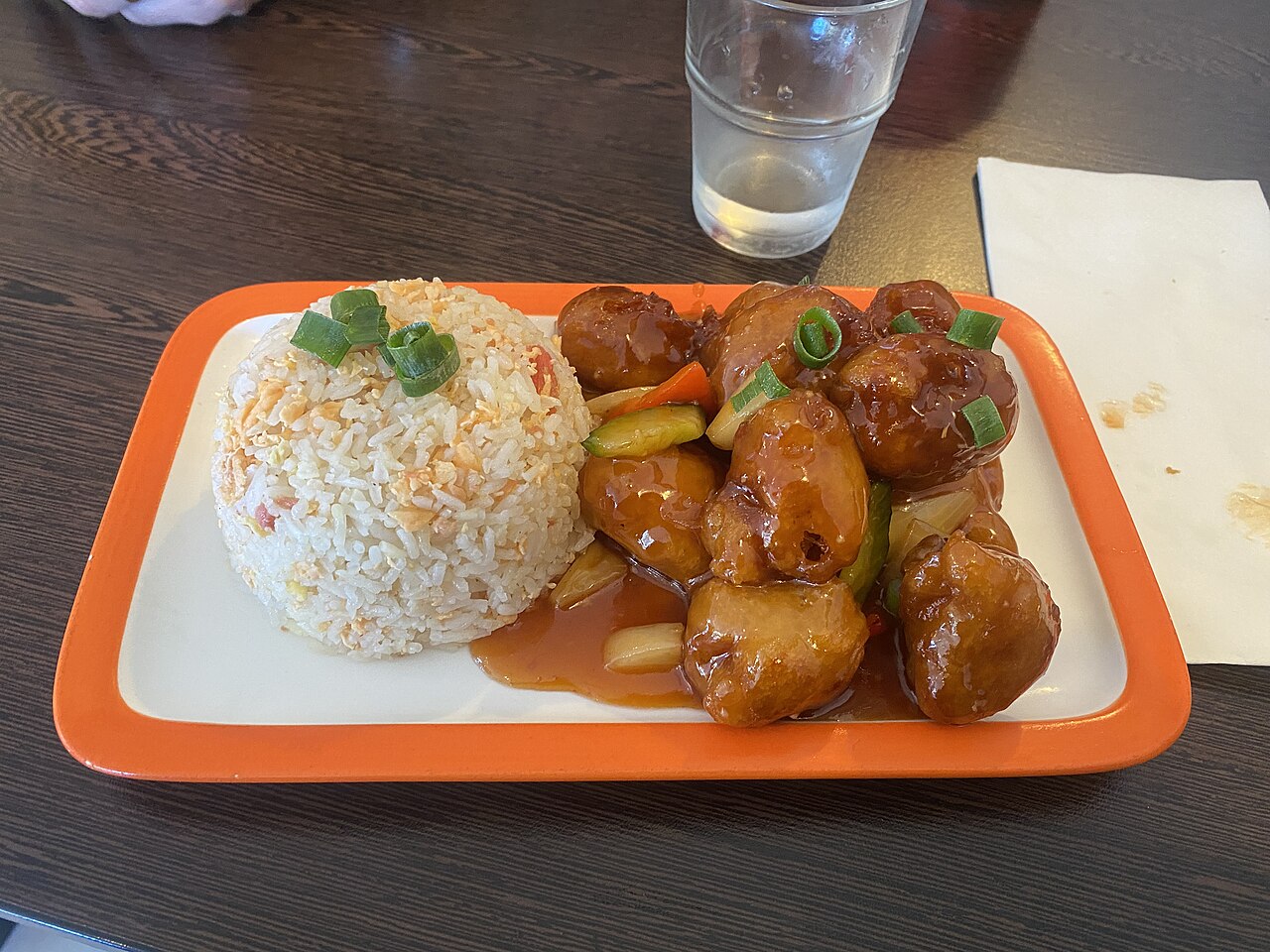
Those components should remain separate until the last moment. The pork needs an evenly cooked center, the peppers should retain some bite, and the sauce should coat rather than soak the crust.
Crisp Sweet & Sour Pork
Planning totals add preparation, cooking and listed waits. Overlapping stages may shorten the schedule; ingredient and equipment differences can lengthen it.
Ingredients
For fractional eggs, beat an extra egg or yolk and measure the required fraction.
Times and base yield refer to the original recipe. Scaling quantities does not automatically change pan size, temperature or cooking time.
Step-by-step method
The steps describe the base batch (4 servings). The calculator changes the ingredient list only; amounts written in the steps, equipment and timing remain for that base batch.
Step 1
Mix pork with beaten egg and one tablespoon of soy sauce, then coat in cornstarch.
Step 2
Combine vinegar, ketchup, sugar and water in a small bowl.
Step 3
Fry pork in batches at 170°C / 338°F until cooked to at least 63°C / 145°F, then rest for 3 minutes on a rack.
Step 4
Briefly refry at 185°C / 365°F if a crisper coating is desired.
Step 5
Heat the separate teaspoon of oil in a clean pan, stir-fry peppers and pineapple, then add the prepared vinegar-ketchup sauce. Simmer until it coats a spoon lightly; this sauce is not meant to become a thick starch gel.
Step 6
Fold in pork just before serving so the coating retains some crunch.
Why this version works
Prepare pork cubes for a thin even crust
Cut 600 grams of shoulder into similarly sized bite-size pieces, removing large tough seams while retaining fine marbling. Very large chunks need a longer fry that can overcolor the coating. The egg and soy mixture should wet the surfaces without leaving a deep pool before cornflour is added. Press starch lightly onto the meat, then shake off thick dry excess. A heavy irregular shell can trap uncooked starch under its outer crust. Prepare a clean draining rack before heating the oil so finished pieces do not have to wait on the raw-meat preparation tray.
Taste the sweet-sour mixture before frying begins
Rice vinegar, ketchup and sugar vary enough that the measured sauce is a starting balance, not a reason to ignore the bottle labels. Ketchup contributes both sugar and acidity; sweetened rice vinegar changes the ratio further. Mix sauce ingredients before the oil heats and taste a safe small sample. It should be lively enough to season plain pork and rice, without becoming an aggressively sour syrup. Drain canned pineapple well, or its packing juice will dilute the pan. Fresh pineapple should be cut into manageable pieces that warm quickly without requiring a long simmer.
Use two temperatures for different purposes
The first fry at about 170°C / 338°F cooks the pork and sets the coating. Work in small batches and verify the meat is safely cooked rather than relying on golden color. A short second fry at about 185°C / 365°F can remove more surface moisture and restore crispness just before serving. It is optional, but useful if the first batches waited. Keep the pan no more than halfway filled with oil and lower food away from your body. Do not add sauce or wet pineapple to the frying pot; those belong in a separate pan.
Glaze only when the rest of the meal is ready
Stir-fry peppers briefly so they soften at the edges while retaining structure. Add pineapple and sauce and reduce until the bubbles look slightly syrupy and a spoon leaves a light coating. The crust already carries starch, so the recipe need not begin with a heavy extra slurry. Fold pork through only at the end and serve immediately. A large deep bowl traps steam; a warm broad platter preserves the contrast better. For advance preparation, keep sauce, vegetables and fried pork separate rather than trying to preserve a fully sauced batch for half an hour.
Keep coating starch distinct from sauce thickening
The large cornstarch allowance belongs around the egg-coated pork. It is not a quantity to whisk into the sweet-sour sauce. Shake off loose excess before frying so dry clumps do not form a heavy shell or accumulate in the oil. The separate vinegar-ketchup mixture should reduce to a light coating, with peppers and drained pineapple contributing pieces rather than a second wet filling. Combine only the pork that will be served promptly. Holding all of it in sauce while waiting for the rice trades away the crispness created during frying.
Ingredient choices and substitutions
Choose pork shoulder with fine marbling and peppers with firm walls. Pineapple should be drained if canned. Taste the sauce before cooking because ketchup and vinegar brands vary in sweetness and acidity.
Fixes for this recipe
| What you notice | Likely reason | What to do |
|---|---|---|
| A thick floury shell beneath a dark exterior | Too much loose cornflour adhered or oil was too hot for the pork size. | Shake off excess coating, cut evenly and control the first-fry temperature. Extend gentle cooking for the center rather than allowing only the outside to brown rapidly. |
| Pork turns soft moments after saucing | The sauce was watery, the pork stood in it too long or the serving dish trapped steam. | Reduce the glaze before adding meat, combine at the last moment and serve on a broad warm plate. Keep components separate if the meal is delayed. |
| A sticky sweet coating hides every other flavor | A sweet ketchup or pineapple syrup was used without adjusting the sugar. | Taste the mixed sauce before cooking and reduce added sugar where appropriate. Adjust vinegar cautiously instead of repeatedly alternating large additions of sugar and acid. |
Recipe-specific questions
Can pork loin replace shoulder in this recipe?
It can make a leaner variation, but has less tolerance for prolonged frying. Cut evenly, check doneness directly and avoid leaving it in hot sauce. Shoulder is recommended for a little more forgiving fat and texture.
Do I have to double-fry the pork?
No. A well-controlled single fry followed by immediate glazing can be satisfying. The second short fry is mainly a texture tool when the first batches have stood or when a crisper exterior is wanted.
Can I make the sauce without ketchup?
Yes, but that is a different formulation rather than a simple omission. Ketchup supplies tomato, sweetness, acidity and body. Build and taste a separate small sauce trial before applying it to an entire batch of fried meat.
Serving and storage
Plain rice absorbs the measured glaze and keeps the meal from becoming uniformly sweet. A simply cooked green vegetable offers a cleaner contrast than another fried, heavily sauced dish.
Refrigerate cooled pork and sauce separately where possible. Re-crisp pork in an oven or air fryer and heat sauce independently, then combine near serving. Already sauced leftovers can be reheated safely, but the original brittle crust will not return simply through longer frying.
An AI-assisted editorial guide, not independently kitchen-tested. The photograph is a serving example. How we prepare and correct our guides.
For safe handling, consult FDA guidance. Send recipe corrections by email to ZYS10.