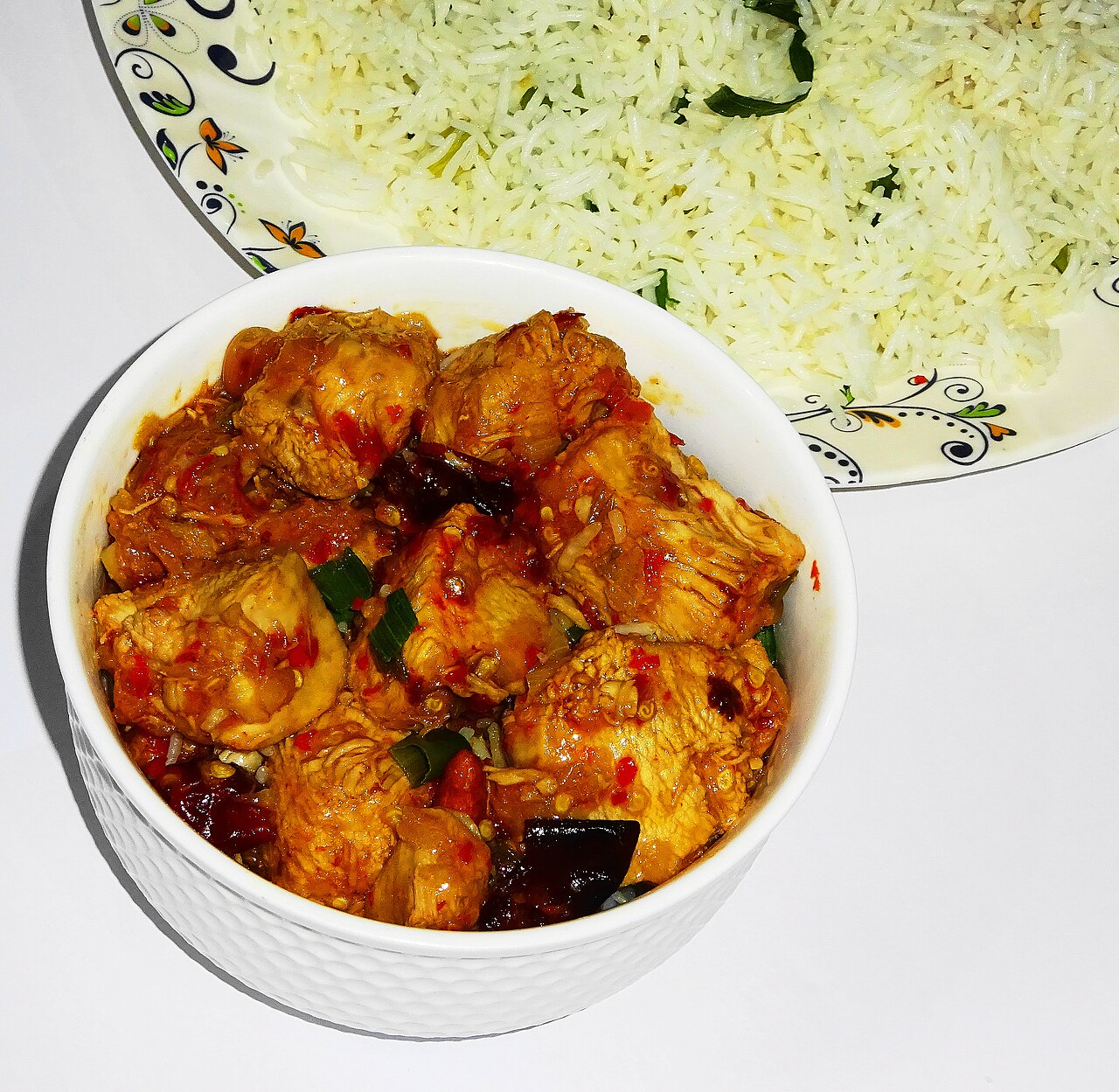
Dried chile and Sichuan pepper should perfume the oil without burning. A home pan benefits from a prepared sauce and modest batches, allowing the sweet-sour seasoning to coat the chicken rather than collect as a starchy puddle.
Kung Pao Chicken
Includes the 15-minute chicken marinade. Preparation can overlap this short rest.
Planning totals add preparation, cooking and listed waits. Overlapping stages may shorten the schedule; ingredient and equipment differences can lengthen it.
Ingredients
Times and base yield refer to the original recipe. Scaling quantities does not automatically change pan size, temperature or cooking time.
Step-by-step method
The steps describe the base batch (4 servings). The calculator changes the ingredient list only; amounts written in the steps, equipment and timing remain for that base batch.
Step 1
Mix chicken with one tablespoon of soy sauce and one teaspoon of cornstarch and rest for 15 minutes.
Step 2
Mix remaining soy, vinegar, sugar, cornstarch and three tablespoons of water for the sauce.
Step 3
Warm oil and briefly toast dried chiles and Sichuan peppercorns without blackening them.
Step 4
Add chicken in a single layer and stir-fry until nearly cooked.
Step 5
Add garlic, ginger and spring onion whites, then sauce, cooking until chicken reaches 74°C / 165°F and the sauce glazes.
Step 6
Fold in peanuts and spring onion greens just before serving.
Why this version works
Cut chicken for quick cooking, not tiny dry fragments
Cut 500 grams of thigh meat into similar bite-size cubes and remove large loose fat or tough sinew. The small soy-and-cornflour marinade should lightly coat the surfaces; it is not intended to make a thick batter. Let it stand for the stated short rest while preparing the sauce and aromatics. Spread pieces in a broad skillet so they can contact the hot metal. If the pan is small, cook in two batches and return them together for the final glaze. Thighs offer some tolerance, but that is not a reason to leave small pieces cooking while measuring the remaining ingredients.
Use pepper fragrance without hard gritty seeds
Sichuan peppercorns have aromatic outer husks and can contain hard dark seeds. Buy a fragrant product and pick out obvious gritty seeds or stems. The sensation is different from chile heat, so reducing dried red chiles does not require eliminating Sichuan pepper. Warm both carefully in oil before the chicken, keeping the color controlled. Blackened chile skins and scorched pepper create bitterness that cannot be hidden by the sauce. If whole husks are unpleasant to your diners, use a suitably ground preparation as a variation and add cautiously rather than leaving a large quantity of hard fragments.
Mix the glaze before the pan is hot
The sauce combines soy, dark rice vinegar, sugar, cornflour and a little water. Stir until the starch is dispersed, then stir again immediately before pouring because it settles. Dark Chinese rice vinegar provides a different flavor from balsamic or sweetened sushi vinegar. Taste the vinegar before mixing if unfamiliar with the product. The sauce needs enough water to distribute over the chicken before the starch sets, but not enough to simmer it like a stew. If scaling up, increase pan capacity or use batches rather than adding a double quantity of cold sauce to one crowded skillet.
Finish peanuts and spring onion at the right stage
Garlic, ginger and spring onion whites need a brief cook before the sauce thickens, while the greens and peanuts belong near the end. Roasted unsalted peanuts make the final salt easier to judge and need no long cooking. A glossy coating should surround individual chicken pieces with only a little liquid remaining. If it turns into a sticky gel, loosen with a spoonful of hot water and fold gently. Serve immediately with plain rice, which moderates the concentrated glaze. A vegetable side should be lightly seasoned enough that the meal does not become uniformly salty and sweet.
Keep the two starch portions in their intended places
The two teaspoons of cornstarch are divided between the chicken coating and the sauce. Measure them separately before marinating so the glaze does not accidentally receive the full amount as well. Stir the sauce again just before pouring because its starch can settle while the chicken cooks. If the glaze tightens immediately, loosen with a little hot water rather than increasing vinegar or soy, which also changes seasoning. Peanuts enter after the coating forms, so they retain a different texture from the tender chicken and lightly thickened sauce.
Ingredient choices and substitutions
Use unsalted roasted peanuts and fragrant Sichuan peppercorns without excessive hard black seeds. Chicken thighs are forgiving in a home stir-fry. Dark Chinese rice vinegar differs from balsamic vinegar and should be tasted on its own.
Fixes for this recipe
| What you notice | Likely reason | What to do |
|---|---|---|
| A thick glue-like coating | Cornflour concentrated after too much reduction or sauce was added to a nearly dry pan. | Add hot water a spoonful at a time and fold until the glaze moves. Re-stir slurry before adding it and stop cooking once the chicken is safely cooked and evenly coated. |
| Bitter oil before the sauce enters | Dried chiles or Sichuan pepper scorched during the initial aromatic stage. | Discard the burnt aromatic oil and restart that small stage. Lower heat and have chicken ready so spices do not sit alone in very hot oil. |
| Peanuts lose their crunch | They simmered with chicken while excess sauce reduced. | Add roasted peanuts only after the sauce is close to ready. Keep an extra small dry portion for serving if the meal cannot go directly to the table. |
Recipe-specific questions
Can cashews replace peanuts in kung pao chicken?
They make a pleasant variation with a different sweetness and softer bite. Use roasted unsalted nuts and add them late. This is not an allergy-safe substitution for everyone, so identify the replacement clearly rather than assuming another nut is automatically suitable.
Does reducing the dried chile remove all its character?
No. Ginger, garlic, Sichuan pepper and the sweet-sour glaze remain important. Use fewer chiles or leave them whole for a milder version, while preventing scorching. Extreme heat is not necessary for a balanced home dish.
Can I prepare the sauce earlier in the day?
Yes. Keep it covered and refrigerate if holding for an extended period, then stir thoroughly before use. Cornflour settles to the bottom, so an unstirred container can deliver thin liquid first and a thick starch lump last.
Serving and storage
Plain rice and a simply cooked green vegetable let the glaze and pepper aroma remain clear. A mild cucumber side is useful if the chicken is hot, without requiring a second heavily sauced stir-fry.
Refrigerate cooked chicken promptly and keep rice separate. Reheat the chicken thoroughly with a small splash of water to loosen the starch glaze. Stored peanuts soften, so reserve a dry garnish when planning leftovers. Do not try to restore crunch by prolonged frying that dries out the chicken.
An AI-assisted editorial guide, not independently kitchen-tested. The photograph is a serving example. How we prepare and correct our guides.
For safe handling, consult FDA guidance. Send recipe corrections by email to ZYS10.