Cooking the wontons in a separate pot prevents loose wrapper flour from clouding the serving stock. The pork-shrimp filling needs a cohesive texture, modest portions and a direct doneness check; floating wrappers alone do not prove the raw center is cooked.
Pork & Shrimp Wonton Soup
Planning totals add preparation, cooking and listed waits. Overlapping stages may shorten the schedule; ingredient and equipment differences can lengthen it.
Ingredients
Times and base yield refer to the original recipe. Scaling quantities does not automatically change pan size, temperature or cooking time.
Step-by-step method
The steps describe the base batch (4 servings). The calculator changes the ingredient list only; amounts written in the steps, equipment and timing remain for that base batch.
Step 1
Mix pork, shrimp, spring onion, ginger, soy and sesame oil until the filling feels sticky and cohesive.
Step 2
Divide the filling between the 30 wrappers, roughly 15 g per wrapper, leaving a clean sealing border. Moisten edges and fold tightly. Check the first wrapper before portioning everything: a small wrapper may need less filling and more wrappers.
Step 3
Warm stock gently in a separate pan and season only after tasting.
Step 4
Bring a large pan of water to a gentle boil and add wontons in batches.
Step 5
Cook for about 5–7 minutes, checking a sample filling reaches 74°C / 165°F, then lift into bowls.
Step 6
Blanch bok choy briefly and add with hot stock, keeping the broth clear.
Why this version works
Chop shrimp for a distinct but manageable filling
Finely chop 150 grams of peeled raw shrimp rather than processing it into a completely smooth paste. Mix with 250 grams of ground pork so small shrimp pieces remain noticeable. Ginger, spring onion, soy and sesame oil should be evenly distributed. Stir until the filling becomes cohesive and a little sticky, but keep it chilled during a long wrapping session. A separate small cooked sample is the safe way to assess seasoning; never taste the raw mixture. Ground pork with some fat is more succulent than exceptionally lean mince, especially inside a thin wrapper.
Use a small filling quantity and clean seal
Thirty wrappers need roughly small teaspoon portions, adjusted to the actual wrapper size rather than forced to hold a large spoonful. Keep the unused stack covered so edges do not dry. Moisten only the sealing border, press out air around the filling and close securely before forming any decorative shape. Filling caught in the seam prevents a reliable seal. Too much water makes the wrapper slippery and fragile, while too little leaves a floury gap. Place completed wontons on a lightly floured or lined tray with space between them so they do not stick together.
Keep cooking water and serving broth separate
Warm the litre of chicken stock gently in one pan, tasting before adding any further salt because the filling already contains soy. Cook wontons in a second pot with enough water for gentle movement. Avoid a violent rolling boil that knocks them against one another. Add in batches so water recovers its temperature, and lift with a slotted spoon when cooked. This leaves loose flour in the cooking pot rather than the soup bowl. Blanch bok choy separately or in the clean cooking water after the dumplings, keeping its texture tender but recognizable.
Check a sample and assemble promptly
The five-to-seven-minute estimate depends on wrapper thickness, filling amount and whether wontons begin chilled or frozen. Check a representative thick dumpling, aiming for 74°C / 165°F in this mixed filling. Floating tells you the wrapper has changed, not that the middle has reached a specific temperature. Put cooked wontons in warm bowls, add greens and hot stock, and serve immediately. Long holding in broth softens wrappers until they break. If making ahead, store or freeze uncooked shaped wontons separately from the stock and finish them near the meal rather than keeping an assembled pot warm for hours.
Match wrapper size to the estimated filling portion
The filling is divided among thirty wrappers, with roughly fifteen grams intended for each. Treat that as a portion-planning estimate, not a demand to force fifteen grams into any wrapper sold under the same name. Seal one first and check that the edges meet without trapped filling. If small wrappers require more pieces, plan additional boiling batches and keep the finished wontons separate from raw ones. Cooking them in plain water protects the serving broth's clarity, while checking a thick filling sample addresses doneness more directly than waiting for every parcel to float.
Ingredient choices and substitutions
Choose thin fresh wonton wrappers and keep the stack covered. Shrimp should smell clean and be finely chopped rather than pureed. A mild stock supports the dumplings without masking them.
Fixes for this recipe
| What you notice | Likely reason | What to do |
|---|---|---|
| Wrappers open and release filling | Edges dried, trapped filling interrupted the seam or portions were oversized. | Keep wrappers covered, use modest filling and moisten a clean border. Press air out gently before sealing; complicated folds do not compensate for a weak basic closure. |
| The serving broth becomes cloudy and thick | Wontons were cooked directly in stock and released flour or broken filling. | Use a separate water pot and lift dumplings into hot serving broth. Strain a cloudy stock if needed, but do not boil the cooked wontons longer in an attempt to clear it. |
| Wrappers are soft but filling remains underdone | Large fillings or frozen dumplings needed longer than the visual wrapper cues suggested. | Maintain a gentle cook and check the center of a sample. Reduce filling portions next time and extend frozen-batch timing rather than using floating alone as the endpoint. |
Recipe-specific questions
Can I freeze these wontons before boiling?
Yes. Freeze in one layer until firm, then transfer to a sealed container so they remain separate. Cook from frozen in batches and allow extra time, checking a sample filling directly rather than relying on the chilled-wonton estimate.
Can square wonton wrappers be replaced with gyoza wrappers?
They can make dumplings, but usually have a different thickness and shape. Expect a firmer wrapper and adjust filling quantity, sealing and cook time. Do not assume the soup will retain the same delicate texture.
Should shrimp be cooked before mixing with pork?
Not for this formulation. Finely chopped raw shrimp binds with the pork and cooks inside the wrapper. Precooked shrimp would heat again and can become firmer; use a different filling approach if that is the ingredient available.
Serving and storage
The soup can be a light meal with greens or part of a larger table alongside a vegetable and rice dish. Use restrained garnishes so the pork-shrimp filling and clear stock remain the focus.
Keep stock refrigerated separately from uncooked dumplings, and freeze shaped wontons promptly if not cooking soon. Cool any cooked leftovers quickly, storing broth separately where practical. Reheated wrappers become softer, so avoid repeatedly warming a complete pot and instead assemble the portions needed.
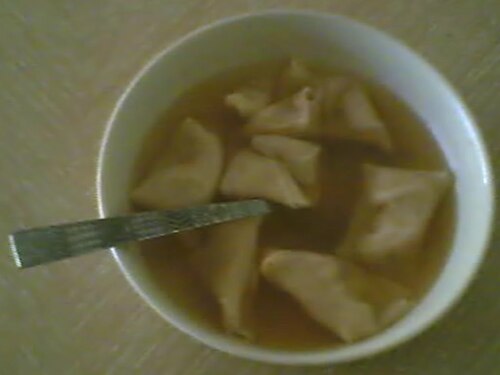
An AI-assisted editorial guide, not independently kitchen-tested. The photograph is a serving example. How we prepare and correct our guides.
For safe handling, consult FDA guidance. Send recipe corrections by email to ZYS10.