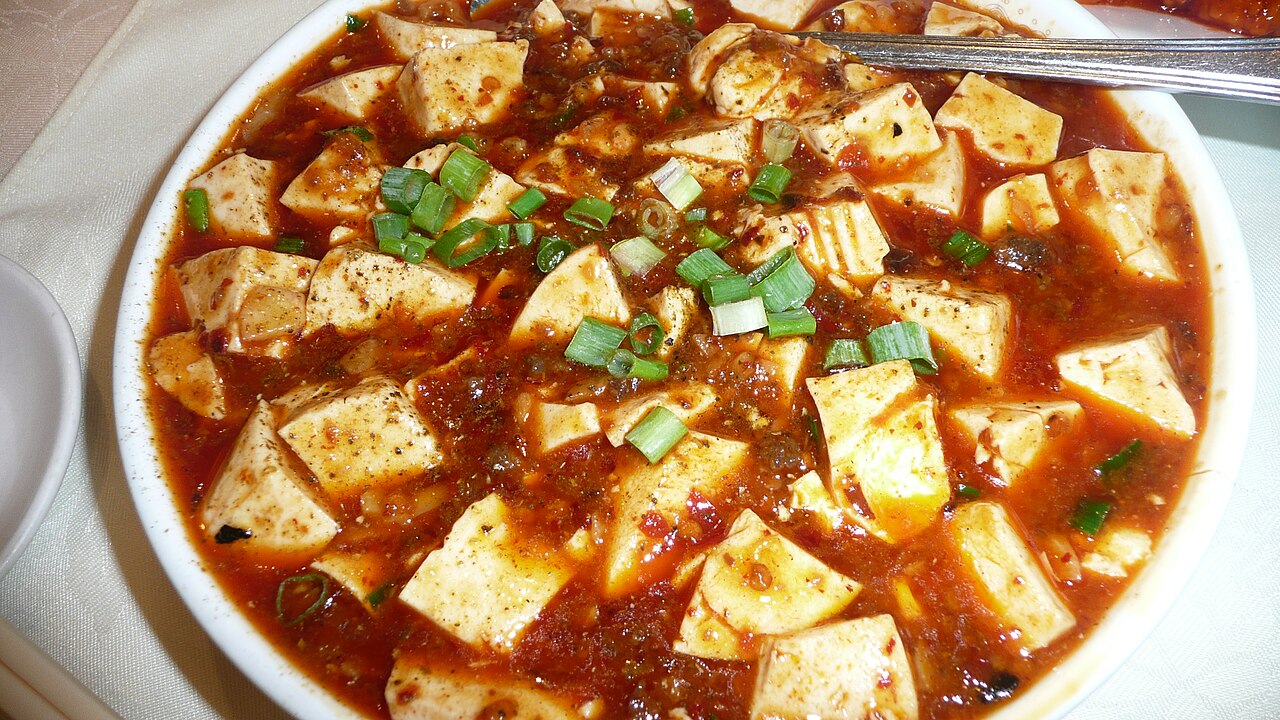
Fermented broad-bean paste provides the backbone, while Sichuan pepper adds a separate aromatic tingling finish. Careful handling matters: the sauce can be moved around the tofu without repeatedly breaking every cube with a spoon.
Sichuan-Style Mapo Tofu
Planning totals add preparation, cooking and listed waits. Overlapping stages may shorten the schedule; ingredient and equipment differences can lengthen it.
Ingredients
Times and base yield refer to the original recipe. Scaling quantities does not automatically change pan size, temperature or cooking time.
Step-by-step method
The steps describe the base batch (4 servings). The calculator changes the ingredient list only; amounts written in the steps, equipment and timing remain for that base batch.
Step 1
Warm tofu cubes in hot water with the 0.25 teaspoon salt for 3 minutes, then drain carefully.
Step 2
Brown pork in oil, breaking it into small pieces and checking it reaches 71°C / 160°F before adding the fermented seasonings.
Step 3
Add doubanjiang, black beans, garlic and ginger and fry gently until the oil turns fragrant.
Step 4
Pour in stock and soy sauce and bring to a gentle simmer.
Step 5
Slide in tofu and simmer for 5 minutes, then add cornstarch mixed with two tablespoons of water.
Step 6
Shake the pan gently until the sauce thickens and finish with Sichuan pepper.
Why this version works
Choose tofu that is soft yet workable
For 500 grams, use soft or medium tofu capable of holding cubes, rather than a very delicate dessert-style silken product that collapses at the lightest touch. Cut with a sharp knife and slide the pieces from the board rather than picking each up roughly. A short warm-water stage heats them evenly and reduces the abrupt temperature drop when they enter the sauce. Drain carefully and keep them warm while making the base. Firm tofu is a possible variation, but gives a chewier bite and less contrast with the sauce; it is not simply an identical easier option.
Cook fermented paste for aroma, not maximum heat
Doubanjiang differs substantially by brand, especially in salt and chile strength. Two tablespoons may already season much of the dish. Chop very coarse pieces if needed and fry gently after browning the pork so its fermented aroma enters the oil. The goal is fragrant reddish oil, not blackened bean fragments. Fermented black beans add another savory note in a smaller quantity. Use unsalted stock initially and hold back some soy sauce if the paste is strongly seasoned. The sauce should taste deep and warm rather than resemble an undiluted spoonful of salty condiment.
Brown pork before the tofu stage
Break 150 grams of ground pork into small pieces in the oil and cook it through before building the sauce. Lightly browned edges supply contrast to the tofu, while very large meat clumps interrupt the intended spoonful. A meat-free adaptation can use finely chopped mushrooms, cooked until their free water evaporates, and vegetable stock. Check paste labels as well if making a vegetarian dish. Once tofu enters, do not attempt another aggressive browning stage. The base should already be ready to support a gentle five-minute simmer that carries flavor around the cubes.
Thicken in small additions and finish with pepper
Mix cornflour with cold water and stir again before use. Add part of the slurry around the bubbling sauce, move the pan gently and let it cook briefly before deciding whether more is needed. Soft tofu releases a little water, so the final consistency may change as it stands. A spoonful should carry sauce and tofu together without the liquid setting like jelly. Ground Sichuan pepper is a finishing aroma; use a fragrant product and add cautiously. A short pan shake distributes it without shredding the cubes, and plain rice makes the concentrated savory flavors easier to appreciate.
Use the slurry to support tofu rather than bury it
The sauce should surround and cling to the cubes while still moving when the pan is tilted. Stir the cornstarch-water mixture immediately before adding, introduce it gradually and allow the simmer to show its effect. A sauce that coats the first cubes does not necessarily need every remaining drop of slurry. Keep Sichuan pepper for the finishing stage rather than repeatedly adding it to compensate for a sauce made dull by excessive starch. Move the pan gently; stirring hard to loosen an overthick sauce can break the tofu while leaving the thickener problem unchanged.
Ingredient choices and substitutions
Choose soft or medium tofu that can hold cubes, rather than a very delicate dessert-style tofu. Doubanjiang varies in salt and heat; Pixian-style fermented paste gives a distinctive depth. Check labels for wheat and bean allergens.
Fixes for this recipe
| What you notice | Likely reason | What to do |
|---|---|---|
| Most tofu breaks into tiny fragments | The tofu was exceptionally delicate or stirred hard after entering the pan. | Use stable soft cubes, add them with the base already prepared and move the sauce by shaking or folding from the edge. Broken tofu still tastes good, but avoid repeated rescue stirring. |
| Sauce becomes a thick red gel | Too much starch was added before allowing the first portion to thicken. | Loosen with hot unsalted stock and fold gently. Add slurry in stages next time; a light coating is more useful than using starch to force all liquid to remain motionless. |
| The bowl is overwhelmingly salty | Doubanjiang, black beans and soy sauce were treated as unseasoned ingredients. | Dilute with unsalted stock and extra tofu where possible. Taste the fermented paste and sauce before adding all the soy; sugar does not remove excess salt. |
Recipe-specific questions
Is silken tofu always the right choice for mapo tofu?
Not every silken product has the same firmness. Some are extremely fragile and intended for gentle cold or dessert preparations. Choose a product that can hold cubes in a simmer, or handle a very delicate one as a softer variation.
Can I omit the pork without replacing anything?
You can, but the sauce loses a browned savory element. Finely chopped mushrooms cooked until their moisture reduces offer another texture. Use vegetable stock and check condiment ingredients if the whole dish needs to be vegetarian.
Does Sichuan pepper make the dish spicy in the same way as chile?
It contributes a different tingling sensation and citrus-like fragrance. Chile paste provides much of the burning heat. Adjust them separately so reducing one does not automatically erase the other aromatic dimension.
Serving and storage
Serve with plain steamed rice and a mild green vegetable. A second heavily fermented or very salty main dish offers less contrast than a simple fresh side, especially when the mapo sauce is concentrated.
Cool promptly in shallow containers and refrigerate. Reheat gently with a little unsalted stock or water, using a broad spoon to move sauce rather than crush cubes. The starch can loosen or thicken after storage, so assess it only once hot before adding any new slurry.
An AI-assisted editorial guide, not independently kitchen-tested. The photograph is a serving example. How we prepare and correct our guides.
For safe handling, consult FDA guidance. Send recipe corrections by email to ZYS10.