It is not simply chicken soup thickened with coconut. This version uses stock to keep the liquid light enough for a shared meal, then adds lime after cooking so the final bowl remains bright rather than heavy.
Coconut Tom Kha Gai
Planning totals add preparation, cooking and listed waits. Overlapping stages may shorten the schedule; ingredient and equipment differences can lengthen it.
Ingredients
Times and base yield refer to the original recipe. Scaling quantities does not automatically change pan size, temperature or cooking time.
Step-by-step method
The steps describe the base batch (4 servings). The calculator changes the ingredient list only; amounts written in the steps, equipment and timing remain for that base batch.
Step 1
Bruise lemongrass and simmer it with galangal and lime leaves in stock for 8 minutes.
Step 2
Add coconut milk and warm gently without a hard boil.
Step 3
Add mushrooms and sliced chicken and simmer until the chicken reaches 74°C / 165°F.
Step 4
Stir in fish sauce and palm sugar, tasting before adding all the seasoning.
Step 5
Take off the heat and add fresh lime juice.
Step 6
Remove large woody aromatics and finish with coriander, serving while hot.
Why this version works
Make galangal the central aromatic
Six slices of galangal may look modest, but their purpose is to infuse the broth rather than become part of a puree. Cut from a fresh or thawed piece and keep the slices recognizable. Lemongrass and makrut lime leaves support that aroma in distinct ways. Ginger can be used when galangal is inaccessible, but its sharper flavor makes a different soup. Infuse these ingredients in the 500 millilitres of stock first, then add coconut milk. This allows the aromatic stage to finish before chicken is exposed to heat.
Allocate the coconut and stock before simmering the chicken
Keep the 400 ml can of coconut milk and 500 ml stock measured separately so the galangal infusion can happen in stock first. Stir the can smooth before pouring unless its label gives a different instruction. Add the coconut, then mushrooms and evenly sliced chicken. Reserve a little unsalted stock outside the pot if you expect to adjust richness at serving; extra lime changes acidity, while stock changes concentration. This soup uses the whole can as broth and does not need the paste-frying stage used by the green curry.
Slice chicken for tenderness and even timing
Cut 500 grams of boneless thigh meat across the grain into similar thin pieces, removing large loose fat. Thin does not mean shredded: pieces should still have a pleasant bite and be easy to lift with a spoon. Add them once mushrooms are close to ready and keep the liquid at a quiet simmer. The thickest piece needs to reach 74°C / 165°F. If using breast, check earlier and avoid a long hold. A vigorous boil does not improve the broth and makes the margin between cooked and dry chicken narrower.
Tune richness with stock and acid separately
After the chicken is ready, fish sauce adjusts savoriness and salt, palm sugar rounds the edges, and lime juice creates freshness. Add these gradually, tasting a complete spoonful that includes coconut broth and chicken. If the soup feels too rich, a little unsalted stock may be more useful than a large extra squeeze of lime. If it tastes thin but salty, more fish sauce will make matters worse. Coriander belongs at the end. Remove large woody aromatics or explain that they are infusion ingredients rather than edible vegetable strips.
Recognize when to adjust stock instead of coconut milk
The recipe deliberately uses both stock and coconut milk. If the finished soup is richer than wanted, a little unsalted stock changes body more directly than extra lime, which adds acidity while leaving the coconut richness in place. Make that adjustment before the final lime tasting, then warm gently and reassess. Conversely, reducing the soup strongly to intensify it also concentrates fish sauce and coconut together. Keep the galangal-led broth recognizable, and portion chicken and mushrooms before dividing the remaining liquid so every serving has useful solids.
Ingredient choices and substitutions
Use unsweetened coconut milk and a clean mild stock. Fresh or frozen galangal is preferable to a stale dry powder. Thinly slice the chicken across the grain for a more tender bite.
Fixes for this recipe
| What you notice | Likely reason | What to do |
|---|---|---|
| A very rich sauce instead of a light soup | The coconut mixture reduced for too long or too little stock was used. | Add hot unsalted stock gradually, then recheck lime and fish sauce. Do not use acidity alone to compensate for excessive concentration. |
| Chicken pieces curl tightly and feel dry | They were sliced unevenly or held in a hard boil. | Use evenly cut thighs and a gentle simmer next time. Remove cooked pieces if further broth adjustment is needed, returning them only for the final warm-through. |
| Coconut flavor overwhelms the galangal | The aromatic infusion was too brief, weak or made with stale ingredients. | Warm fresh galangal and lemongrass in a little separate stock, strain and combine. Adding more lime gives sourness, not the missing galangal fragrance. |
Recipe-specific questions
Can I use chicken breast for tom kha gai?
Yes, but cut it evenly and begin checking sooner. Breast should enter close to the end and leave the heat once safely cooked. A long simmer suited to making stock is unnecessary for these thin pieces.
Is tom kha gai supposed to taste strongly sweet?
The small palm-sugar amount rounds coconut, salt and acid; sweetness should not dominate. Curry pastes are not part of this version, and sweetening it like a bottled coconut sauce would obscure the aromatic broth.
Can I prepare the coconut broth before guests arrive?
Yes. Infuse, strain if desired and chill it promptly if making well ahead. Reheat gently, cook the chicken near serving and add lime and coriander last. This protects both chicken texture and fresh finishing aroma.
Serving and storage
Jasmine rice is a neutral partner for the coconut broth. A crunchy vegetable salad or simply cooked greens creates textural contrast, while another creamy coconut curry makes the meal less varied.
Cool promptly and refrigerate in shallow portions. Reheat gently until thoroughly hot, keeping the pan covered enough to avoid excessive reduction. Add a little stock if needed and finish with fresh coriander; a new small lime adjustment after warming can restore brightness without extending the chicken’s time on the heat.
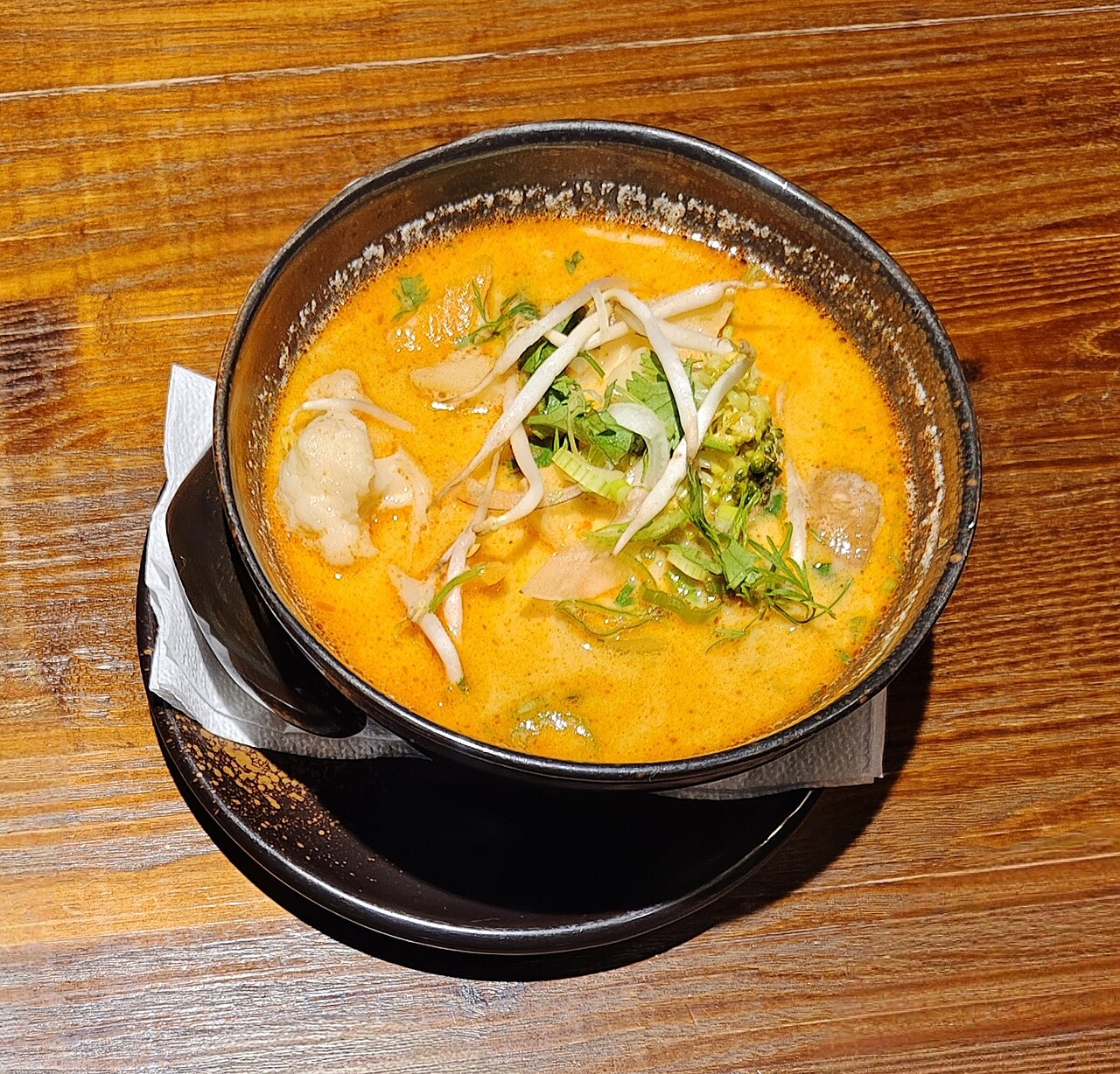
An AI-assisted editorial guide, not independently kitchen-tested. The photograph is a serving example. How we prepare and correct our guides.
For safe handling, consult FDA guidance. Send recipe corrections by email to ZYS10.