Ordinary jasmine rice does not become the same ingredient by cooking with less water. The dessert should combine tender cohesive grains, a lightly salty coconut finish and ripe mango that contributes its own sweetness.
Mango Coconut Sticky Rice
Plus soaking and rice resting
Planning totals add preparation, cooking and listed waits. Overlapping stages may shorten the schedule; ingredient and equipment differences can lengthen it.
Ingredients
Times and base yield refer to the original recipe. Scaling quantities does not automatically change pan size, temperature or cooking time.
Step-by-step method
The steps describe the base batch (4 servings). The calculator changes the ingredient list only; amounts written in the steps, equipment and timing remain for that base batch.
Step 1
Rinse rice and soak in cool water for at least 4 hours, then drain.
Step 2
Steam rice in a cloth-lined steamer for 25–30 minutes until translucent and tender.
Step 3
Warm 200 ml coconut milk with 60 g sugar and half the salt until dissolved.
Step 4
Fold the hot coconut mixture into the hot rice, cover and rest for 20 minutes.
Step 5
Warm the remaining 100 ml coconut milk with the remaining 15 g sugar and salt. If using the optional rice flour, mix it with 1 tablespoon cold water, whisk into the sauce and simmer gently while stirring until lightly thickened.
Step 6
Serve the rice with sliced mango, coconut sauce and sesame seeds.
Why this version works
Plan the rice and the two coconut mixtures as separate jobs
Begin soaking the 250 g glutinous rice well before dessert preparation, following the listed minimum four hours. Measure the 300 ml coconut milk into a 200 ml portion for the hot rice and a 100 ml portion for the topping before adding sugar. Keep the mangoes whole until the rice is close to ready so the cut fruit stays fresh. The rice guide compares varieties and storage; this dessert specifically needs glutinous rice, a steamer and enough time for the sweet coconut liquid to absorb after cooking.
Steam the grain before adding sweet liquid
Keep simmering water below the rice and allow steam to circulate through the cloth or suitable basket. Check the water level so the pot does not boil dry during the half-hour cook. The rice should be tender through the center and look more translucent when ready. If a grain still has a hard core, continue steaming before adding the coconut mixture. Sweet coconut milk is absorbed as a seasoning stage, not a dependable way to finish raw rice. If the layer is deep, turn it gently partway through so the middle is not shielded from steam.
Combine hot rice and hot coconut seasoning
Warm 200 millilitres of the coconut milk with most of the sugar and some salt, stirring until dissolved without prolonged boiling. Fold it into the hot cooked rice and cover for the rest. The mixture can initially look wetter than expected; give it time to absorb before deciding to add more rice or discard liquid. The remaining coconut milk becomes a separate topping with its own light seasoning. A small rice-flour slurry is optional for that sauce, but it should remain pourable rather than resemble a thick pudding. Salt is important to prevent flat sweetness.
Choose mango by aroma and readiness
Two ripe mangoes should yield gently and smell fragrant near the stem, with flesh that slices cleanly rather than collapses. Variety and ripeness influence sweetness more than a rigid sugar adjustment can predict. Taste the fruit before serving and keep the rice’s sweetness moderate enough to let it register. Slice close to the meal so the cut surface stays fresh. Serve slightly warm or room-temperature rice with mango that is not refrigerator-cold, allowing its aroma to be noticeable. Sesame is a light finishing texture; a heavy nut coating would obscure the rice and fruit.
Divide the coconut mixture by its destination
The rice soak-in mixture and the topping sauce use different portions of the coconut milk, sugar and salt. Put their measured ingredients into separate containers before heating so the rice does not accidentally receive all the sweetened coconut liquid. The rice should absorb its mixture during the covered rest; judge the topping only after that stage. A sauce poured on top cannot correct rice that remained firm in the steamer. Slice mango close enough to service that its texture stays distinct, and serve moderate sauce portions so the fruit remains noticeable.
Ingredient choices and substitutions
Buy glutinous or sticky rice, which is a specific rice type and not ordinary rice cooked with less water. Choose fragrant mangoes that yield gently. Unsweetened full-fat coconut milk gives the sauce a rounded texture.
Fixes for this recipe
| What you notice | Likely reason | What to do |
|---|---|---|
| Hard centers inside sticky rice grains | The soak or steaming stage ended too early. | Continue steaming before adding sweet coconut milk. For future batches check several grains from the center of the layer, not just the soft outer edge. |
| A wet coconut puddle remains after mixing | The rice was insufficiently cooked, very wet from the steamer or given too much liquid. | Allow the full covered absorption rest first. Next time drain soaked rice properly and measure the seasoning; do not try to create tenderness by adding unlimited sweet milk. |
| The dessert tastes sweet but dull | The coconut seasoning lacks salt or the mango is underripe and bland. | Adjust a small serving with a little properly salted coconut sauce. Choose riper fruit next time rather than increasing sugar to compensate for missing mango flavor. |
Recipe-specific questions
Can sushi rice replace Thai sticky rice here?
It creates a different texture and cooking method. Sushi rice is cohesive, but not the same grain. For the intended steamed dessert, buy rice explicitly labeled glutinous, sweet or Thai sticky rice instead of treating all sticky-looking rice as interchangeable.
Should the coconut sauce be completely sweet?
A restrained salty note is part of the balance, especially against ripe fruit and sweetened rice. Add salt carefully and taste a complete bite. The topping should not taste like plain sweet coconut drink.
Can I serve the whole dessert straight from the fridge?
It is safe when properly chilled, but rice becomes firmer and mango aroma is muted by strong cold. Warm only the rice portion gently and serve with freshly cut fruit, keeping any uneaten components safely chilled.
Serving and storage
This is a complete dessert, so the best addition is often simply a small spoon of the seasoned coconut topping. Serve modest portions after a rich meal so ripe mango and coconut remain enjoyable rather than overwhelming.
Separate rice, coconut topping and uncut mango where practical. Cool cooked rice quickly, ideally within one hour, and refrigerate; use within 24 hours and reheat once until thoroughly hot. Add a little coconut milk or water when warming if needed, then let it cool to a comfortable serving temperature.
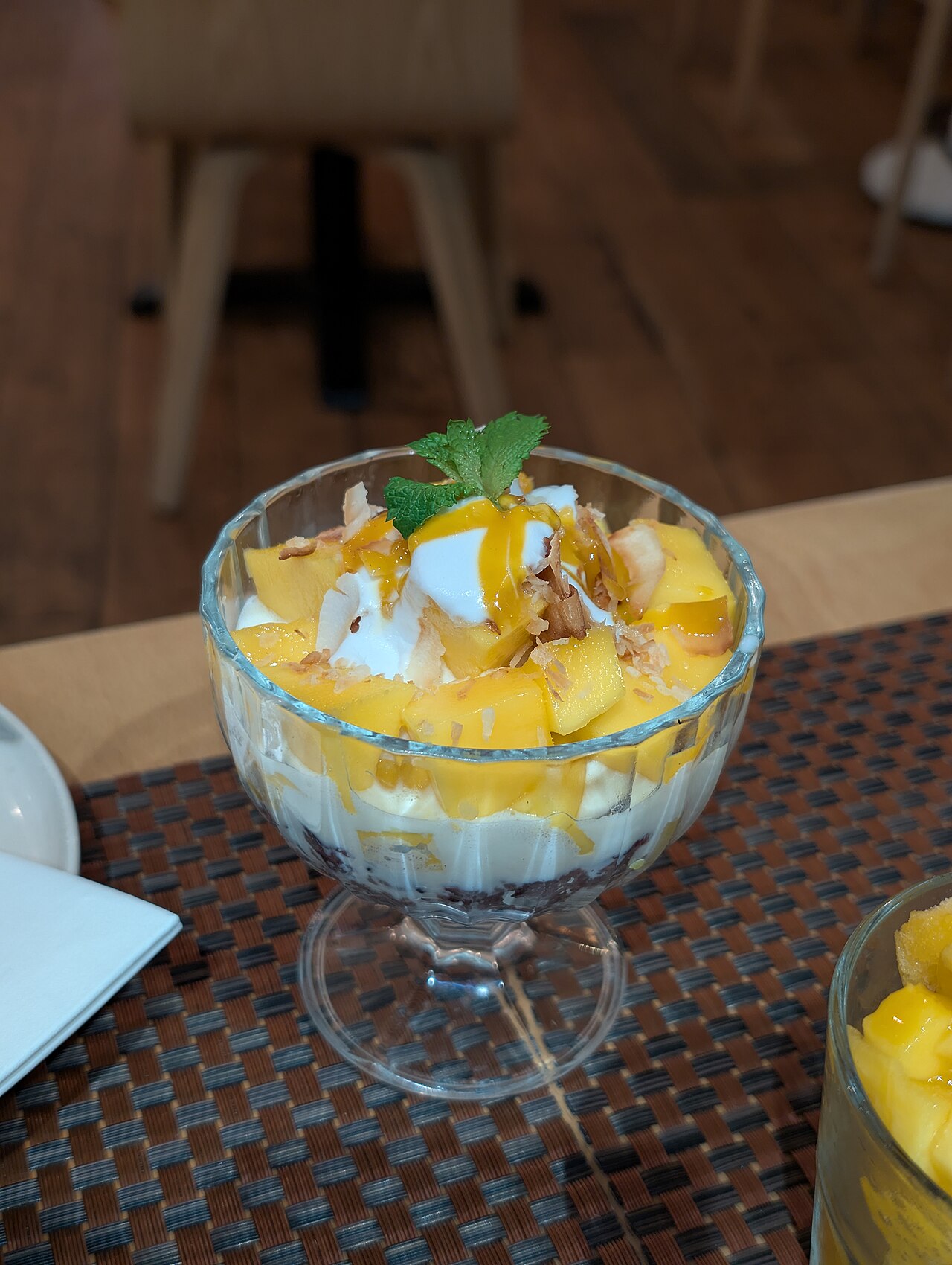
An AI-assisted editorial guide, not independently kitchen-tested. The photograph is a serving example. How we prepare and correct our guides.
For safe handling, consult FDA guidance. Send recipe corrections by email to ZYS10.