Tomato adds fresh juicy pieces, not a wet sauce. Fish sauce provides a savory base, while lime and cucumber remain separate so the pan can stay relatively dry.
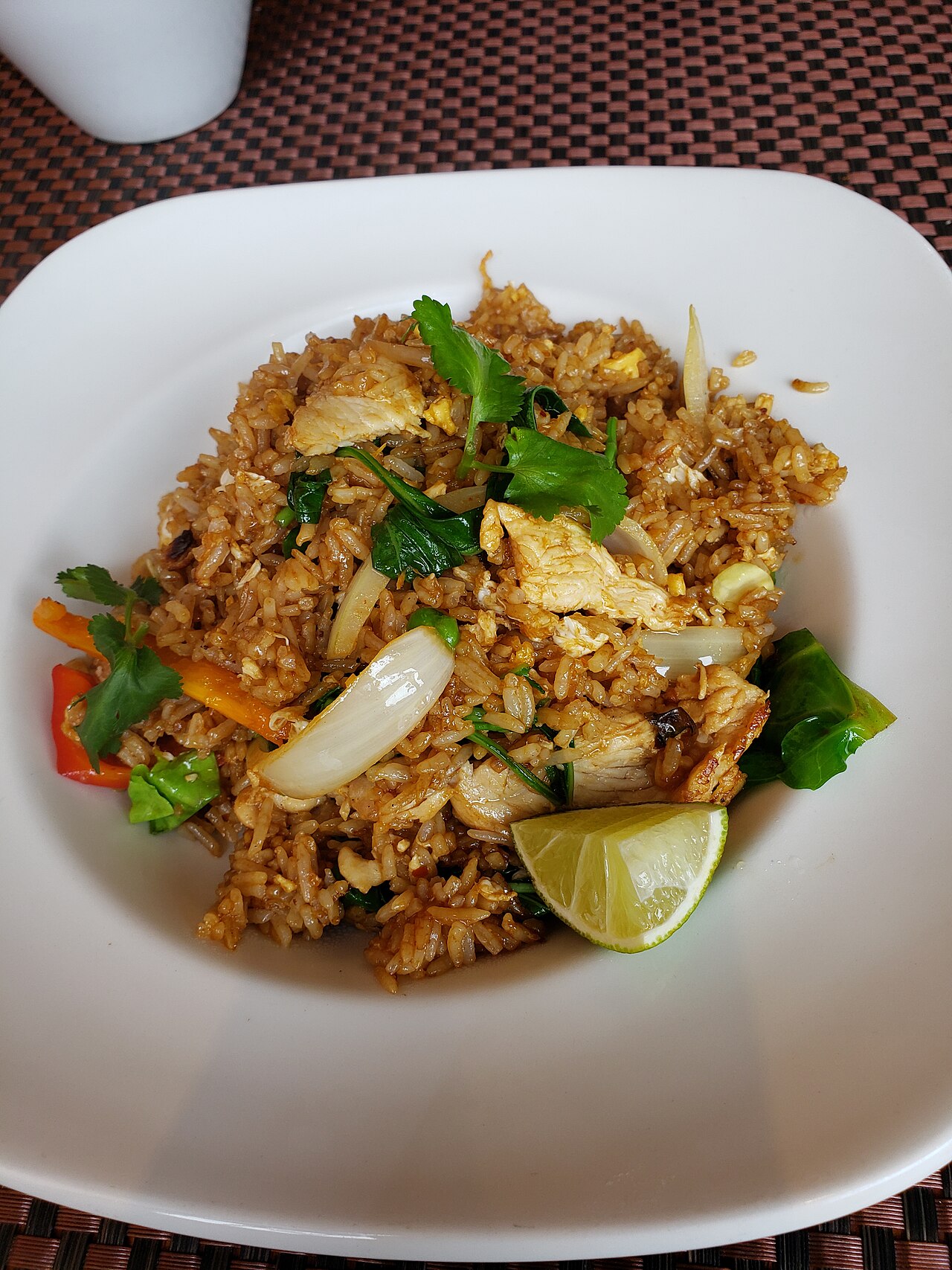
Thai-Style Chicken Fried Rice
Planning totals add preparation, cooking and listed waits. Overlapping stages may shorten the schedule; ingredient and equipment differences can lengthen it.
Ingredients
For fractional eggs, beat an extra egg or yolk and measure the required fraction.
Times and base yield refer to the original recipe. Scaling quantities does not automatically change pan size, temperature or cooking time.
Step-by-step method
The steps describe the base batch (4 servings). The calculator changes the ingredient list only; amounts written in the steps, equipment and timing remain for that base batch.
Step 1
Break chilled rice into loose grains with clean hands or a spoon.
Step 2
Heat half the oil and scramble eggs until just set, then remove.
Step 3
Add remaining oil and cook chicken until it reaches 74°C / 165°F.
Step 4
Stir-fry onion and garlic briefly, then add rice and spread it across the pan.
Step 5
Add fish sauce and soy sauce, toss until hot throughout and fold in egg and tomato.
Step 6
Finish with spring onions and serve with lime wedges and sliced cucumber.
Why this version works
Separate the cooked-rice allowance before the chicken enters
Weigh 700 g of safely chilled cooked jasmine rice, break up clumps and split it into two portions if the pan is small. Prepare the deseeded tomato and keep the finished egg on a clean plate. Once the chicken is cooked, the rice can then heat in a broad layer instead of remaining a cold mound around the meat. Use rice that was cooled promptly and refrigerated, not rice left out overnight. The rice guide carries the full storage explanation; safe chilled rice is the starting ingredient here.
Keep the chicken pieces and egg curds distinct
Dice 300 grams of chicken into similar small pieces so they cook before the rice stage begins. Scramble eggs first and remove when just set, avoiding a long dry hold over the burner. Cook chicken to 74°C / 165°F, then continue with onion and garlic as written. If the pan is narrow, temporarily remove cooked chicken as well, giving rice more contact space. Returning components near the end is easier than rescuing overcooked egg shreds after a long attempt to heat a cold dense mound of rice.
Control the tomato’s contribution
A deseeded tomato should be diced into pieces large enough to remain visible. Remove excess seed pulp so it does not flood the pan, and add the flesh late enough to soften lightly rather than collapse into a sauce. This distinguishes the finish from a plain soy fried rice without making the grains wet. Onion should lose its raw edge earlier, while spring onion greens can retain some freshness at the finish. If using a particularly watery tomato, reserve part for a fresh side instead of forcing the entire fruit into the stir-fry.
Use seasoning around hot grains, not as a soaking liquid
One tablespoon each of fish sauce and light soy is a restrained amount for this batch, but brands still vary. Spread rice before tossing so it heats evenly, then add seasonings in a way that distributes them across the pan rather than pooling in one cold spot. A home skillet may need two batches. Lime juice belongs at the table: it adds a fresh acidic note without interrupting the relatively dry frying stage. Taste a full bite after the chicken and egg return before adding more salt-containing sauce.
Handle tomato as a finishing ingredient rather than a sauce
Deseeding and dicing the tomato limits loose liquid, and its late addition keeps it recognizable beside the rice. If the tomato is unusually juicy, drain it briefly instead of tipping its whole cutting-board puddle into the pan. The eggs can return near the end without spending the entire rice-frying stage being repeatedly broken up. Keep the cucumber and lime beside the finished plate; they add freshness without cooling or wetting the frying surface. Judge the hot rice itself before adding more fish sauce to compensate for a watery tomato addition.
Ingredient choices and substitutions
Jasmine rice gives a distinct aroma. Use cooked rice that was cooled promptly and refrigerated, not rice left overnight on the counter. Small chicken pieces make timing easier in a quick stir-fry.
Fixes for this recipe
| What you notice | Likely reason | What to do |
|---|---|---|
| Rice stays in cold clumps while the bottom sticks | Clumps were not separated first or the pan was overloaded. | Break rice gently before cooking and fry in smaller portions. Do not keep pouring oil over the mound; it makes the finished dish greasy without heating its center evenly. |
| The finished rice is wet and orange-tinted | A very juicy tomato entered too early and broke down. | Deseed and drain tomato, then add it near the end. Evaporate only enough water to restore the grains without overcooking the chicken and eggs. |
| Strong fish sauce smell with little fresh balance | Too much concentrated sauce was added before tasting with the other components. | Use the measured starting amount and finish with spring onion and optional lime. Dilute an oversalted batch with separately cooked unsalted rice rather than masking it with sugar. |
Recipe-specific questions
Is leftover takeaway rice suitable for this fried rice?
Only if it was handled safely and its storage history is known. Takeaway rice may already have been reheated. Fresh rice that you cool quickly and refrigerate yourself gives clearer control; discard rice with uncertain warm holding rather than relying on smell.
Can brown rice replace jasmine rice?
It makes a different, firmer-textured variation and needs to be fully cooked and safely chilled first. The aromatic jasmine character will be absent. Keep the final pan stage short and adjust seasoning after tasting the more substantial grains.
Should I add sesame oil to make it more fragrant?
It is not necessary in this version. Fish sauce, jasmine rice, garlic and the fresh accompaniments provide the intended direction. A strong sesame finish changes that balance rather than automatically improving it.
Serving and storage
Cucumber slices and lime wedges are simple purposeful accompaniments. Their coolness and acidity contrast with the hot savory rice without adding more liquid while it cooks. A light vegetable soup can round out the meal.
Because this dish already uses chilled cooked rice, plan portions carefully and follow rice guidance: keep safely refrigerated rice no longer than 24 hours before reheating, and reheat only once until steaming hot throughout. Do not repeatedly chill and refry the same batch to recover its texture.
An AI-assisted editorial guide, not independently kitchen-tested. The photograph is a serving example. How we prepare and correct our guides.
For safe handling, consult FDA guidance. Send recipe corrections by email to ZYS10.