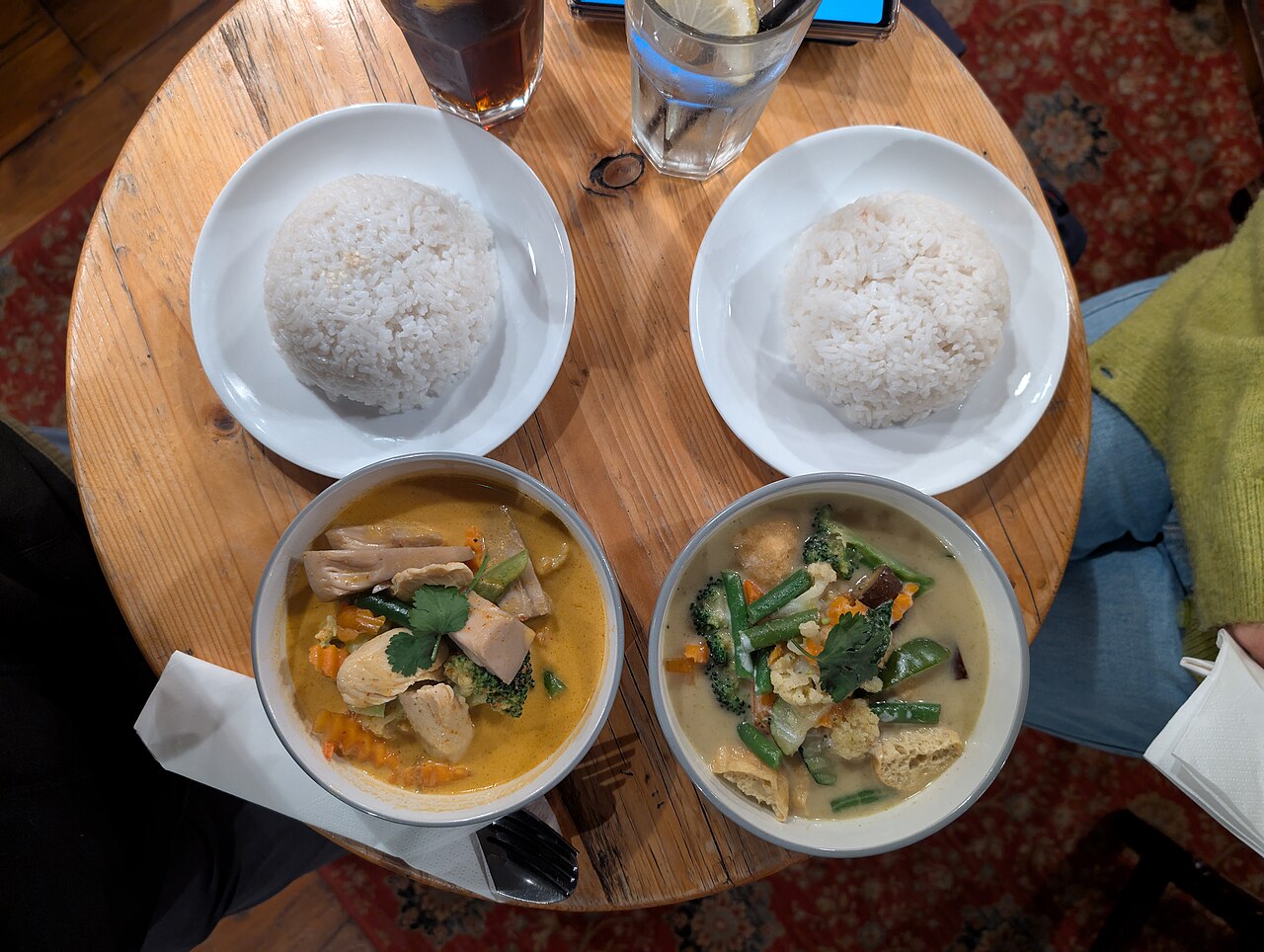
Coconut gives richness, but the paste and herbs provide direction. This chicken version uses a measured amount of purchased paste and adjusts seasoning afterward, because two brands can differ dramatically in salt and heat.
Thai Green Chicken Curry
Planning totals add preparation, cooking and listed waits. Overlapping stages may shorten the schedule; ingredient and equipment differences can lengthen it.
Ingredients
Times and base yield refer to the original recipe. Scaling quantities does not automatically change pan size, temperature or cooking time.
Step-by-step method
The steps describe the base batch (4 servings). The calculator changes the ingredient list only; amounts written in the steps, equipment and timing remain for that base batch.
Step 1
Spoon the thick coconut cream from the can into a pan and cook gently with curry paste until fragrant.
Step 2
Add chicken and stir so the paste coats the surfaces.
Step 3
Pour in remaining coconut milk and water and bring to a gentle simmer.
Step 4
Add eggplant and beans and cook until tender and chicken reaches 74°C / 165°F.
Step 5
Season gradually with fish sauce and palm sugar, considering the salt already in the paste.
Step 6
Tear makrut leaves, stir them in briefly and finish off the heat with Thai basil.
Why this version works
Know whether your coconut milk can separate
Many canned coconut milks have a thick top layer that can be spooned into the pan to fry the paste. Others contain stabilizers and remain evenly mixed. Do not keep cooking a stable emulsion indefinitely while waiting for it to split; the useful goal is fragrant paste without burnt deposits. Use a little of the milk to start, stir frequently and proceed when the raw paste aroma mellows. Choose unsweetened coconut milk, not sweet coconut drink or cream of coconut intended for desserts. Light coconut milk gives a thinner, less rich result.
Keep the curry’s measured seasoning separate until the chicken is ready
Measure the two tablespoons of paste, fish sauce and palm sugar separately rather than pouring them together as one seasoning mixture. Cook the paste with the coconut first, then simmer the 600 g chicken and vegetables. Taste the cooked sauce before adding all the fish sauce, because the paste already contributes salt. Leave basil and torn lime leaves ready for the final stage. This preserves the intended chicken-to-coconut balance while allowing the particular paste to determine the last seasoning adjustment. Product-strength comparisons belong in the Thai pantry guide.
Cut vegetables to fit the chicken timing
Slice thigh meat evenly so the pieces finish within a short simmer. Round Thai eggplants can be quartered, while courgette is a more accessible but softer and less bitter variation. Add sturdy vegetables before quick-softening ones, and trim green beans to manageable lengths. A hard boil reduces the coconut rapidly and can toughen chicken before the vegetables are ready. Use a gentle bubbling sauce and check a thick chicken piece directly. If a vegetable needs longer, remove cooked chicken briefly rather than sacrificing its texture to synchronize the pan.
Finish with leaves, not a large citrus squeeze
Makrut lime leaves perfume the sauce; tear them to release aroma and keep pieces large enough to remove or avoid. Their role is different from sour lime juice. Thai basil contributes an anise-like note and should be folded in off the heat so it stays fragrant. Sweet basil is a recognizable variation but changes the finish. A sauce that tastes heavy may need careful salt adjustment or more aromatic paste rather than automatic lime. The final consistency should pour around jasmine rice, not cling like a reduced butter-based gravy.
Choose vegetable cuts for the same finishing window
Thai eggplant and courgette are offered as alternatives, but they do not necessarily need identical time in the coconut broth. Cut the chosen vegetable into manageable pieces and check it before treating the chicken's doneness as the only endpoint. Separate thicker bean sections from very small vegetable pieces if they would otherwise finish far apart. If the chicken is ready first, avoid boiling it indefinitely to wait for an oversized eggplant chunk. Correcting the cuts before cooking gives more control than increasing heat and reducing the coconut sauce aggressively afterward.
Ingredient choices and substitutions
Choose unsweetened coconut milk and a curry paste with clear ingredients. Thai basil has an anise-like aroma that differs from sweet basil. Makrut lime leaves are aromatic leaves, not a substitute for lime juice.
Fixes for this recipe
| What you notice | Likely reason | What to do |
|---|---|---|
| A sweet coconut sauce with little curry aroma | The paste was weak or its quantity was reduced while sugar remained unchanged. | Cook a little additional paste separately with coconut milk, then incorporate gradually. Do not add raw paste at the table or try to generate aroma with extra fish sauce alone. |
| Chicken is firm while eggplant stays hard | Pieces were uneven or the pan was boiled rapidly. | Remove ready chicken, finish the vegetable gently and return meat just to warm. Next time cut the eggplant smaller or give it a brief head start. |
| An overly thick oily curry | The sauce reduced much longer than needed while waiting for other components. | Add a little hot water or coconut milk, stir gently and recheck seasoning. Stop once ingredients are cooked rather than chasing a thick restaurant-style appearance. |
Recipe-specific questions
Can I make green curry vegetarian with this paste?
Only if the paste and other seasonings are suitable. Many green curry pastes contain shrimp paste. Choose a vegetarian-labeled product, replace fish sauce and use tofu or vegetables with appropriate cooking times rather than simply removing the chicken.
Do I need to peel the Thai eggplants?
Small Thai eggplants are generally used with their skin. Trim the stem and cut evenly. If using a different large eggplant, its bitterness, water content and cooking time may differ, so treat that as an adaptation.
Should green curry be as thick as a cream sauce?
Not for this version. A fluid coconut sauce lets each spoonful mingle with rice and keeps the meal from feeling heavy. If it coats a spoon densely after standing, loosen it before serving and reassess the salt.
Serving and storage
Plain jasmine rice is a useful partner because it absorbs the aromatic liquid. A crisp cucumber side adds freshness without adding another coconut component. Keep extra chile separate if the table has different heat preferences.
Cool curry promptly in shallow portions and refrigerate. Reheat gently so the chicken warms through without prolonged boiling. Vegetables and basil soften on storage, so fresh basil added after reheating improves aroma. Store rice separately and follow the shorter rice cooling and reheating guidance when serving leftovers together.
An AI-assisted editorial guide, not independently kitchen-tested. The photograph is a serving example. How we prepare and correct our guides.
For safe handling, consult FDA guidance. Send recipe corrections by email to ZYS10.