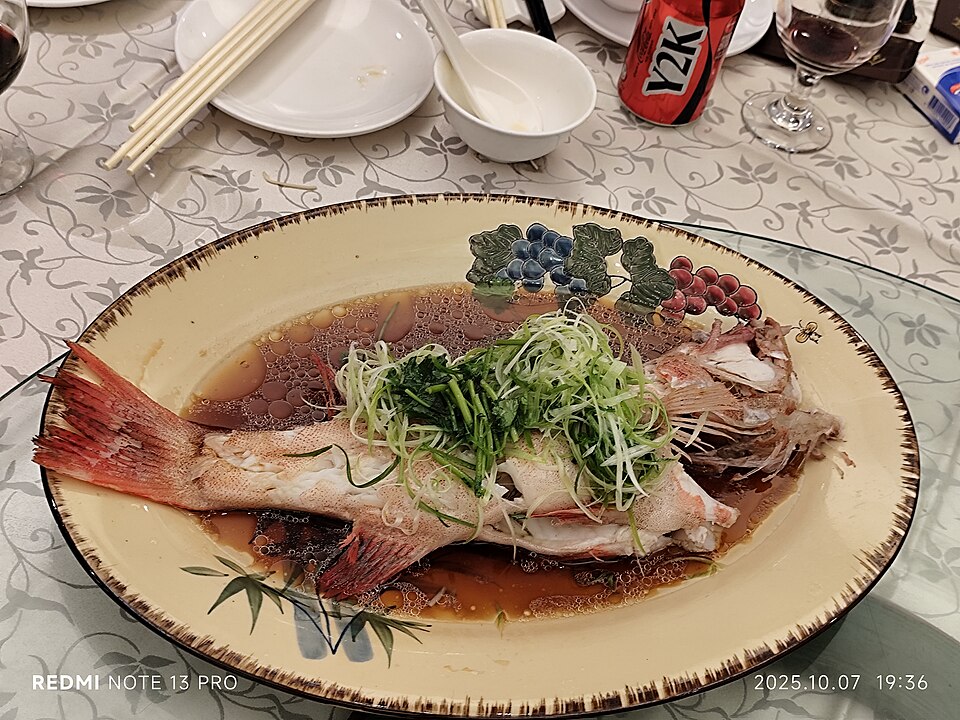
The fish should remain moist beside the backbone, while fresh shredded aromatics release fragrance under a small amount of hot oil. A stable steamer and a plate that can be lifted safely are as important as the ingredient list.
Ginger-Scallion Steamed Fish
Planning totals add preparation, cooking and listed waits. Overlapping stages may shorten the schedule; ingredient and equipment differences can lengthen it.
Ingredients
Times and base yield refer to the original recipe. Scaling quantities does not automatically change pan size, temperature or cooking time.
Step-by-step method
The steps describe the base batch (4 servings). The calculator changes the ingredient list only; amounts written in the steps, equipment and timing remain for that base batch.
Step 1
Check the fish is scaled and cleaned and pat it dry, then make two shallow cuts in the thickest flesh.
Step 2
Lay some ginger and spring onion on a heatproof plate and place fish over them.
Step 3
Steam over actively simmering water for 12–18 minutes, checking the thickest part reaches 63°C / 145°F.
Step 4
Carefully pour away the cloudy steaming liquid without dropping the fish.
Step 5
Warm soy sauce, water and sugar separately and spoon around the fish.
Step 6
Top with fresh ginger and spring onion, then pour carefully heated oil over the aromatics and finish with coriander.
Why this version works
Choose a fish that fits the equipment
An approximately 800-gram cleaned sea bass needs a heatproof plate and steamer wide enough to hold it without bending the fish against the lid. Ask for scaling and gutting, then check the cavity and rinse as needed before drying. Size alone does not determine cooking time: a thick round fish takes longer through the center than a flatter fish of similar weight. A fresh clean smell and firm flesh are useful shopping cues. A fillet can make a practical adaptation, but should use a shorter timing based on thickness rather than the whole-fish estimate.
Arrange aromatics for fragrance and even steam
Place a few ginger and scallion pieces beneath the fish so it is not pressed completely flat against the plate. Make the shallow cuts in thicker flesh as written without slicing all the way to the bone. Bring water to a steady simmer before adding the plate, and keep the level below it. The lid needs to fit well enough to retain steam, but the pot should not boil so violently that water splashes onto the dish. Keep a kettle of hot water ready if the steamer is small and may need topping up.
Check the thickest flesh without overcooking the tail
Begin checking near the lower end of the timing range, lifting the lid away from your face. The thick area behind the head and along the backbone is more informative than the thin tail. Use a thermometer to verify 63°C / 145°F where appropriate, and avoid touching bone with the probe. Opaque flesh that flakes is a helpful observation, but not a reason to keep steaming until every piece looks dry. If the fish is ready, lift it out rather than leaving it over boiling water while making sauce and chopping garnish.
Discard the first liquid and finish with fresh aromatics
The initial steaming liquid can be cloudy and strongly flavored, so pour it away carefully while keeping the fish supported. Warm soy sauce, water and sugar separately, then spoon around the fish rather than drowning its surface. Add fresh fine ginger and scallion shreds before the hot oil. Heat the small oil amount until hot enough to sizzle the garnish, without deliberately creating heavy smoke, and pour cautiously away from hands. This final step fragrances the topping; it does not replace proper steaming or make undercooked fish safe. Serve from a clean warm plate and separate portions thoughtfully around bones.
Prepare the serving dish around the whole fish
Choose a plate that fits the steamer and leaves space to lift it without gripping hot liquid. The whole fish's weight includes bones and other inedible parts, so four servings depend on the rest of the meal rather than representing four large fillets. Plan a vegetable and rice accompaniment if that is how it will be shared. Keep the finishing ginger and spring onion separate from the aromatics used underneath during steaming. Pour away the first liquid carefully, then add the measured clean sauce so its seasoning is not diluted unpredictably.
Ingredient choices and substitutions
Choose fish with a clean smell, firm flesh and clear eyes if buying whole. Ask the fishmonger to scale and gut it. Fish thickness matters more than weight alone when estimating cooking time.
Fixes for this recipe
| What you notice | Likely reason | What to do |
|---|---|---|
| Dry tail meat with a firm center near the head | The fish was unusually thick or checked only at its thinnest point. | Assess the thickest flesh directly and choose a more evenly shaped fish or fillets for easier timing. Do not assume one weight gives an exact universal steam time. |
| Cloudy watery sauce on the serving plate | The initial steaming liquid remained and diluted the finishing sauce. | Pour it away carefully before adding the warm soy mixture. Use a plate with a manageable rim and prepare safe lifting tools before the fish is hot. |
| Garnish smells scorched rather than fresh | Oil was overheated or poured repeatedly over very fine aromatics. | Use a small controlled hot-oil finish and stop once it sizzles. Smoking oil and blackened scallions are not required for fragrance. |
Recipe-specific questions
Can I steam two smaller fish instead of one large bass?
Yes, if the steamer has space around them. Check each fish by thickness and doneness rather than simply halving the time. Crowding plates so steam cannot circulate makes the smaller size less helpful.
Is the ginger under the fish meant to be eaten?
It mainly supports and perfumes the fish during steaming. Tender finely shredded garnish on top is a separate component. Remove coarse pieces where practical and tell diners about bones and any fibrous aromatics left on the plate.
Can I skip the hot-oil finish?
Yes. The result will be lighter and the raw garnish sharper, but the fish can still be enjoyable. Use very fine tender shreds and a carefully balanced warm sauce rather than adding extra soy to replace the missing oil aroma.
Serving and storage
Plain rice and lightly cooked greens let the ginger-scallion finish remain clear. Keep strongly sweet sauces separate, and use clean serving utensils so diners can take fish without repeatedly breaking the whole presentation apart.
Freshly steamed fish is best eaten promptly. Refrigerate leftovers safely in shallow portions, removing bones where practical before storing. Reheat gently until thoroughly hot, understanding that delicate flesh firms with repeated heating. Do not leave the whole cooked fish on a warm table while saving portions for later.
An AI-assisted editorial guide, not independently kitchen-tested. The photograph is a serving example. How we prepare and correct our guides.
For safe handling, consult FDA guidance. Send recipe corrections by email to ZYS10.