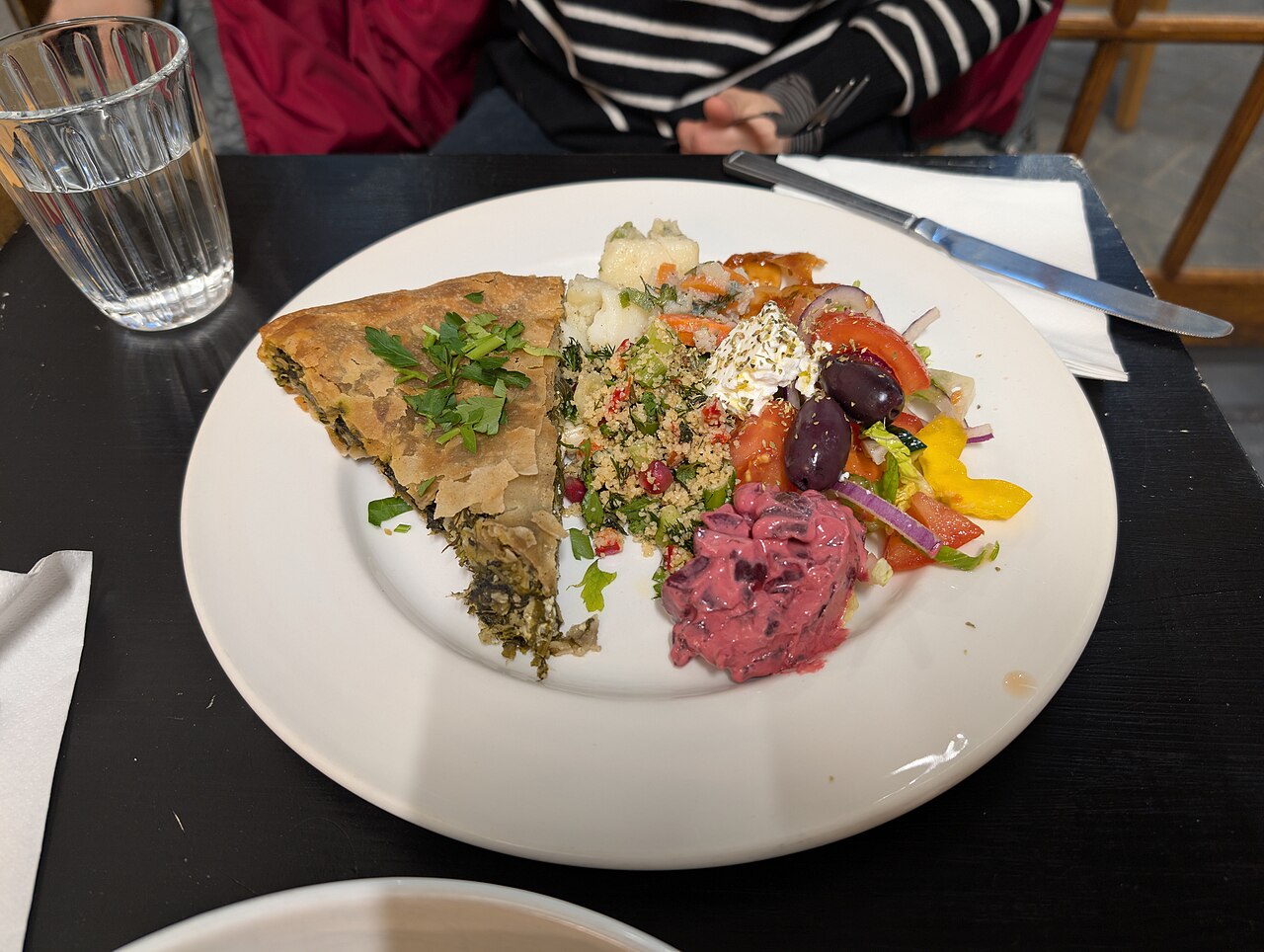
The spinach, feta and dill should remain a soft savory center, while thin oiled sheets provide the contrasting shell. Treat squeezing the spinach and protecting unused filo as the two preparation stages that cannot be rushed.
Spinach & Feta Spanakopita
Plus 15 minutes resting
Planning totals add preparation, cooking and listed waits. Overlapping stages may shorten the schedule; ingredient and equipment differences can lengthen it.
Ingredients
For fractional eggs, beat an extra egg or yolk and measure the required fraction.
Times and base yield refer to the original recipe. Scaling quantities does not automatically change pan size, temperature or cooking time.
Step-by-step method
The steps describe the base batch (4 servings). The calculator changes the ingredient list only; amounts written in the steps, equipment and timing remain for that base batch.
Step 1
Wilt spinach briefly in a pan, cool and squeeze out as much liquid as possible.
Step 2
Chop spinach and mix with crumbled feta, spring onions, beaten eggs, dill and pepper.
Step 3
Brush a baking dish with oil and layer half the filo sheets, brushing lightly between layers.
Step 4
Spread filling evenly without packing it densely.
Step 5
Cover with remaining oiled filo, tuck in edges and score the top into portions.
Step 6
Bake at 180°C / 356°F for 40–50 minutes until deep golden and the egg filling reaches 71°C / 160°F, then rest for 15 minutes.
Why this version works
Remove spinach water before adding the cheese
Wilt the 450 grams of fresh spinach just until collapsed, then let it cool enough to handle. Squeeze firmly in a clean cloth or in small handfuls until little liquid escapes. Merely draining in a sieve leaves much more water than the pastry can tolerate. Chop the squeezed leaves so long strands do not pull filling from a slice. Frozen spinach can work, but its starting weight and retained water differ; thaw and squeeze thoroughly rather than assuming frozen block weight equals prepared fresh leaves. The filling should look moist from ingredients, not sit in a puddle of green water.
Season through feta, herbs and onion
The 200 grams of feta contribute salt and tang, so taste a piece before adding any extra seasoning to the filling. Break it into small uneven pieces rather than blending into a uniform paste. Spring onions supply fresh allium flavor without a long onion-cooking stage, and dill gives the filling a clear aromatic identity. Dry herbs after washing and cut them finely enough to distribute. Eggs bind the mixture when baked; they do not remove excess spinach water. Keep the filling cool before spreading it over filo, since a warm wet mixture softens delicate sheets quickly during assembly.
Manage filo as separate thin sheets
A modest dish around 20 by 25 centimeters, or a comparably sized round tin, helps the listed filling form a coherent layer. Filo package dimensions vary, so trim or fold sheets to fit without creating a massive dough wad in one corner. Keep unused sheets under a clean cover that prevents drying without soaking them. Brush a thin oil film between layers; every sheet need not be saturated. Torn lower sheets can be patched and overlapped, reserving more intact ones for the top. Work steadily rather than trying to roll or knead filo as if it were ordinary pastry dough.
Bake the underside as well as the visible top
Spread filling evenly without packing it hard, then tuck and oil the upper layers lightly. Score the top into portions before baking so crisp sheets are easier to cut later. A metal tin generally transfers bottom heat differently from a thick ceramic dish, so use color and structure as well as minutes. The top should be deep golden and the lower pastry should no longer look raw and translucent. If the top browns early, cover loosely and continue. Rest for about fifteen minutes so steam can escape and the filling settles before the final cuts are completed.
Count filo layers before filling the dish
Check how the sheets fit the selected baking dish and divide them into lower and upper groups before brushing oil. Very large sheets can be folded neatly, but a dense wad of folded corners bakes differently from thin distributed layers. Spread the spinach mixture across the base without pressing out all its air, then leave the top layers recognizable. Keep unused sheets covered while handling the current one. If the oil allowance seems to disappear quickly, brush more thinly rather than soaking each sheet to make it visibly glossy everywhere.
Ingredient choices and substitutions
Fresh or frozen spinach can work, but both must be squeezed thoroughly. Keep filo covered with a lightly damp towel while assembling. Choose feta that tastes tangy and not excessively salty.
Fixes for this recipe
| What you notice | Likely reason | What to do |
|---|---|---|
| The bottom pastry is soggy. | Spinach retained water, filling was warm or the underside needed more baking. | Squeeze the greens thoroughly and cool the filling before assembly. Bake long enough for the lower sheets, protecting the top if necessary. |
| Filo tears into brittle fragments while assembling. | Unused sheets dried in open air. | Keep the stack covered and expose only a few sheets at a time. Patch tears in lower layers rather than discarding every imperfect sheet. |
| The filling tastes salty and dull rather than fresh. | Feta supplied more salt than expected while the herbs were weak or wet. | Taste feta before seasoning and use aromatic fresh dill. Extra lemon can brighten a serving, but it does not remove excess salt from the filling. |
Recipe-specific questions
Can I use puff pastry instead of filo?
It makes a different spinach pie with a thicker buttery crust and different baking needs. The same filling may be useful, but the filo layering instructions and texture claims would no longer apply.
Is olive oil required between every sheet?
A light brushing on the layers helps separation, but pooling oil is unnecessary. Distribute the measured amount thoughtfully and avoid leaving the top completely dry while saturating the bottom.
Can I bake individual triangles instead?
Yes as a separate shaping approach. Keep filling modest and seal folds carefully. Smaller parcels bake differently from a single pie, so check pastry color and filling doneness rather than reusing the full tray timing.
Serving and storage
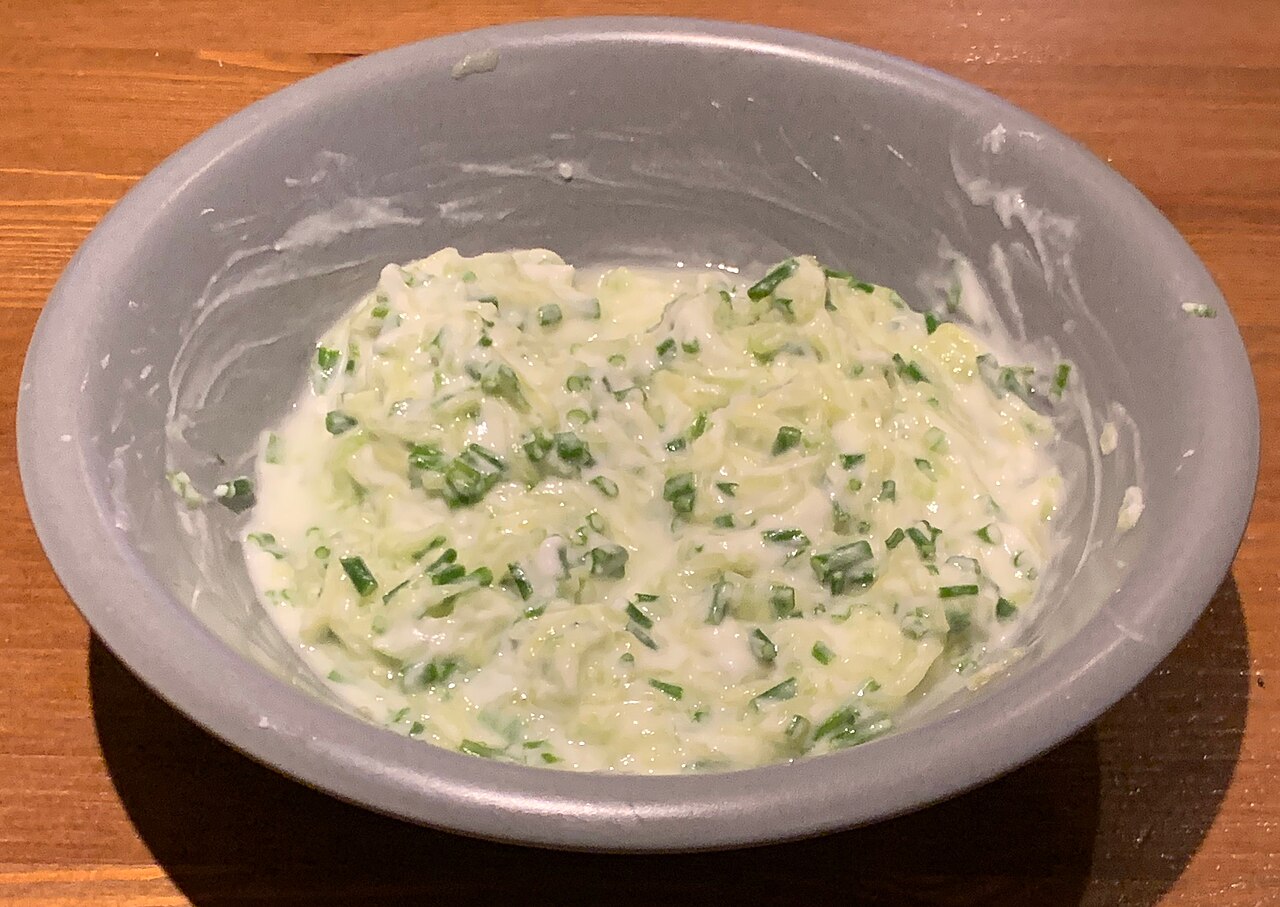
Serve with ripe tomatoes or a simple cucumber salad. Tzatziki can be offered in a small amount, but avoid covering the crisp top with a wet sauce before eating.
Refrigerate cooled portions promptly. Reheat on a tray in the oven until thoroughly hot to restore some filo crispness; a covered microwave reheat makes a softer pastry. For advance preparation, keep filling and unopened filo separate until assembly whenever practical.
An AI-assisted editorial guide, not independently kitchen-tested. The photograph is a serving example. How we prepare and correct our guides.
For safe handling, consult FDA guidance. Send recipe corrections by email to ZYS10.