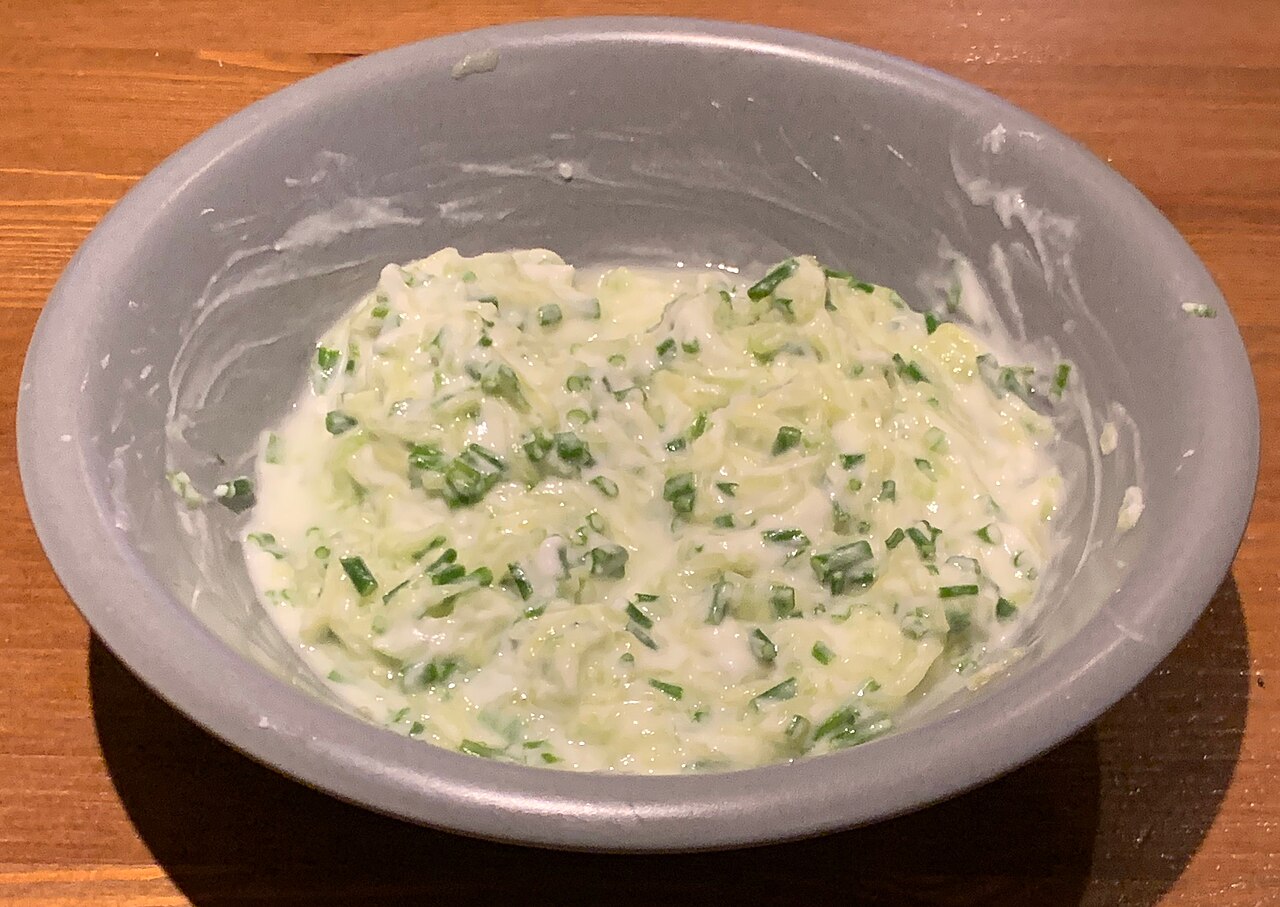
The rest of the recipe is a balance of garlic, acidity and olive oil, all of which become clearer after a short chill. Start with properly strained unsweetened yogurt rather than trying to thicken a thin sweetened product afterward.
Thick Cucumber Tzatziki
Plus draining and chilling
Planning totals add preparation, cooking and listed waits. Overlapping stages may shorten the schedule; ingredient and equipment differences can lengthen it.
Ingredients
Times and base yield refer to the original recipe. Scaling quantities does not automatically change pan size, temperature or cooking time.
Step-by-step method
The steps describe the base batch (4 servings). The calculator changes the ingredient list only; amounts written in the steps, equipment and timing remain for that base batch.
Step 1
Grate cucumber on the coarse side of a grater and mix with a small pinch of salt.
Step 2
Rest for 10 minutes and squeeze firmly in a clean cloth.
Step 3
Stir yogurt with garlic, olive oil, lemon and remaining salt.
Step 4
Fold in the squeezed cucumber and dill.
Step 5
Refrigerate for 30 minutes so the flavors settle.
Step 6
Taste again before serving and add only a little extra lemon if needed.
Why this version works
Choose yogurt for its structure
The 400 grams of Greek-style yogurt should be thick enough to hold a soft mound on a spoon. Products labeled Greek vary, so judge texture and check that they are plain and unsweetened. A thin natural yogurt can be strained in a lined sieve in the refrigerator, but that takes additional time and reduces the final weight. Measure the strained amount rather than starting with 400 grams of loose yogurt and assuming nothing changes. Full-fat yogurt gives a rounded mouthfeel; lower-fat versions can work but taste sharper and may release more whey depending on the product.
Squeeze grated cucumber in a controlled stage
Grate cucumber coarsely so there are small identifiable strands rather than a watery puree. If it contains a large soft seed core, remove that before grating. A little salt draws out moisture during the ten-minute rest, after which firm squeezing removes much more water than a casual sieve drain. Use a clean cloth or small handfuls and stop when the strands feel moist but no longer drip readily. The cucumber's starting size varies, so focus on the prepared texture rather than insisting every fruit contains exactly the same amount of water. Keep the squeezed cucumber cool while mixing the base.
Add garlic with the refrigerator rest in mind
One finely grated clove can be quite noticeable because it is not cooked. Mix thoroughly into the yogurt so no bite contains a large raw piece. Garlic character varies with age and variety, and its impression spreads during the rest. If serving people sensitive to its sharpness, begin with part of the measured clove and taste after chilling before adding more. Lemon provides freshness but also more liquid, so use the tablespoon as a measured start rather than squeezing a whole large lemon automatically. Dill should be washed, dried and chopped finely enough to distribute without long stringy stems.
Finish for a spoonable dip, not a loose dressing
Fold cucumber into the yogurt mixture rather than beating vigorously, then refrigerate for thirty minutes. Inspect any collected whey before serving: a small amount can be stirred back in, while substantial separation suggests the yogurt or cucumber needed more draining. Olive oil rounds the acidity and can be partly reserved for a small surface drizzle, but a deep pool is unnecessary. Taste a spoonful alongside the intended bread or grilled food because the dip alone will seem more intense. Tzatziki is cold sauce; warming it aggressively changes its texture and fresh garlic-herb character.
Judge the sauce with its intended accompaniment
A spoonful of cold yogurt dip can seem sharper or more garlicky alone than beside warm pita or chicken. Taste that complete combination before adding another round of lemon, oil or salt. The drained cucumber also carries some seasoning, so stir it through before the final adjustment. If a small amount of whey appears during the refrigerator rest, assess whether a gentle stir gives the intended body before trying a structural change. Adding flour or starch to a cold bowl is not the same as choosing properly strained yogurt at the beginning.
Ingredient choices and substitutions
Choose thick strained yogurt without sweeteners. A firm cucumber with small seeds gives less watery pulp. Fresh garlic should be used sparingly because it is not cooked or softened by heat.
Fixes for this recipe
| What you notice | Likely reason | What to do |
|---|---|---|
| The dip becomes runny after chilling. | Cucumber was insufficiently squeezed or yogurt was not truly strained. | Use a thicker yogurt and remove cucumber liquid before combining next time. Drain a loose current batch briefly in the refrigerator if practical; more lemon will only add water. |
| Garlic dominates every bite. | The clove was large or extra garlic was added before the flavors had time to spread. | Dilute with more plain thick yogurt and squeezed cucumber. Sugar does not remove raw garlic intensity, so begin more cautiously in the next batch. |
| The dip tastes sour without enough freshness. | A sharp yogurt and excessive lemon overwhelmed the cucumber and dill. | Add more plain yogurt or cucumber if available and refresh the dill. Taste after resting before adding additional acid. |
Recipe-specific questions
Can I use ordinary natural yogurt?
Yes, if you strain it sufficiently in the refrigerator and then weigh the amount needed. Using it unstrained gives a thinner sauce and should not be promised as the same thick dip.
Does cucumber need peeling?
Only if the skin is tough, bitter or waxy. Tender skin can stay and adds small green flecks. Removing a watery seed core is often more important to texture than removing every strip of peel.
Can I make tzatziki without dairy?
A thick unsweetened plant-based yogurt can make an adapted dip, but acidity, fat and stabilizers vary. Taste carefully and check the product's texture rather than assuming every alternative behaves like strained dairy yogurt.
Serving and storage
Serve with souvlaki, roasted vegetables, bread or crisp cucumber sticks. Use a thin layer inside wraps and offer more separately so the bread does not become saturated.
Keep covered in the refrigerator and serve small portions at a time. Store away from strongly scented foods because yogurt readily picks up refrigerator odors. Stir gently before serving and keep clean utensils in the bowl rather than repeatedly dipping tools used on raw meat.
An AI-assisted editorial guide, not independently kitchen-tested. The photograph is a serving example. How we prepare and correct our guides.
For safe handling, consult FDA guidance. Send recipe corrections by email to ZYS10.