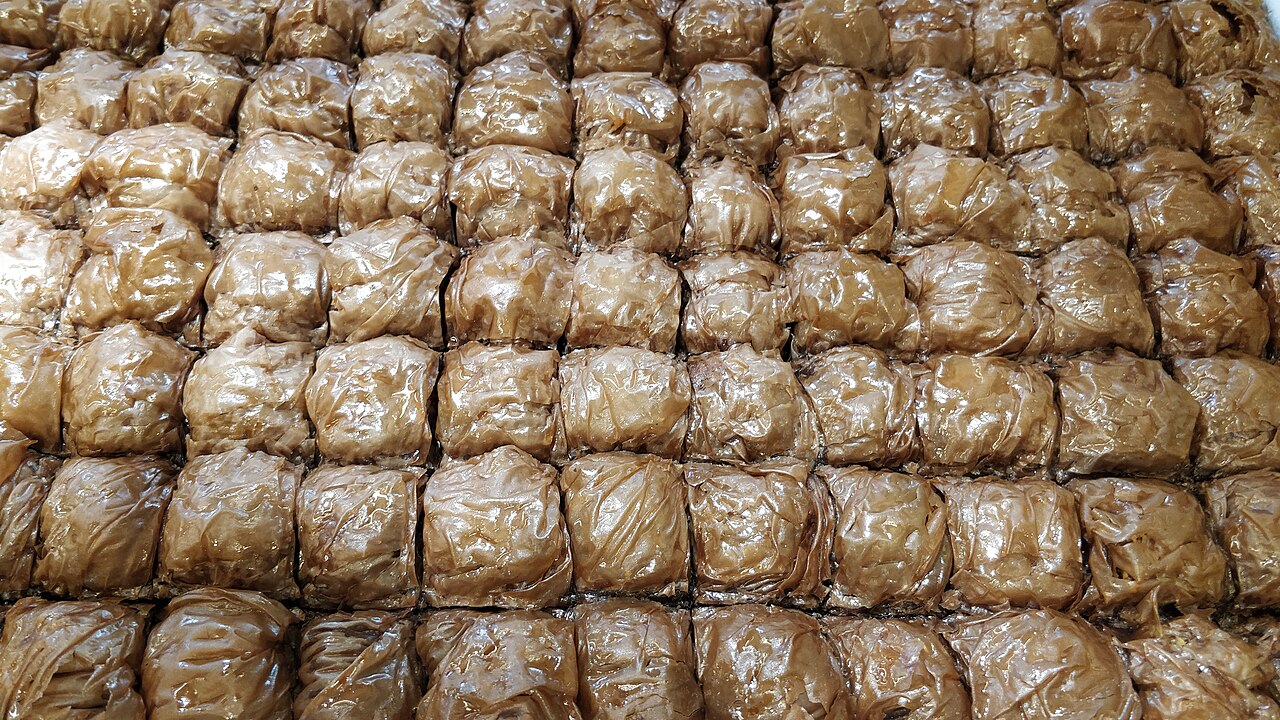
Crisp filo must be cooked through, not merely colored on top, and the nuts should be chopped finely enough to support neat layers. This quantity is best cut into many small pieces rather than treated as four large dessert portions.
Honey Walnut Baklava
Plus several hours for syrup absorption
Planning totals add preparation, cooking and listed waits. Overlapping stages may shorten the schedule; ingredient and equipment differences can lengthen it.
Ingredients
Times and base yield refer to the original recipe. Scaling quantities does not automatically change pan size, temperature or cooking time.
Step-by-step method
The steps describe the base batch (16 small pieces). The calculator changes the ingredient list only; amounts written in the steps, equipment and timing remain for that base batch.
Step 1
Simmer sugar, water and lemon zest for 5 minutes, stir in honey and lemon juice and let the syrup cool.
Step 2
Mix walnuts with cinnamon and brush a baking dish with butter.
Step 3
Layer several filo sheets with thin butter coatings, then add a thin walnut layer.
Step 4
Repeat layers, ending with several buttered sheets and score into diamonds before baking.
Step 5
Bake at 170°C / 338°F for 45–50 minutes until deep golden and crisp through the layers.
Step 6
Pour cool syrup evenly over hot pastry and leave uncovered for several hours to absorb.
Why this version works
Choose fresh walnuts and a restrained honey
Taste a walnut before chopping the 300 grams. Nuts contain oils that can become stale, and syrup does not hide a rancid flavor. Chop finely enough to spread in thin even layers while leaving small pieces rather than grinding everything into nut flour. Cinnamon should support the walnuts, not dominate every bite. Honey varieties differ in strength; a very assertive dark honey can overwhelm the pastry, while a milder one keeps the nut flavor clear. Do not add several other spices automatically. The combination is already rich, sweet and aromatic when the main ingredients are in good condition.
Layer filo with thin butter films
Filo sheet size varies by brand, so choose a tin that fits the available sheets with sensible trimming or folding rather than a huge dish that forces extremely thin coverage. A medium rectangular tin around 20 by 25 centimeters is a practical starting point for 250 grams of filo. Keep unused sheets covered to prevent brittle drying. Brush butter lightly between layers, reaching corners without making deep pools. Build several bottom sheets before the first thin walnut layer, repeat evenly and reserve enough intact sheets for a tidy top. Torn sheets can be patched in inner layers without wasting the whole sheet.
Score before baking and inspect the lower layers
Cut the assembled pastry into diamonds or small squares before it becomes brittle. Use a sharp knife and controlled pressure so layers are divided without dragging the filling into piles. The top is easy to brown while the lower sheets remain pale, particularly in a thick ceramic dish, so allow sufficient moderate baking. Look for deep golden pastry and a cooked layered structure at the edge, not just one toasted surface. If the top colors early, cover loosely rather than stopping the bake prematurely. Syrup cannot turn underbaked dough into crisp pastry; the structure must be established first.
Use the hot-pastry and cool-syrup sequence consistently
This version prepares the syrup first and lets it cool while the pastry bakes. Pour the measured cool syrup evenly over hot baked baklava, distributing it across the cut lines rather than flooding one corner. The contrasting temperatures are part of this particular method; other recipes may use different syrup timing and ratios, so avoid combining instructions indiscriminately. Leave uncovered for several hours so absorption occurs without trapping steam over the top. Do not repeatedly add more syrup because the first minute looks uneven. Let time distribute it through the layers, then finish the scored cuts carefully before serving.
Divide nuts before the filo layers become hidden
Estimate the number of nut layers from the available filo and pan size, then split the walnuts accordingly. This prevents the first layer becoming a thick nut slab while later layers contain almost none. Keep a separate butter portion for the final top sheets and corners. Score portions through the layers before baking, using a size suitable for a small rich sweet rather than four oversized wedges. The syrup is an intentional liquid addition after baking; do not add extra simply because a freshly poured patch has not yet absorbed during the first minute.
Ingredient choices and substitutions
Use fresh walnuts without a rancid smell and keep filo covered while working. A moderate honey lets the nuts remain noticeable. Finely chopped nuts fill the layers more evenly than very large pieces.
Fixes for this recipe
| What you notice | Likely reason | What to do |
|---|---|---|
| The bottom is gummy while the top looks golden. | Lower filo layers were underbaked or too much syrup was added. | Bake the pastry thoroughly before syruping and use the measured quantity. More cooling may help absorption, but it cannot create a crisp structure in raw lower dough. |
| The top becomes soft during the rest. | Warm baklava was covered tightly and trapped steam. | Leave it uncovered during absorption in a clean protected area. Add a loose cover only once it has cooled, avoiding a damp airtight tent over hot pastry. |
| Slices shatter and lose their filling. | The pastry was not scored before baking or nuts were left in very large pieces. | Score the raw assembly with a sharp knife and chop nuts more evenly. Finish the same cut lines after absorption instead of sawing randomly through the crisp surface. |
Recipe-specific questions
Can pistachios replace walnuts?
Yes, but the flavor and cost change and the cinnamon may need reconsideration. Use unsalted nuts and retain a similar finely chopped texture. This becomes a pistachio variation rather than the same walnut recipe.
Can I reduce the syrup dramatically?
It changes how the layers bind and keep, not only sweetness. A smaller piece is a straightforward way to serve less sweetness. If reformulating, expect a different texture rather than assuming the original result remains unchanged.
Why should baklava rest for several hours?
Syrup needs time to move through the cut layers and the pastry needs to cool. Cutting and serving immediately gives a less settled distribution and can make the first portion seem dry while syrup collects elsewhere.
Serving and storage
Serve one or two small pieces with unsweetened tea or coffee. Fresh tart fruit can add contrast, but a wet sauce poured over the top quickly removes the delicate filo crunch.
Once fully cooled, cover and store according to the ingredients and your local food-storage guidance, avoiding a warm damp environment that softens the pastry. Use clean utensils and keep away from strong odors. For longer storage, freeze well-wrapped portions and expect some loss of the first crispness after thawing.
An AI-assisted editorial guide, not independently kitchen-tested. The photograph is a serving example. How we prepare and correct our guides.
For safe handling, consult FDA guidance. Send recipe corrections by email to ZYS10.