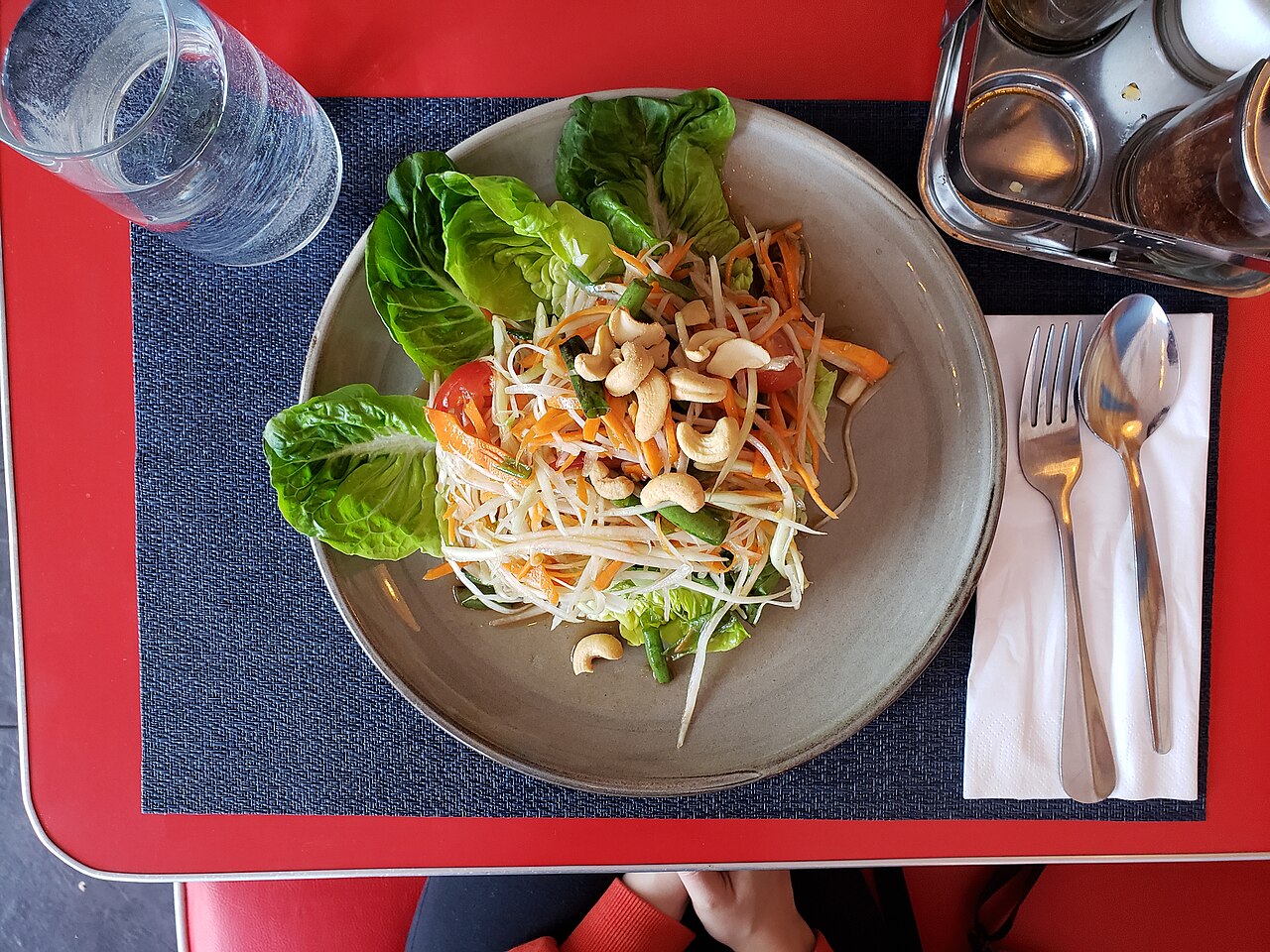
The strands should stay crunchy while becoming lightly coated in the tomato-lime juices. A mortar is useful, but force is not the goal: repeated heavy pounding turns a crisp salad into wet fragments before it reaches the table.
Crunchy Green Papaya Salad
Planning totals add preparation, cooking and listed waits. Overlapping stages may shorten the schedule; ingredient and equipment differences can lengthen it.
Ingredients
Times and base yield refer to the original recipe. Scaling quantities does not automatically change pan size, temperature or cooking time.
Step-by-step method
The steps describe the base batch (4 servings). The calculator changes the ingredient list only; amounts written in the steps, equipment and timing remain for that base batch.
Step 1
Dissolve palm sugar with lime juice and fish sauce, using a teaspoon of warm water if needed.
Step 2
Pound garlic and chile lightly in a mortar, then bruise the sliced beans.
Step 3
Add tomatoes and press just enough to release some juice.
Step 4
Add green papaya and dressing, tossing and gently pounding to help the flavor coat the shreds.
Step 5
Fold in peanuts and dried shrimp if using.
Step 6
Taste for a balance of sour, salty and sweet and serve without a long rest.
Why this version works
Start with genuinely green papaya
The 400 grams of shreds should come from firm unripe papaya with pale flesh, not a ripe orange fruit. Peel, remove the seeds and shred into long thin pieces that bend while retaining bite. A julienne peeler makes this manageable without advanced knife technique. Rinse if needed and drain very well; surface water dilutes the dressing. Shredded carrot or deseeded cucumber can create a salad inspired by the same seasoning, but their sweetness and water release differ. Do not expect a ripe papaya or a wet cucumber substitute to behave like the intended neutral crunchy base.
Dissolve palm sugar before the salad enters
Palm sugar can be firm enough that a casual stir leaves chunks at the bottom of the bowl. Dissolve it with lime juice and fish sauce, adding only a little warm water if necessary. Taste the mixture in a small amount rather than swallowing a concentrated spoonful. The ratio needs adjustment if lime acidity or fish sauce salt differs. The dressing should become lively against papaya, which dilutes its strength. If using a liquid palm-sugar syrup, account for its extra water instead of measuring it as though it were a dry solid.
Bruise ingredients in a useful order
Garlic and chile can take the first light pounding. Long beans need enough bruising to make their texture more approachable, but should retain pieces rather than become a paste. Tomatoes then release some juice, followed by papaya and dressing. Use one hand to lift and turn the mixture with a spoon while the pestle presses gently, so the salad is dressed evenly without repeated blows to the same area. A large mixing bowl and a sturdy spoon can approximate this action when no mortar is available, though the texture will differ.
Add crunchy and optional ingredients deliberately
Peanuts belong near serving so they stay crisp. Dried shrimp add a salty marine note, so taste the dressing before adding the full optional quantity if the product is strongly seasoned. A vegetarian variation needs both the shrimp omitted and fish sauce replaced; simply removing visible seafood does not make the dressing vegetarian. The finished salad should have a little flavorful juice, not a deep pool. Serve as soon as it is mixed, because salt and acid continue pulling moisture from the vegetables and gradually soften the strands.
Use the dressing gradually when the papaya yield changes
The papaya quantity refers to prepared shreds, not a whole fruit with skin and seeds. Weigh that usable portion before committing all the dressing. A smaller bowlful should not automatically receive the full fish sauce and lime allowance. Add dressing in stages, lifting from the bottom so you can see whether liquid is collecting beneath the shreds. The tomatoes also release juice during gentle pounding. Peanuts provide contrast at the end; crushing every nut into the dressing produces a different, more paste-like coating rather than the intended mixture of shreds and crisp pieces.
Ingredient choices and substitutions
Use unripe green papaya with firm pale flesh, not sweet orange ripe papaya. Long beans should snap cleanly. Roasted unsalted peanuts make it easier to control the final seasoning.
Fixes for this recipe
| What you notice | Likely reason | What to do |
|---|---|---|
| Papaya becomes limp and the bowl fills with liquid | The salad was pounded too heavily or stood dressed for too long. | Drain excess liquid only if necessary and serve promptly. Next time dry the shreds well, mix close to eating and use lifting motions instead of continuous forceful pounding. |
| Strong salty bites alternate with bland strands | Palm sugar or seasonings did not dissolve and distribute evenly. | Prepare a fully mixed dressing first, then turn the papaya thoroughly through it. Do not pour an additional concentrated sauce over the top without folding it through. |
| A substitute vegetable makes the salad watery | Cucumber or another high-water ingredient replaced green papaya without preparation changes. | Remove watery seeds, drain the shreds and use less liquid dressing initially. Describe the result as a variation and assemble just before serving. |
Recipe-specific questions
Can I make som tam without a large mortar?
Yes. Crush garlic and chile separately, then use a broad bowl and sturdy spoon to press beans and tomatoes while folding the papaya through the dressing. The bruising is less pronounced but the salad can still be balanced and crisp.
How far ahead can green papaya be shredded?
It can be prepared ahead and kept chilled, covered and separate from dressing. Dry it before mixing if condensation collects. Add tomato, peanuts and the final seasoning near the meal rather than storing a fully dressed bowl for hours.
What changes if I leave out dried shrimp?
The salad loses a salty seafood accent but remains coherent. Reassess fish sauce after mixing rather than automatically replacing every gram of shrimp with more sauce. For a vegetarian version, check every prepared seasoning as well.
Serving and storage
Sticky rice and simply grilled food provide a neutral, comforting contrast to the sharp salad. Keep accompaniments less acidic, and serve modest initial portions so diners can adjust chile without committing the whole plate.
Store undressed papaya, dressing and peanuts separately in the refrigerator where appropriate. A finished salad is best eaten promptly; refrigeration preserves safety but not its original crunch. Do not add yesterday’s watery dressing to a new dry batch without tasting, because vegetable juices will have changed its concentration.
An AI-assisted editorial guide, not independently kitchen-tested. The photograph is a serving example. How we prepare and correct our guides.
For safe handling, consult FDA guidance. Send recipe corrections by email to ZYS10.