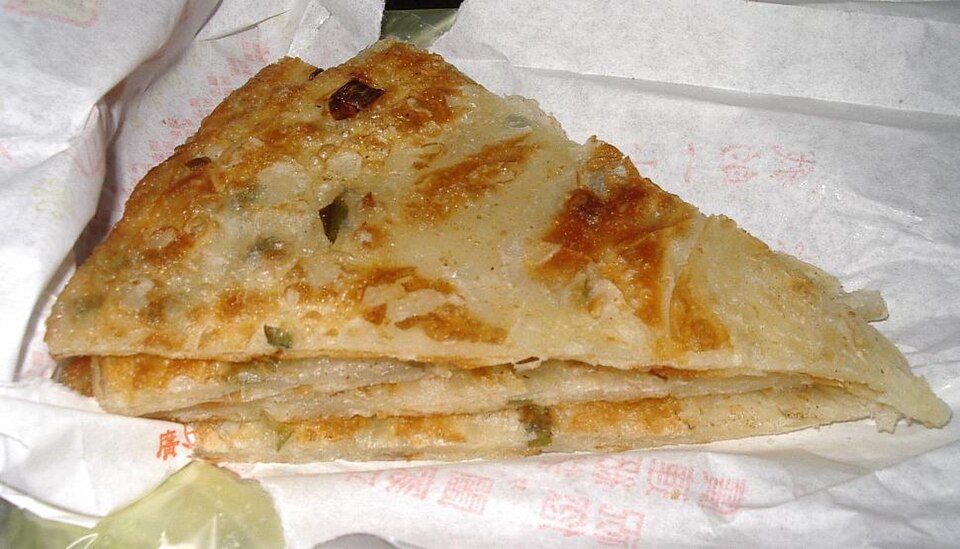
Rolling a thin sheet into a log and then a coil creates layers separated by oil paste. The dough needs enough rest to stretch, while the final round needs moderate heat to cook through without burning its scallion-filled surfaces.
Flaky Scallion Pancakes
Plus dough resting
Planning totals add preparation, cooking and listed waits. Overlapping stages may shorten the schedule; ingredient and equipment differences can lengthen it.
Ingredients
Times and base yield refer to the original recipe. Scaling quantities does not automatically change pan size, temperature or cooking time.
Step-by-step method
The steps describe the base batch (4 servings). The calculator changes the ingredient list only; amounts written in the steps, equipment and timing remain for that base batch.
Step 1
Mix flour with hot water gradually and knead once cool enough to handle into a soft dough.
Step 2
Cover and rest for 30 minutes, then divide into four pieces.
Step 3
Mix two tablespoons of oil with extra flour and salt to make a thin paste.
Step 4
Roll each piece thinly, brush with paste, scatter spring onions and roll into a log.
Step 5
Coil the log, rest for 10 minutes and flatten gently into a round pancake.
Step 6
Pan-fry the four pancakes in the remaining 2 tablespoons oil, dividing it between batches, until both sides are golden and the layers are cooked through. Mix the listed soy sauce and rice vinegar in a small bowl and serve as a dipping sauce.
Why this version works
Make a soft dough that can rest into shape
The 350 grams of plain flour receive hot water gradually. Stir first with a spoon or chopsticks and wait until safe to touch before kneading. Hot water changes how the flour handles, producing a dough that can roll without the strong elasticity of a bread dough. It should be soft and cohesive, not a wet batter. Keep covered for the full thirty-minute rest so the flour hydrates and the surface does not crust. If it feels slightly rough at first, give the rest time to work before adding extra flour or prolonged vigorous kneading.
Use a thin oil paste between the layers
Two tablespoons of oil mixed with the extra flour and salt should make a spreadable coating, not a dry crumb. Apply a thin even layer over each rolled sheet, reaching near the edges without leaving a heavy pool. This barrier helps layers remain distinct when the dough is rolled and cooked. Plain oil alone is a possible variation, but the flour paste stays distributed more evenly. The scallions should be finely sliced and dry after washing. Large hard pieces puncture the dough, while a wet handful introduces steam and makes rolling more awkward.
Roll, coil and rest without crushing the structure
Roll the sheet into a log from one edge, keeping it reasonably even, then coil into a loose spiral. Tuck the end under and allow the stated short rest before flattening. If the coil resists, more time is more effective than force. Roll with light pressure from the center outward so the final pancake is an even thickness. Do not chase a paper-thin round after lamination; excessive pressure merges the layers and pushes scallions through the surface. Four medium pancakes are easier to control in a home skillet than one very large fragile disc.
Cook the inside while building the crust
Heat a little oil in a heavy skillet over medium heat and add one pancake at a time. The underside should color gradually while the interior dough cooks. Turn when the first side has a stable golden surface, then continue until both sides show crisp patches. A very hot pan can blacken exposed scallions before the center sets. If needed, lower heat and give another short turn rather than removing a raw-centered round because it looks attractive outside. Rest briefly on a rack, then cut into wedges. Soy-vinegar dip belongs alongside, not poured over the whole crisp pancake.
Keep the rolling surface and the sealing edge different
A light flour dusting helps the dough move across the worktop, but a heavy dry coating at the final seam prevents the coiled roll from joining cleanly. Brush the oil-flour paste thinly, scatter the spring onions without large wet clusters and leave a small clean edge for closing. If a coil resists flattening, rest it covered before pressing harder. A thin torn patch can release onion into the pan, while a very thick center remains doughy beneath browned outer layers. Use even thickness as the comparison between the four rounds.
Ingredient choices and substitutions
Use plain flour rather than very strong bread flour for easier rolling. Spring onion greens give flavor without too much hard white stalk. Neutral oil lets the onion aroma remain clear.
Fixes for this recipe
| What you notice | Likely reason | What to do |
|---|---|---|
| The pancake springs back during final rolling | The coiled dough has not relaxed after shaping. | Cover and rest a little longer before using light pressure again. Do not compensate with a large amount of flour, which makes the final layers heavier. |
| Crisp dark outside with chewy raw dough inside | The round is too thick for the pan heat. | Lower heat and continue turning until the middle cooks. Roll the next pancake more evenly and avoid a bulky central coil while shaping. |
| Little separation between cooked layers | The oil paste was patchy or the final rolling compressed the coil too firmly. | Spread a thin continuous barrier and use a gentle final roll. Distinct layers require the shaping sequence, not simply more frying oil around the outside. |
Recipe-specific questions
Can I make scallion pancakes with a liquid batter?
That produces a different scallion pancake style. This version relies on a kneaded dough and rolled layers, so a batter cannot use the same folding method or achieve the same flaky structure.
Which part of the spring onion should I use?
Tender green sections are easiest to distribute without puncturing the thin dough. A little finely sliced pale section is possible, but coarse hard white pieces make rolling and even cooking less reliable.
Can the shaped pancakes be frozen before cooking?
Yes. Separate flat uncooked rounds with baking paper and freeze so they do not stick together. Cook from frozen over controlled medium heat, allowing extra time for the center and checking it rather than only the surface color.
Serving and storage
Serve wedges with a small soy-vinegar dip and a light soup or vegetable dish. Keep the dipping portion modest so the layered bread can be tasted rather than saturated before eating.
Cool cooked pancakes on a rack before refrigerating so condensation does not soften them immediately. Reheat in a lightly oiled skillet or uncovered oven to recover some crispness. A microwave warms them but gives a softer chewy result, making pan reheating more suitable when texture matters.
An AI-assisted editorial guide, not independently kitchen-tested. The photograph is a serving example. How we prepare and correct our guides.
For safe handling, consult FDA guidance. Send recipe corrections by email to ZYS10.