The batter only needs to hold the vegetables together. A moderate pan temperature lets the pork and center cook while the outside develops color, and smaller rounds make the first attempt much easier to turn.
Cabbage Okonomiyaki
Planning totals add preparation, cooking and listed waits. Overlapping stages may shorten the schedule; ingredient and equipment differences can lengthen it.
Ingredients
For fractional eggs, beat an extra egg or yolk and measure the required fraction.
Times and base yield refer to the original recipe. Scaling quantities does not automatically change pan size, temperature or cooking time.
Step-by-step method
The steps describe the base batch (4 servings). The calculator changes the ingredient list only; amounts written in the steps, equipment and timing remain for that base batch.
Step 1
Whisk flour, dashi and eggs until just combined, then fold in cabbage and spring onions.
Step 2
Heat a lightly oiled skillet over medium heat and spoon in half the mixture as a thick round.
Step 3
Lay half the pork slices across the top and cook for 5–6 minutes until the underside sets.
Step 4
Turn carefully using two spatulas and cover for 4–5 minutes to cook the cabbage and pork.
Step 5
Uncover, turn once more if needed and check the pork is fully cooked.
Step 6
Repeat with the remaining batter and finish with a thin layer of sauce and mayonnaise.
Why this version works
Cut cabbage to support the structure
Slice the cabbage finely enough that the strips bend and interlock rather than forming long stiff splinters. Thick core pieces need especially fine cutting or removal. The 300 g amount should dominate the 120 g flour mixture visually. Dry the cabbage after washing so it does not thin the batter unexpectedly. If the bowl contains a puddle beneath the vegetables after mixing, fold gently and cook promptly rather than adding repeated handfuls of flour. Excess flour makes a dense bready center and reduces the natural sweetness of the cabbage.
Use dashi for seasoning, not extra wetness
The measured dashi gives savory depth while eggs help bind the cabbage. A mild vegetable stock is a practical alternative, but a strongly salted stock can compete with the sauces added later. Whisk the liquid and flour just until combined, then fold in vegetables. This version does not include grated mountain yam, which is used in some styles for a different softness. Do not assume its texture must match every restaurant okonomiyaki. The written batter is a straightforward home formulation whose moisture balance should be assessed before introducing additional ingredients.
Make a round that can cook through
For two large pancakes, use a roughly 22–24 cm non-stick skillet and spread the mixture into an even round without a high mound in the middle. Smaller individual pancakes are easier if the pan or spatula is limited. Lay very thin pork belly slices on top with little overlap so they can cook when turned onto the pan. A medium heat gives the underside time to set. Pressing hard with the spatula forces out moisture and compresses the cabbage, so shape the edge gently rather than repeatedly flattening the center.
Use the lid to cook, then uncover to finish
When the first side is firm enough to lift, turn with two broad spatulas or make smaller rounds that one spatula can support. Cover briefly after turning so steam helps cook the cabbage and pork layer. Then uncover to release moisture and restore the surface. Check a thick section to ensure the egg-flour center is set and the pork is cooked. Apply sauce and mayonnaise after cooking in thin amounts. Their sweet and tangy richness should complement the cabbage, not conceal a wet raw middle or dominate every bite.
Make the pancake size match the turning tool
The recipe forms two substantial rounds, which can be divided at the table. Before spooning in batter, check that the skillet and two spatulas can support the planned diameter. Four smaller rounds are easier to turn, but they introduce extra batches and their cooking interval must be judged separately. Keep the cabbage distributed through the batter rather than leaving a flour-heavy first pancake and a cabbage-heavy second one. Lay the pork in a thin even layer so the turn places it against the pan instead of leaving a folded raw pocket.
Ingredient choices and substitutions
Use a fresh compact cabbage and slice it finely enough to bend easily. A simple dashi adds depth, but a light vegetable stock is a workable variation. Pork slices should be thin so they cook within the pancake's timing.
Fixes for this recipe
| What you notice | Likely reason | What to do |
|---|---|---|
| The pancake breaks during turning. | It was flipped before setting, made too broad or filled with long stiff cabbage strips. | Cook the next round slightly smaller and let the base develop structure before moving it. A broken pancake can still be served in pieces once the center is fully cooked. |
| The middle tastes raw and floury. | The round was too thick or the exterior browned over excessive heat. | Lower the heat and continue covered briefly, then uncover. For the next pancake spread an even thinner layer instead of creating a tall central mound. |
| The texture is dense and heavy. | Too much flour was added or the mixture was repeatedly pressed during cooking. | Use the original cabbage-to-batter balance next time and handle gently. More topping will not restore the light vegetable texture lost through excess flour. |
Recipe-specific questions
Can the pork be omitted?
Yes. The cabbage pancake can be cooked without a meat layer, though the final flavor is less rich. Check dashi, sauce and toppings if a vegetarian version is needed, since bonito flakes and some prepared products contain fish.
Is this the same as Hiroshima-style okonomiyaki?
No. This mixed-batter home version combines cabbage with the batter before cooking. Other regional styles use different layering and may include noodles. Describe this recipe by its method rather than presenting it as a complete definition of all okonomiyaki.
What if I cannot find Japanese mayonnaise?
A mild plain mayonnaise is a workable finishing variation. Use a smaller amount first and adjust alongside the sweet-savory sauce. Strong mustard-flavored mayonnaise changes the profile more noticeably and should not be added automatically at the full quantity.
Serving and storage
Serve in wedges with a simple cucumber side. Nori flakes or bonito flakes can be offered as optional toppings, but a modest amount of sauce allows the cabbage's sweetness and lightly browned surface to remain noticeable.
Keep leftover pancakes refrigerated promptly and store extra sauces separately. Reheat in a covered skillet until the center is hot, then uncover briefly to dry the outside. Thick portions need more time than thin wedges, so cut them sensibly and check the middle rather than relying only on a warm surface.
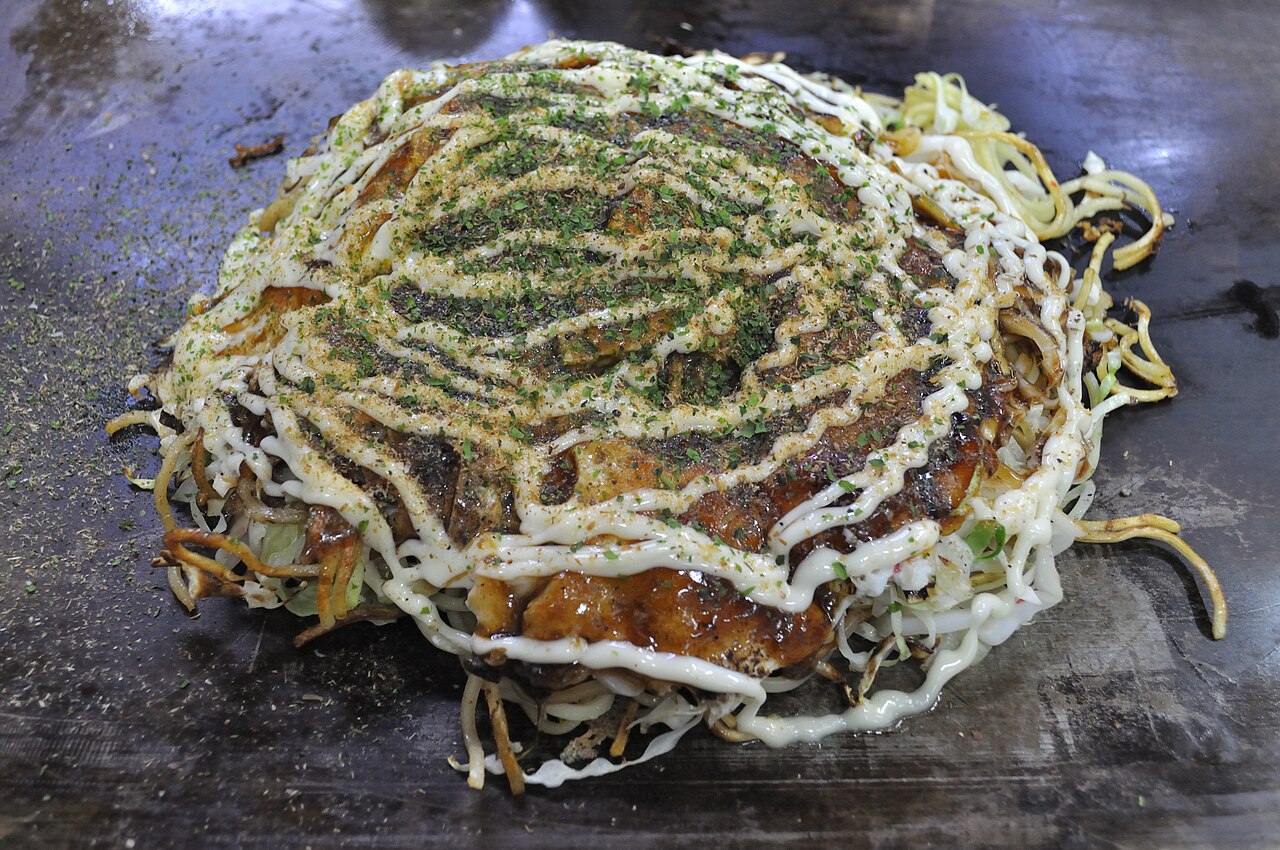
An AI-assisted editorial guide, not independently kitchen-tested. The photograph is a serving example. How we prepare and correct our guides.
For safe handling, consult FDA guidance. Send recipe corrections by email to ZYS10.