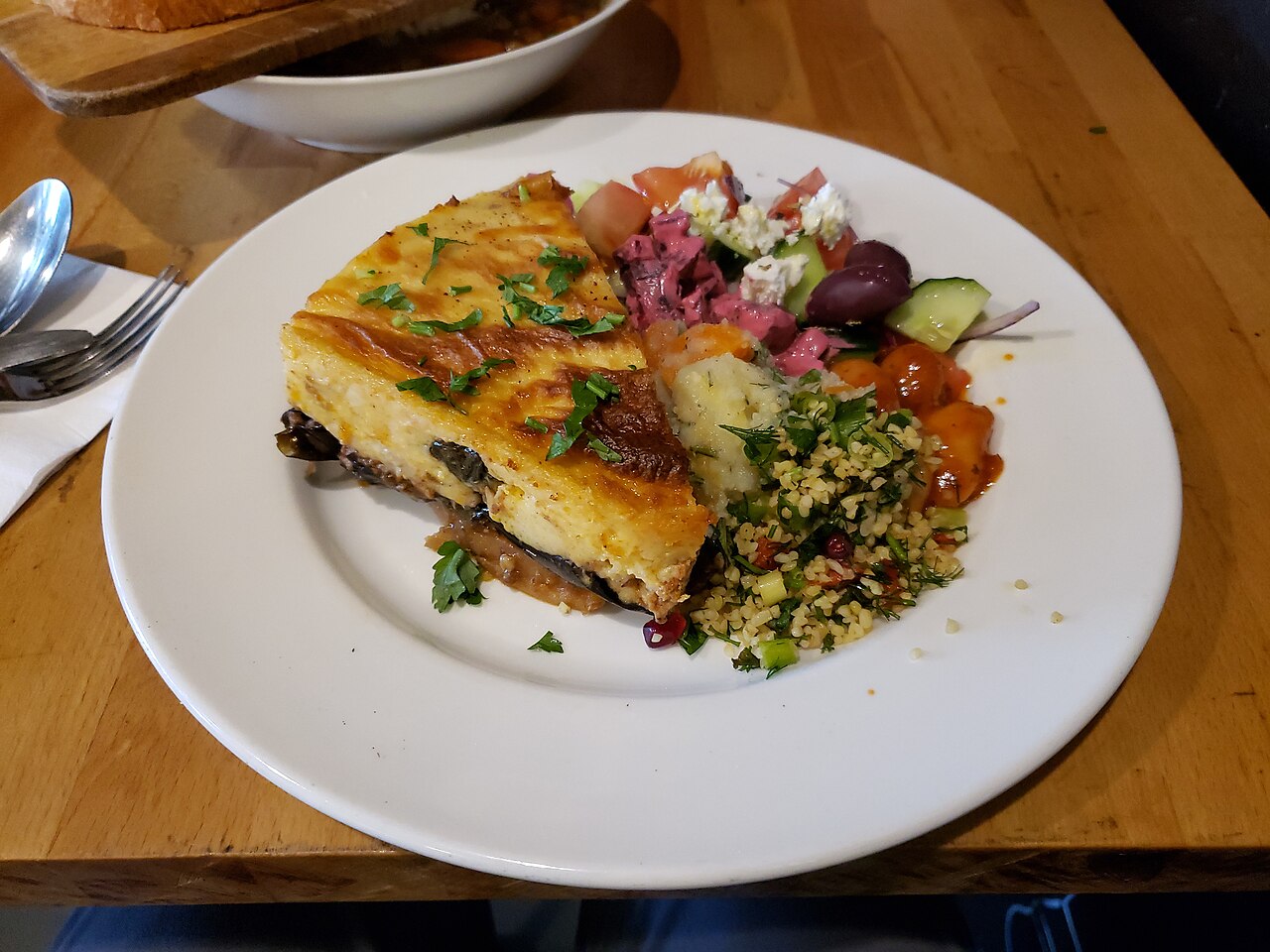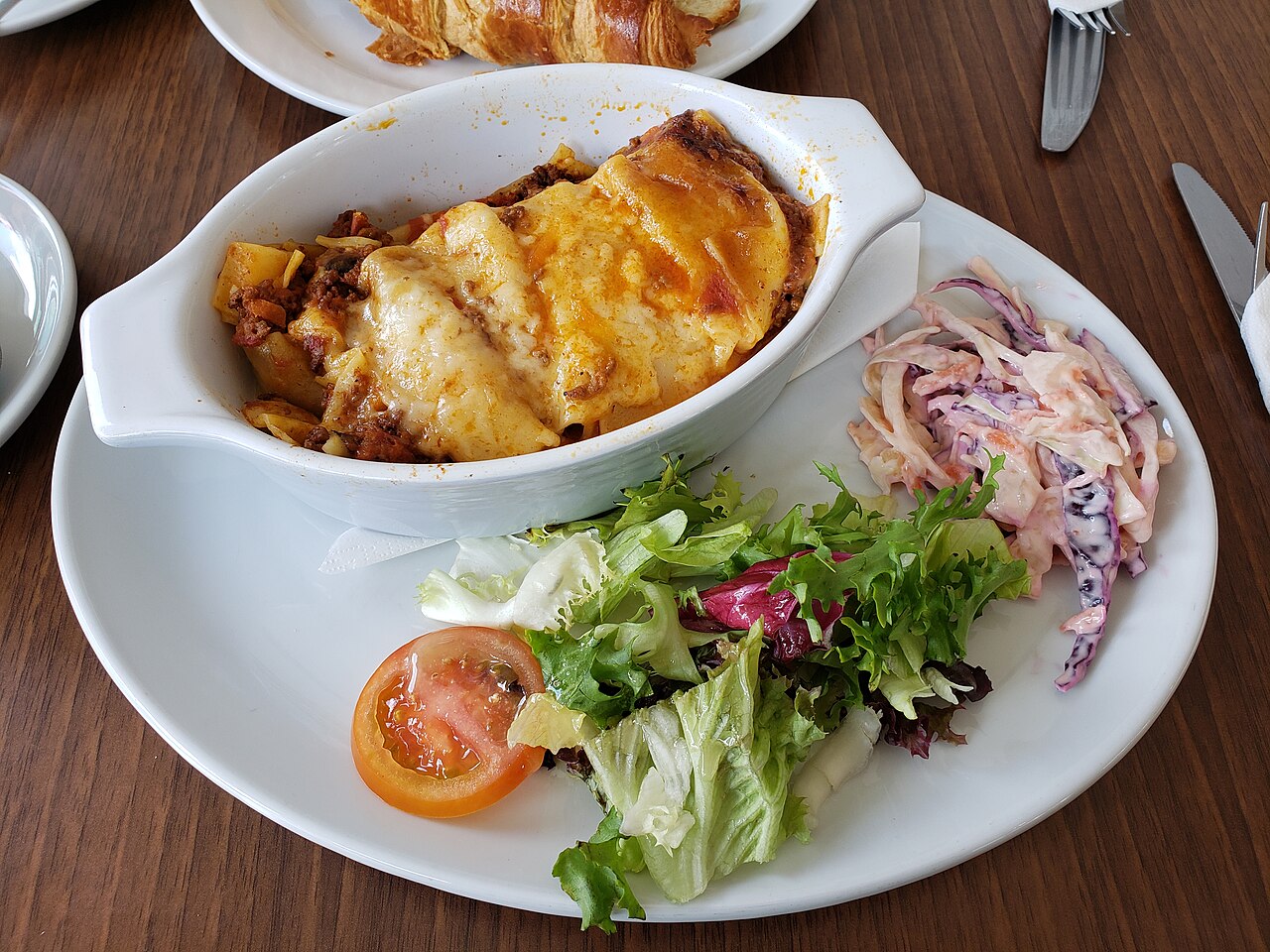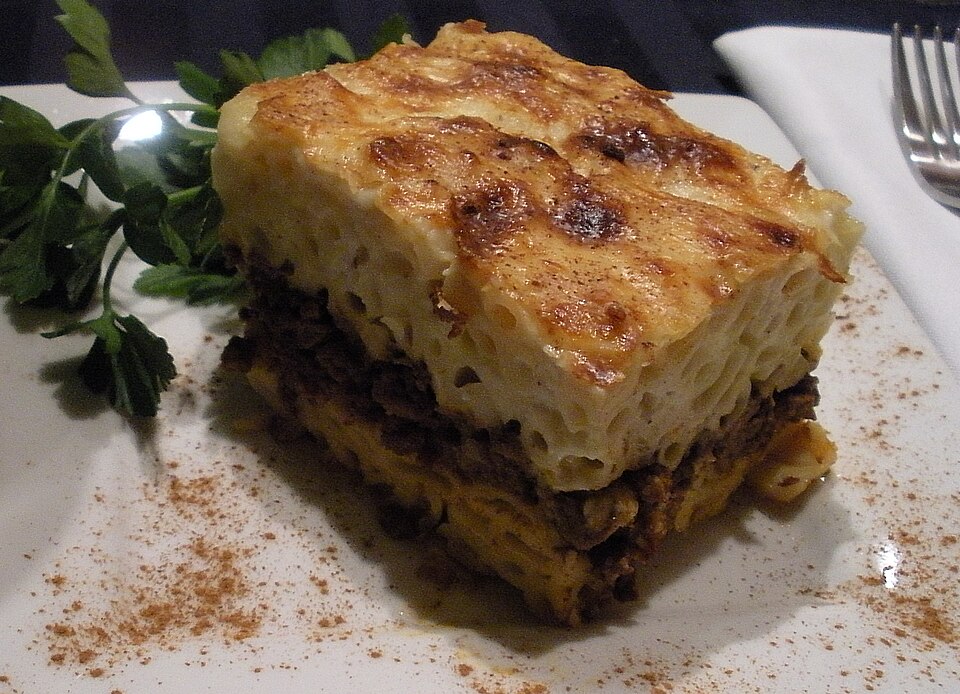
Each component should be prepared before layering, and the finished tray needs a real rest. That structure is more important than adding ever more cheese to make a loose filling seem richer.
Greek Baked Pasta Pastitsio
Plus 25 minutes resting before slicing
Planning totals add preparation, cooking and listed waits. Overlapping stages may shorten the schedule; ingredient and equipment differences can lengthen it.
Ingredients
For fractional eggs, beat an extra egg or yolk and measure the required fraction.
Times and base yield refer to the original recipe. Scaling quantities does not automatically change pan size, temperature or cooking time.
Step-by-step method
The steps describe the base batch (1 deep pasta bake, 6 servings). The calculator changes the ingredient list only; amounts written in the steps, equipment and timing remain for that base batch.
Step 1
Cook onion and garlic in oil, brown beef and add tomatoes and cinnamon, then simmer for 25 minutes.
Step 2
Boil pasta until just short of al dente and drain.
Step 3
Make a thick béchamel from butter, flour and milk, then cool slightly and stir in beaten eggs and half the cheese.
Step 4
Arrange pasta in an oiled baking dish and spread the concentrated meat sauce over it.
Step 5
Cover with béchamel and remaining cheese.
Step 6
Bake at 180°C / 356°F for 40–45 minutes until golden and the center reaches 74°C / 165°F. Rest for 25 minutes before slicing.
Why this version works
Choose substantial tubes and stop boiling early
The 350 grams of pasta should have enough wall thickness to survive another oven cook. Long Greek pastitsio tubes give a distinctive cross-section, but sturdy shorter tubes can form a practical adaptation. Cook until just short of fully tender, then drain well rather than letting water collect in the baking dish. Overcooked pasta cannot regain firmness in the oven. If using long tubes, arrange them broadly in the same direction for cleaner serving, without turning assembly into a painstaking decoration exercise. The quantity and dish depth matter more than an exact photographic pattern.
Make the meat sauce thick enough to stay in its layer
Brown the beef after onion and garlic soften, breaking it into small loose pieces. Add tomatoes and cinnamon and simmer until free watery liquid has reduced. The half teaspoon of cinnamon should provide warmth behind the savory meat rather than taste like sweet spiced pudding. If using very lean beef, the filling may feel drier; a modestly fatty mince is more forgiving. A sauce that pours like soup migrates into the pasta and destabilizes the slice. Taste after reduction because both tomato acidity and salt become more concentrated as water leaves.
Build a smooth top with a controlled egg addition
The 70 grams each of butter and flour thicken 750 milliliters of milk into a substantial béchamel. Whisk milk in gradually, paying attention to the pan corners where flour lumps collect. After cooking, remove the sauce from heat and let it cool slightly before adding the beaten eggs and part of the cheese. The eggs help the baked top hold, but only if mixed evenly rather than scrambled by a fiercely hot saucepan. Grate the cheese finely so it disperses. A hard sheep's cheese gives one direction of flavor, with Parmesan a practical alternative rather than an identical product.
Keep layers even and give the baked tray time
A baking dish around 20 by 28 centimeters is a reasonable starting footprint for the listed quantities, provided it has sufficient depth and headroom. Spread pasta, meat and sauce evenly rather than making a thick central hill. Béchamel should cover the meat without needing to be forced down through the tubes. Bake until the surface is golden and the center thoroughly hot. The twenty-five-minute rest lets the top and interior settle, making it possible to cut a wedge instead of scooping a flowing mixture. Use that interval for a fresh salad rather than trying to hurry the slice with extra baking.
Arrange the pasta to support the slice you want
The tubular pasta can be aligned more deliberately for a clear cut surface or placed more casually for a looser home serving. Neither choice removes the need for a reduced meat layer and the stated rest. Keep pasta below the béchamel instead of repeatedly stirring all components together during assembly. If long tubes are too large for the dish, trim or choose a compatible tube shape rather than bending them into thick doubled sections. Portion the cheese between the sauce and top before starting so the final layer receives its intended share.
Ingredient choices and substitutions
Use substantial hollow pasta that remains firm after boiling. A hard sheep's cheese is a traditional direction, with Parmesan as an accessible alternative. Ground beef with some fat gives a more rounded filling.
Fixes for this recipe
| What you notice | Likely reason | What to do |
|---|---|---|
| The first portion collapses into a loose heap. | The tray was cut too hot or the meat sauce remained watery. | Rest before slicing and reduce the filling properly in the next batch. A longer oven cook cannot always remove trapped water without drying the pasta edges. |
| Pasta turns very soft and swollen. | It was fully cooked before baking or sat in excessive sauce liquid. | Stop the initial boil earlier and drain thoroughly. Choose sturdy tubes instead of a delicate quick-cooking shape. |
| Béchamel has visible egg curds. | Egg was stirred into sauce at boiling temperature. | Let the sauce cool slightly, add beaten egg gradually and whisk evenly. Severe curdling is not repaired by adding more cheese. |
Recipe-specific questions
Is short pasta acceptable?
Yes, as a home adaptation. Choose hollow pieces with enough structure and distribute them evenly. Long tubes create the familiar aligned slice, but correct cooking and moisture control matter more than exact shape.
Can I make pastitsio without cinnamon?
You can, though it removes a warm aromatic feature of this version. Do not replace it with a large amount of unrelated spice merely to fill a perceived gap; the meat and tomato should remain savory.
Can I freeze individual portions?
Yes, after cooling and handling safely. Wrap portions well, thaw in the refrigerator and reheat evenly until thoroughly hot. The pasta may soften further, so expect a useful make-ahead meal rather than an unchanged fresh-baked texture.
Serving and storage
Serve with crisp leaves, cucumber or tomatoes dressed simply with lemon and olive oil. The pasta and béchamel already provide plenty of richness, so the side should offer freshness and crunch.
Refrigerate cooled portions promptly in shallow containers. Reheat covered to prevent the upper layer drying before the center is hot, uncovering briefly only if browning is desired. Store a large tray in portions rather than repeatedly cutting and reheating the same whole dish.
An AI-assisted editorial guide, not independently kitchen-tested. The photograph is a serving example. How we prepare and correct our guides.
For safe handling, consult FDA guidance. Send recipe corrections by email to ZYS10.