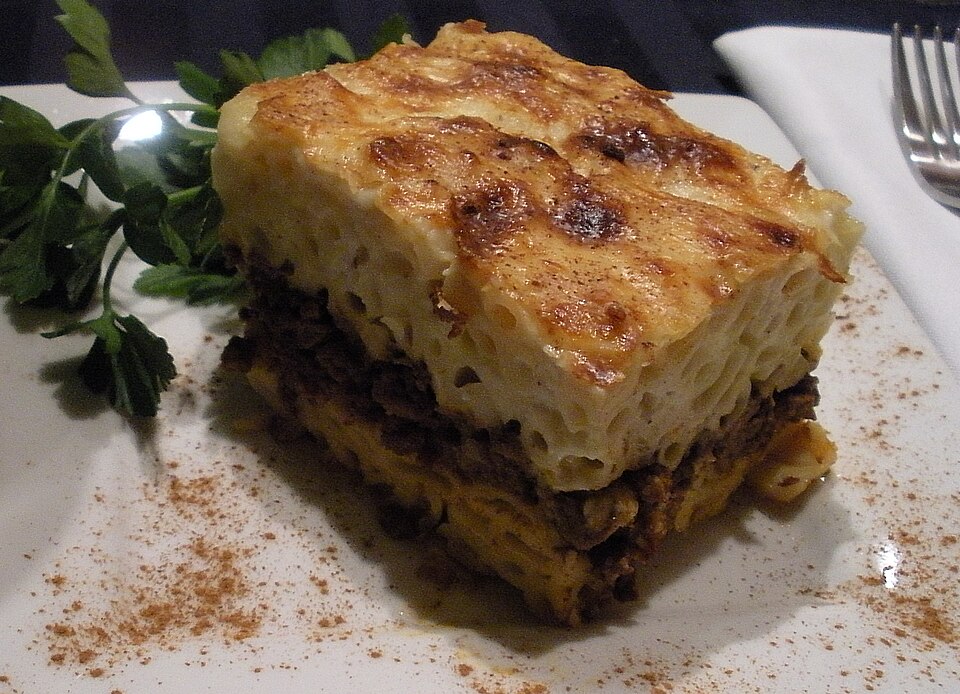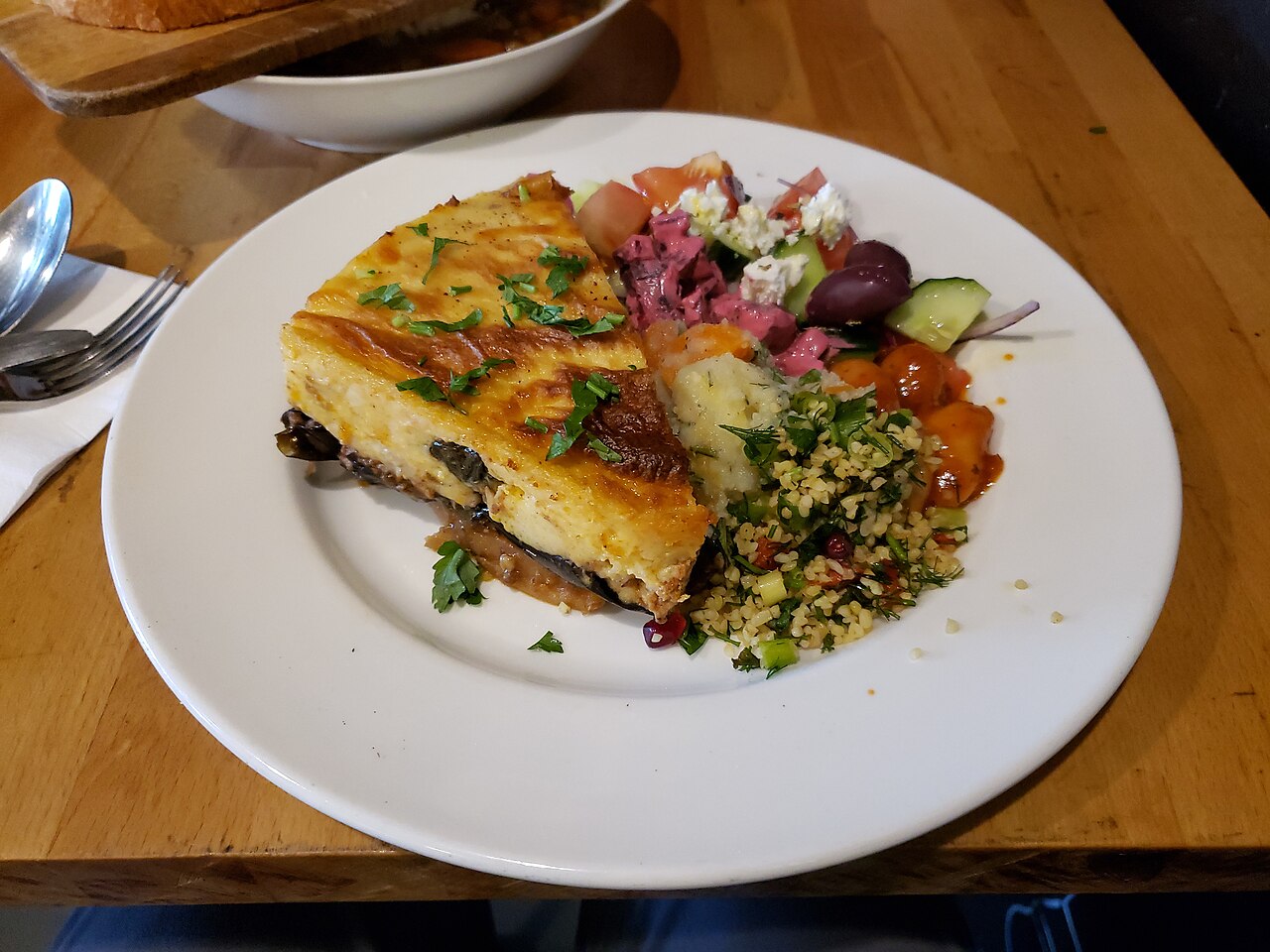
Aubergine must already be tender, the lamb sauce concentrated and the béchamel thick enough to form a defined top. The final oven stage joins those components, while the rest afterward makes a slice possible.
Layered Greek Moussaka
Plus 25 minutes resting before slicing
Planning totals add preparation, cooking and listed waits. Overlapping stages may shorten the schedule; ingredient and equipment differences can lengthen it.
Ingredients
For fractional eggs, beat an extra egg or yolk and measure the required fraction.
Times and base yield refer to the original recipe. Scaling quantities does not automatically change pan size, temperature or cooking time.
Step-by-step method
The steps describe the base batch (1 deep layered bake, 6 servings). The calculator changes the ingredient list only; amounts written in the steps, equipment and timing remain for that base batch.
Step 1
Brush aubergine slices with 3 tablespoons of the oil and roast at 220°C / 428°F for 25 minutes until tender.
Step 2
Use the remaining tablespoon oil to cook onion and garlic. Add lamb and brown, then add tomatoes and cinnamon and simmer for 25 minutes.
Step 3
Make béchamel by cooking butter and flour, whisking in milk and simmering until thick.
Step 4
Cool the sauce slightly and whisk in egg and half the grated cheese.
Step 5
Layer aubergine and meat sauce in a baking dish, top with béchamel and remaining cheese.
Step 6
Bake at 180°C / 356°F for 40–45 minutes until browned and the center reaches 74°C / 165°F. Rest for 25 minutes before slicing.
Why this version works
Roast aubergine until its center is genuinely soft
Cut the two large aubergines into even slices roughly eight millimeters thick. Very thin sheets become fragile and can dry before assembly, while thick slabs may remain spongy inside. Brush both surfaces lightly with olive oil and leave space on the roasting trays. The slices should bend easily and have softened centers, not merely a brown surface. Roasting is a practical way to limit how much oil the vegetable absorbs compared with deep frying, but it still needs enough oil for pleasant texture. Keep the pieces in broad sheets so they can form a recognizable layer beneath the sauce.
Reduce the lamb filling before building the dish
Brown the lamb in loose small clumps after the onion and garlic soften. The meat should develop savory color rather than remain gray in a large pool of released water. Add tomatoes and cinnamon and let the mixture simmer until thick enough to sit on a spoon without a watery ring. The half teaspoon of cinnamon should suggest warmth, not turn the filling into a sweet dessert spice mixture. Lamb fat contributes flavor, but skim an excessive surface layer if needed. Lean beef is a possible variation with a different flavor and moisture balance; it should not be treated as a completely invisible substitution.
Temper the egg-enriched béchamel
Cook butter and flour together, then whisk in milk gradually, reaching into the saucepan corners to prevent lumps. The sauce needs more body than a thin pouring béchamel because it becomes a substantial upper layer. Remove from heat and let it cool slightly before whisking in the egg. Adding egg directly to a fiercely bubbling pan can create scrambled strands instead of an even set. Stir in part of the cheese and taste before salting because a hard sheep's cheese or Parmesan adds considerable seasoning. The sauce should spread across the meat without sinking immediately through it.
Use a consistent layer depth and respect the rest
A medium baking dish around 20 by 28 centimeters gives a useful starting footprint for these quantities, but the combined depth matters more than a decorative shape. Arrange aubergine with slight overlap, spread the meat evenly and level the béchamel gently. Deep isolated mounds heat differently from thin corners. Bake until the top is golden and the whole dish is hot through. If the top colors early, cover loosely rather than increasing heat. The suggested twenty-five-minute rest is part of the eating result: it lets the creamy top and moist filling settle so slices hold instead of flooding the plate.
Allocate aubergine and meat by the dish footprint
Lay enough roasted aubergine across the empty baking dish to estimate the bottom layer before adding sauce. Reserve a comparable amount for the remaining layer instead of using all the best slices underneath. The meat should spread in a contained layer, with enough reduced sauce to bind it but no deep pool. Béchamel is the separate top layer, not liquid to pour through dry gaps in the filling. If the chosen dish is much smaller, use a second dish rather than making an unusually tall bake whose center no longer follows the same heating schedule.
Ingredient choices and substitutions
Choose firm aubergines and lamb with some fat for flavor. A hard sheep's cheese is a fitting finish; Parmesan is a practical alternative. Milk and egg should be combined at a safe moderate temperature.
Fixes for this recipe
| What you notice | Likely reason | What to do |
|---|---|---|
| A watery pool appears beneath the slice. | The tomato meat sauce was loose or aubergine was not fully prepared. | Reduce the sauce before assembly and roast vegetables until tender. For the current dish, allow a longer settling rest rather than trying to boil away water under an already browned top. |
| The upper sauce has scrambled bits. | Egg entered béchamel while it was too hot. | Cool the sauce slightly before adding beaten egg gradually. Small defects may be strained before assembly, but a fully scrambled mixture cannot be returned to a perfectly smooth custard by stirring. |
| The aubergine feels tough between soft layers. | Surface browning was mistaken for internal tenderness. | Test a roasted slice before assembling. A finished layered bake is not the best place to complete a large amount of undercooked aubergine. |
Recipe-specific questions
Can I add a potato layer?
Yes, as a deliberate variation. Cook the slices nearly tender first and use a dish large enough to preserve reasonable layer depth. Extra raw potato cannot simply be inserted while keeping the same baking time.
Can I assemble moussaka a day ahead?
Prepare and cool components safely, refrigerate and assemble with appropriate chilled storage. A cold deep dish takes longer to heat than a freshly assembled warm one, so verify the center rather than following the original minutes blindly.
Why not cut immediately after baking?
The sauces are still fluid and the layers have little support while very hot. Resting improves portioning and eating temperature; it is not a sign that the dish should be left unrefrigerated for an extended period.
Serving and storage
A crisp cucumber-and-tomato salad with lemon provides a useful contrast to lamb and béchamel. Keep additional creamy sauces off the plate so the distinct layers remain the main interest.
Cool leftover portions promptly in shallow containers and refrigerate. Reheat covered until thoroughly hot, uncovering near the end only if the top needs drying. Freezing individual portions is more practical than repeatedly warming a large tray; thaw in the refrigerator before an even reheat.
An AI-assisted editorial guide, not independently kitchen-tested. The photograph is a serving example. How we prepare and correct our guides.
For safe handling, consult FDA guidance. Send recipe corrections by email to ZYS10.