The practical controls are enough moisture, space inside each tomato or pepper and sufficient covered baking before the top colors. Choose vegetables that stand securely, and judge the rice itself rather than assuming a browned lid means the filling is ready.
Rice-Stuffed Tomatoes & Peppers
Planning totals add preparation, cooking and listed waits. Overlapping stages may shorten the schedule; ingredient and equipment differences can lengthen it.
Ingredients
Times and base yield refer to the original recipe. Scaling quantities does not automatically change pan size, temperature or cooking time.
Step-by-step method
The steps describe the base batch (4 servings). The calculator changes the ingredient list only; amounts written in the steps, equipment and timing remain for that base batch.
Step 1
Slice tops from tomatoes and peppers, keep the lids and scoop tomato flesh into a bowl.
Step 2
Blend the tomato flesh roughly and remove pepper seeds.
Step 3
Soften onion and garlic in half the oil, add rice and tomato pulp and cook for 5 minutes.
Step 4
Stir in chopped herbs, season and fill the vegetables only about three-quarters full.
Step 5
Arrange in a baking dish with potato wedges, add stock around them and drizzle with remaining oil.
Step 6
Replace lids, cover and bake at 180°C / 356°F for 50 minutes, then uncover for 20–30 minutes until rice is tender.
Why this version works
Choose shells with stable bases and usable walls
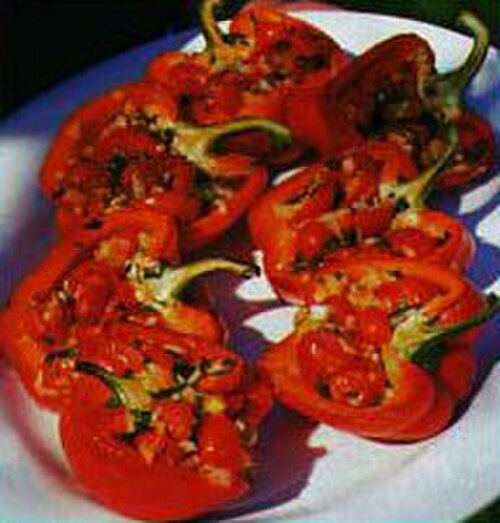
The four tomatoes should be large and firm enough to hollow without tearing, but ripe enough to contribute flavor. Cut lids with enough flesh attached to remain sturdy. Scoop gently and keep the pulp for the filling, leaving walls that can support the rice. Peppers need their seeds and tough inner membranes removed without puncturing the base. Stable shapes are useful because tilted vegetables spill liquid and leave part of the rice dry. If necessary, trim only a very thin slice from the outside base; cutting a hole defeats the shell's purpose.
Prepare a moist filling, not a finished risotto
The 220 grams of medium-grain rice receive only a short stovetop stage with onion, garlic and tomato pulp. That begins flavor absorption but does not fully cook the grain. Blend tomato pulp roughly so it brings juice without large tough core fragments. The filling should remain moist enough that the rice has liquid to absorb during baking. If the reserved tomato flesh is unusually dry, add a little of the measured stock to the pan rather than packing dry grains into shells. Parsley and mint are chopped and folded in for a fresh aromatic direction, not cooked into a dark herb paste.
Leave expansion room and support the vegetables
Fill each shell only about three-quarters full, placing the lid loosely back on top. Tightly packing to the rim encourages rice to swell out and dry. Arrange the shells close enough to support one another in a dish without crushing them. Potato wedges around the vegetables catch the tomato-rich pan juices, but cut them evenly so they become tender within the baking period. Pour stock around the shells and keep some moisture in the dish as cooking proceeds. The liquid outside and tomato juices inside work together; neither an empty dry tray nor a deep drowning bath is the aim.
Use covered heat for hydration, uncovered heat for color
The first covered stage traps steam and gives rice time to soften inside the shells. Removing the cover later lets the tops color and some liquid concentrate. If the surface looks finished while rice remains chalky, replace a loose cover and add a little hot stock to maintain moisture. Test the filling from more than one vegetable because peppers and tomatoes can differ in size and water content. Let the dish rest briefly before serving so rice and juices settle. This meat-free version emphasizes vegetables and herbs; other gemista preparations may include meat and need their own safe cooking checks.
Keep tomato pulp in the filling's liquid budget
Scooped tomato flesh becomes part of the rice mixture, while the stock is added around the vegetables. That distinction matters: pouring all the stock into the rice pan before stuffing creates a much wetter filling than the written sequence. Fill loosely below the top so the rice has space to expand, and support unstable vegetables with the potato wedges. Check the thickest rice-filled shell before declaring the tray done from its browned lid. A collapsed tomato wall may still taste good, but it indicates different support and ripeness choices for the next batch.
Ingredient choices and substitutions
Choose large firm tomatoes that can stand upright and peppers with stable bases. Medium-grain rice absorbs the filling's juices well. Fresh mint and parsley give a more lively result than dried herb blends.
Fixes for this recipe
| What you notice | Likely reason | What to do |
|---|---|---|
| Rice is hard despite browned vegetable tops. | The filling lacked moisture or the dish was uncovered too early. | Add a little hot stock, cover and continue gently. Browning cannot substitute for grain hydration, so test rice before deciding the dish is done. |
| Rice bursts out and forms a dry crust. | Shells were filled tightly to the rim. | Leave more expansion space next time. For the current dish, moisten exposed grains carefully and cover briefly while the interior finishes. |
| Tomato shells collapse before peppers are tender. | Vegetables differed greatly in ripeness or wall thickness. | Choose comparable practical sizes and handle tomatoes gently. Remove a ready fragile shell if further pepper cooking is needed rather than stirring the whole arrangement. |
Recipe-specific questions
Can I use long-grain rice?
It changes absorption and texture. It can make an adapted filling, but may need a different liquid balance and checking schedule. The listed method is designed around medium-grain rice rather than treating all rice as interchangeable.
Can the rice be completely cooked first?
That becomes a different stuffed-vegetable method with a shorter hydration requirement. Fully cooked rice should not automatically receive the same long covered bake or it may become excessively soft.
Why are potatoes placed around the shells?
They use the flavorful tray juices and help make a complete meal. Their wedges should be modest and even, not huge chunks that remain hard after the rice and vegetables are ready.
Serving and storage
A small piece of feta or a spoon of plain yogurt adds tang without obscuring the herbs. A crisp cucumber salad supplies contrast to the tender shells and rice.
Cool leftovers promptly and refrigerate, paying attention to cooked-rice storage guidance. Use shallow portions rather than leaving a deep warm tray unattended. Reheat only once until thoroughly hot and add a little moisture if needed; the shells will become softer after another cooking cycle.
An AI-assisted editorial guide, not independently kitchen-tested. The photograph is a serving example. How we prepare and correct our guides.
For safe handling, consult FDA guidance. Send recipe corrections by email to ZYS10.