This version uses a concentrated meat ragù, milk-based béchamel and dried sheets. The ingredients are straightforward; the difficult decisions are how dry to cook the ragù, which sheets need pre-cooking and how long to let the finished layers settle.
Slow-Simmered Lasagna
Plus 20 minutes resting before slicing
Planning totals add preparation, cooking and listed waits. Overlapping stages may shorten the schedule; ingredient and equipment differences can lengthen it.
Ingredients
Times and base yield refer to the original recipe. Scaling quantities does not automatically change pan size, temperature or cooking time.
Step-by-step method
The steps describe the base batch (1 deep 23 cm lasagna, 6 generous servings). The calculator changes the ingredient list only; amounts written in the steps, equipment and timing remain for that base batch.
Step 1
Soften onion, carrot and celery in olive oil for 10 minutes, then add the meat and brown it in loose clumps.
Step 2
Add tomatoes and 150 ml water, simmer uncovered for 60 minutes and season to taste.
Step 3
Melt butter in a separate pan, stir in flour for 2 minutes, then whisk in milk gradually and simmer until coating a spoon.
Step 4
Check the pasta package and briefly boil sheets if required, then drain on clean towels.
Step 5
Layer ragù, pasta, béchamel and Parmesan in a 23 cm baking dish, ending with sauce and cheese.
Step 6
Bake at 190°C / 374°F for 40–45 minutes until bubbling and browned, then rest for 20 minutes before slicing.
Why this version works
Build a ragù with small, tender pieces
The carrot, celery and onion should be diced smaller than the meat clumps so they become part of the sauce rather than separate crunchy pieces. Cook them gently before adding mince. When browning the 650 g mixed meat, break it into loose small clusters; a completely mashed paste can feel dense between the sheets. The pork contributes richness, while beef gives a firmer savory note. For an all-beef version, choose a moderately fatty mince rather than the leanest available product and reduce only excess surface fat later.
Recognize the right sauce concentration
After the tomatoes have simmered, draw a spoon along the bottom of the pan. The trail should close gradually, not immediately fill with thin red water. The sauce must still spread comfortably, because dried pasta needs moisture to finish cooking. A rigid fried-meat mixture is too dry, while a broth-like ragù makes unstable layers. If the tomatoes are unusually watery, extend the uncovered simmer before assembly. If the sauce catches while the meat is still coarse, add a small amount of water and continue gently.
Match the sheets to their package instructions
Dried lasagna varies considerably in thickness and processing. Sheets labeled oven-ready are designed to hydrate in sauce; other sheets may need boiling first. Do not assume a remembered method from another brand will work. When pre-boiling, cook only until flexible and arrange the sheets separately on clean towels so they do not weld together. Trim pieces to fit the dish rather than stacking thick overlaps. Each sheet needs contact with sauce, including the corners, which are the first places to dry into hard edges.
Use béchamel as a continuous thin layer
The butter and flour should cook together briefly before milk is added, removing the raw flour impression without browning the roux deeply. Whisk in milk in stages, smoothing the first thick paste before adding more. A spoon-coating sauce spreads easily and supports the pasta without forming heavy white pockets. Use a dish with roughly a 23 cm footprint and enough depth for bubbling, and stop below its rim. After baking, leave the lasagna undisturbed for around twenty minutes; immediately cutting it defeats the structure built by careful layering.
Allocate sauce before building the first layer
Place the ragù, béchamel and pasta beside the dish before assembly and estimate how many layers the available sheets will form. Reserve enough sauce for the final surface instead of using most of it in the first two layers. Every pasta corner should meet moisture, but a deep pool of sauce between sheets makes the layers slide. If the dish is becoming full, stop below the rim and cook surplus components separately. Compressing another layer into an already full pan changes depth, increases overflow and undermines the stated baking estimate.
Ingredient choices and substitutions
Choose beef with some fat rather than the leanest mince. Aged Parmesan has more depth than mild grated cheese. Pasta sheets vary in thickness and hydration needs, so follow the manufacturer's pre-cooking instructions.
Fixes for this recipe
| What you notice | Likely reason | What to do |
|---|---|---|
| The center runs outward when sliced. | The ragù retained excessive free water or the bake was cut before it settled. | Wait longer before portioning. Next time reduce the ragù separately and keep layer thickness even, rather than trying to dry an already assembled lasagna through a much longer bake. |
| The upper sheets are leathery. | Bare pasta was exposed above the sauce or the top dried before the center heated. | Cover all sheets with béchamel and cheese. If coloring accelerates, cover loosely with foil and finish heating gently before uncovering for the final browning. |
| Béchamel contains pale flour lumps. | Too much milk was added to an uneven roux before the initial paste was smoothed. | Whisk vigorously while warm or pass the sauce through a sieve. Add milk gradually during the next attempt and scrape the pan corners where dry flour collects. |
Recipe-specific questions
Can the whole dish be assembled the night before?
Yes, when the sauces have been cooled safely before refrigeration. A cold assembled dish needs additional heating time, and the top may require foil protection. Follow the pasta maker's guidance because some sheets absorb substantial liquid during a long refrigerated hold.
Should every layer contain cheese?
A little Parmesan between selected layers is sufficient here. The béchamel already supplies richness, so thick cheese blankets can make the result heavy and salty. Reserve enough cheese for the top, where its browning contributes more contrast than a large hidden quantity.
Can vegetables replace some of the mince?
Finely chopped browned mushrooms are a practical partial replacement. Cook off their water before combining them with the ragù. A wholly vegetable lasagna needs its own moisture balance; replacing meat weight for weight with raw courgettes usually makes the layers wetter and changes the cooking needs.
Serving and storage
A sharp leaf salad and lightly dressed tomatoes contrast with the soft rich layers. Avoid another creamy side: the meal benefits more from crunch and acidity than from additional starch or cheese.
Portion leftovers once the dish has stopped steaming vigorously and refrigerate promptly in shallow containers. Reheat a covered portion until thoroughly hot in its center, adding a small spoon of water around a dry edge if needed. Freeze individual portions for easier reheating; a large frozen slab takes much longer for its middle to heat than its exterior suggests.
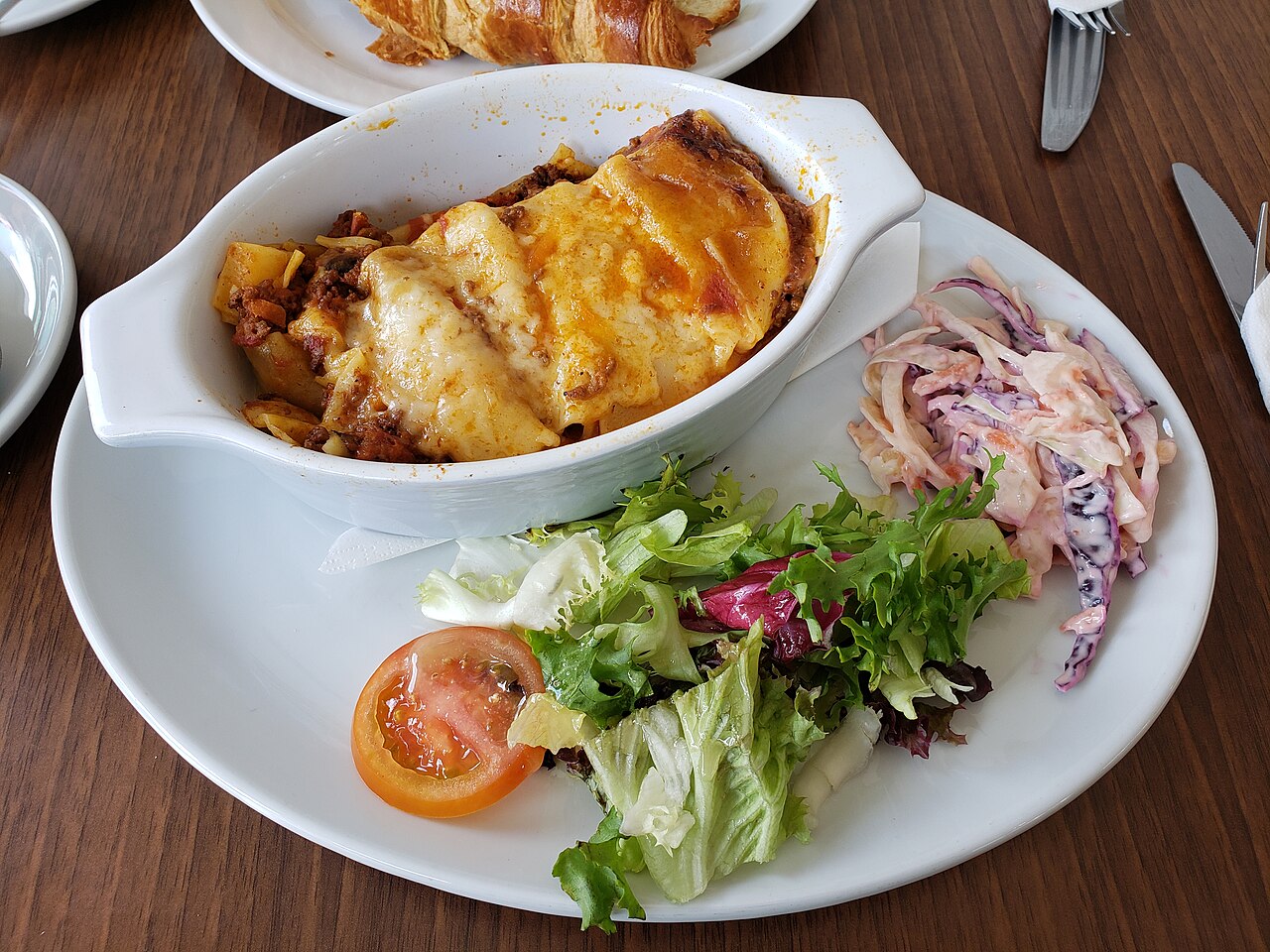
An AI-assisted editorial guide, not independently kitchen-tested. The photograph is a serving example. How we prepare and correct our guides.
For safe handling, consult FDA guidance. Send recipe corrections by email to ZYS10.