Their fragility changes how the dish is cooked: loosen them before heating, use modest batches and fold instead of aggressively stirring. The goal is controlled pan contact on home equipment, not an unsupported promise of restaurant burner heat.
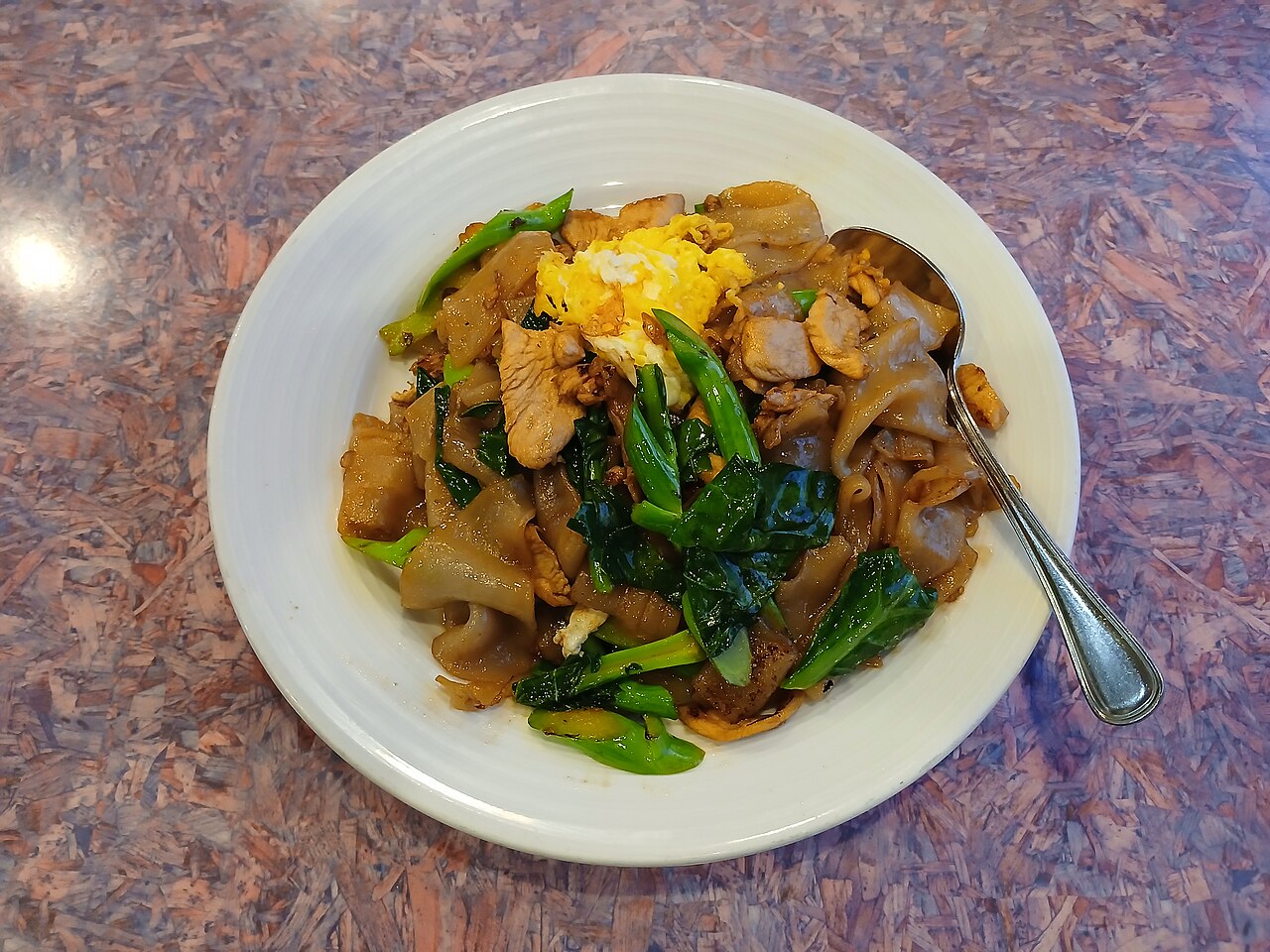
Soy-Glazed Pad See Ew
Planning totals add preparation, cooking and listed waits. Overlapping stages may shorten the schedule; ingredient and equipment differences can lengthen it.
Ingredients
For fractional eggs, beat an extra egg or yolk and measure the required fraction.
Times and base yield refer to the original recipe. Scaling quantities does not automatically change pan size, temperature or cooking time.
Step-by-step method
The steps describe the base batch (4 servings). The calculator changes the ingredient list only; amounts written in the steps, equipment and timing remain for that base batch.
Step 1
Loosen fresh noodles gently and cut broccoli stems thinner than the leaves.
Step 2
Mix soy sauces, oyster sauce and sugar with one tablespoon of water.
Step 3
Heat oil, cook garlic briefly and stir-fry chicken until it reaches 74°C / 165°F.
Step 4
Add broccoli stems, then leaves, and push aside to scramble the eggs.
Step 5
Add noodles and sauce, spreading them against the hot pan briefly before folding.
Step 6
Toss carefully until evenly glazed, working in two batches if needed.
Why this version works
Prepare two piles of noodles before cooking
Loosen the 500 g fresh wide noodles according to their package and divide them into two equal finishing portions. Divide the mixed soy-and-oyster sauce at the same time. Cook the chicken and broccoli first if the skillet is small, then use half those components with each noodle portion. A broad spatula supports the sheets better than pulling a heavy mound with narrow tongs. The noodle guide covers fresh-versus-dried hydration; this recipe is written around fresh sheets, so any dried-noodle substitution needs its own preparation stage.
Separate broccoli stems from leaves
Chinese broccoli has sturdy stems and more delicate leafy tops. Slice thick stems on a diagonal so they cook in a short time, keeping leaves aside for later addition. Ordinary broccoli or tenderstem can be substituted, but has a different shape and needs deliberate cutting. With 350 grams of thinly sliced chicken, keep the meat pieces even and cook safely before the fragile noodles join. A broad pan makes it easier to spread ingredients; if it is small, cook the chicken and vegetables first and divide the noodle finishing stage into two portions.
Understand the two soy sauces
Light soy supplies much of the salty seasoning, while dark soy adds color and a rounder sweet character. Thai dark soy and other dark soy products vary, so one tablespoon is not a universal color-and-sugar result. Oyster sauce adds another seasoned layer. Mix the sauce before cooking and taste a little safely, considering how the plain noodles will dilute it. Do not add large extra quantities of dark soy merely to force a darker photograph-like appearance. A glossy brown coating should not become a sticky black syrup that overwhelms the noodle flavor.
Give a small portion contact, then fold
After eggs set, add a manageable quantity of noodles and sauce. Spread gently against the hot metal and leave a brief interval before lifting and folding. Constant motion prevents useful contact, but a very long undisturbed wait can stick or scorch the sauce. Use a broad spatula under the sheets instead of narrow tongs that pinch and tear them. Finish when the coating is distributed and everything is hot. The dish should not wait in a covered bowl, where steam softens its browned edges and turns separate broad ribbons into a compact mass.
Prepare complete small batches rather than splitting halfway
Divide noodles, chicken, vegetables, egg and sauce into the number of batches the pan can hold before cooking starts. If only the noodles are divided, the first batch may use nearly all the chicken or sauce and the second will not represent the same recipe. Keep stems thinner than leafy sections and have them ready in their cooking order. Once the fresh noodles enter, use broad folds and brief surface contact rather than trying to separate a cold block with repeated chopping. Extra oil does not repair noodles already torn into fragments.
Ingredient choices and substitutions
Fresh wide rice noodles should be pliable; follow the package warming instructions if refrigerated. Chinese broccoli has thicker stems than ordinary broccoli leaves, so cut it thoughtfully. Dark and light soy are not interchangeable by volume.
Fixes for this recipe
| What you notice | Likely reason | What to do |
|---|---|---|
| Noodles fracture into short sticky pieces | They entered cold and rigid or were stirred too forcefully. | Warm and separate gently before cooking, then use broad lifting motions. Cook less at a time so you do not need to force a dense mound around the pan. |
| The noodles are wet with no browned areas | The batch overwhelmed the burner or ingredients carried excess water. | Dry and drain components, finish in smaller portions and allow brief direct contact. Adding more oil alone does not overcome a pan full of steam. |
| Dark bitter patches cling to the pan | Sugar-rich sauce was left over excessive heat after liquid evaporated. | Shorten contact intervals and lower heat slightly if needed. Move unburnt food out without scraping blackened deposits through it; color should support flavor, not replace it. |
Recipe-specific questions
Can I boil the fresh noodles to loosen them?
Only if the package specifically recommends it. Many fresh sheets need gentle warming rather than boiling, which can over-soften the surface. Identify the product first and separate it carefully before the stir-fry.
Why not cook four servings in one giant batch?
A home burner may not replace heat quickly enough, even in a large wok. Dividing the final noodle stage gives better contact and less tearing. Keep the cooked chicken and vegetable portions ready so each batch finishes quickly.
Does Pad See Ew need vinegar inside the sauce?
This version keeps the main sauce soy-led and offers chile vinegar separately. A little acid at the table can brighten a rich bite without changing the whole pan or wetting the noodles before serving.
Serving and storage
Serve as a main noodle dish with a small crisp vegetable side. Chile vinegar supplies a useful optional contrast, while an additional heavy sweet sauce makes the soy coating less clear.
Keep unused fresh noodles according to the package storage directions. Refrigerate cooked leftovers promptly and reheat gently with minimal water, accepting that the broad sheets may soften and break more. Store chile vinegar separately; it is more useful as a fresh table adjustment than as a long soak.
An AI-assisted editorial guide, not independently kitchen-tested. The photograph is a serving example. How we prepare and correct our guides.
For safe handling, consult FDA guidance. Send recipe corrections by email to ZYS10.