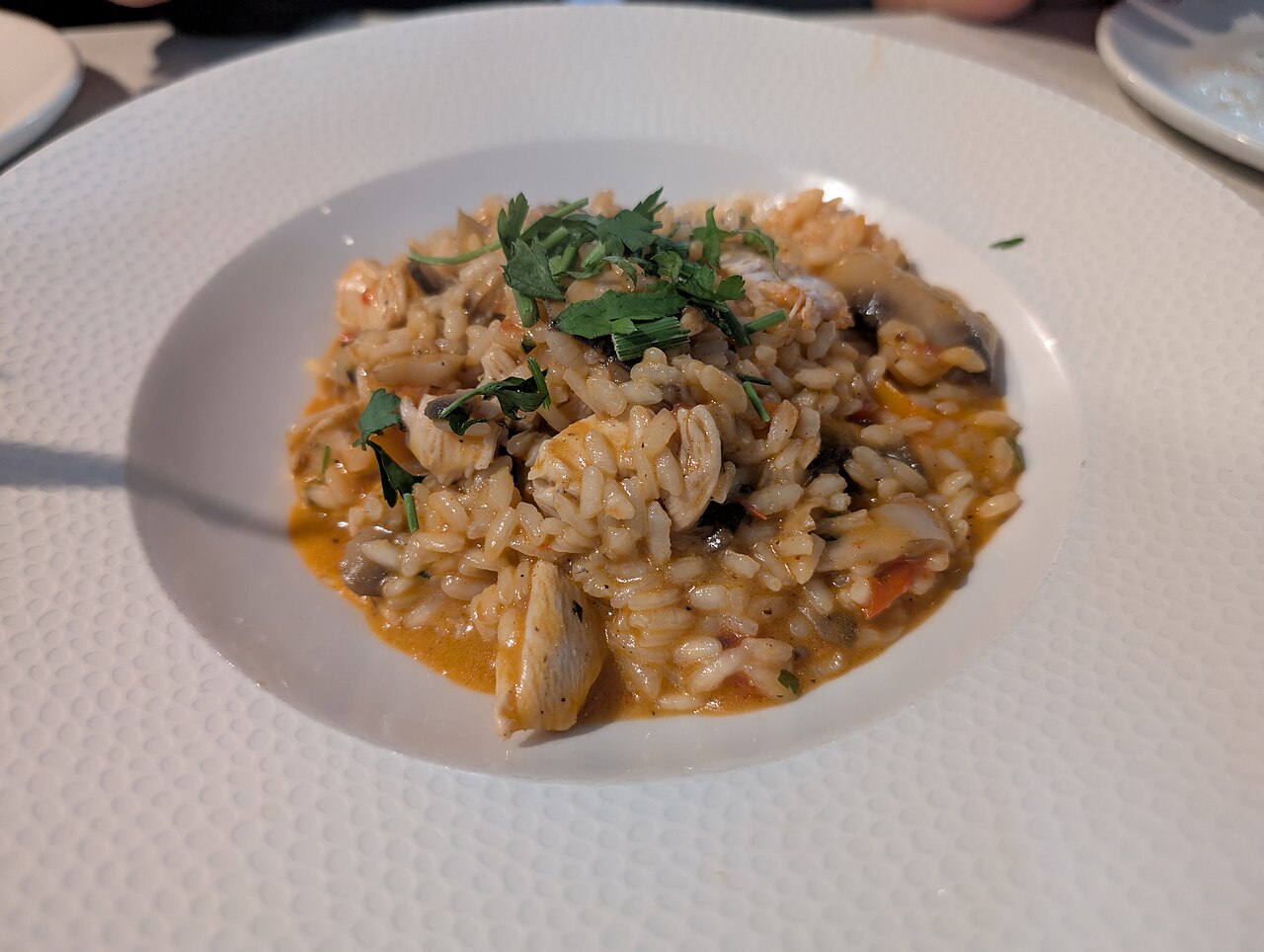
Its richness comes from rice starch, mushrooms, butter and Parmesan rather than added cream. The cook's job is to coordinate the grain's center with the sauce's fluidity, which do not always arrive at the same moment.
Creamy Mushroom Risotto
Planning totals add preparation, cooking and listed waits. Overlapping stages may shorten the schedule; ingredient and equipment differences can lengthen it.
Ingredients
Times and base yield refer to the original recipe. Scaling quantities does not automatically change pan size, temperature or cooking time.
Step-by-step method
The steps describe the base batch (4 servings). The calculator changes the ingredient list only; amounts written in the steps, equipment and timing remain for that base batch.
Step 1
Warm the stock in a small pan and keep it just below a simmer.
Step 2
Brown the mushrooms with the thyme in olive oil in two batches, season lightly and reserve half for the topping.
Step 3
Soften the onion in half the butter, add the rice and stir for 2 minutes until the edges look translucent.
Step 4
Add hot stock one ladle at a time, stirring regularly and waiting until most liquid is absorbed before adding more.
Step 5
After about 16 minutes, fold in half the mushrooms and continue until the rice is tender with a slight bite.
Step 6
Take off the heat, beat in the remaining butter and Parmesan, and loosen with stock before topping with mushrooms and parsley.
Why this version works
Choose mushrooms for contrast, not an expensive label
A mixture of chestnut mushrooms and oyster mushrooms gives an accessible combination of firm slices and tender frilled edges. Clean away visible dirt and dry the surfaces before slicing. Avoid soaking them in a bowl of water and then dropping them wet into the pan. The 500 g allowance needs two batches in an ordinary skillet; each piece should touch metal instead of lying in a deep wet pile. Salt lightly after browning begins, and reserve the prettiest pieces for the final topping rather than burying all their texture in the rice.
Why Carnaroli is a useful starting rice
The written liquid quantity is a reserve rather than a promise that every milliliter must enter the pan. Carnaroli gives a useful balance between released starch and a defined center. Arborio can work as a variation, but the point of tenderness and the tendency to soften differ. Do not rinse this rice as if preparing separate fluffy grains: the surface starch is part of the intended sauce. Stir the dry rice through the softened onion and fat until hot, without trying to brown it as deeply as the mushrooms.
Make stock support the mushrooms
A strongly flavored commercial vegetable stock can dominate the dish with celery, yeast or salt. Taste it warm before starting and dilute if necessary. Keep it hot in a neighboring pan, then add enough to maintain a fluid simmer. Large additions are not inherently forbidden, but small additions make the changing texture easier to read while learning. Avoid letting the rice become a dry sizzling layer between ladles. The bottom of a broad heavy saucepan should stay moist, with grains moving through liquid when the spoon passes.
Reserve mushrooms and stock for the last four bowls
Set half the browned mushrooms aside for topping before the rice absorbs any liquid. As the 320 g rice approaches tenderness, bring the other half into the pan so mushroom flavor runs through it. Keep a little of the 1.2 litres stock available when adding the final butter and 60 g cheese. Portion into four warmed bowls and divide the reserved mushrooms between them. This separates a soft mushroom background from a more distinct browned topping without increasing the amount of fat or cheese to create richness.
Separate the rice finish from the mushroom finish
The browned mushrooms and the rice do not need identical textures to taste integrated. Keep topping mushrooms out of the final vigorous butter-and-cheese mixing so their edges remain recognizable. Taste one spoonful containing both rice and mushroom before adding more seasoning; the mushroom surface may already be salted even when the rice tastes mild alone. Portion the rice first, then distribute the reserved mushrooms so every bowl receives them. Folding the entire topping back into the pot for convenience removes that deliberate contrast without improving hydration of the rice.
Ingredient choices and substitutions
The 500 g mushroom weight is for fresh mushrooms after trimming. A bag of dried mushrooms is not an equal-weight replacement: it changes both the soaking liquid and the quantity. Pick a low-salt stock and grate Parmesan from a wedge so the final seasoning can be judged after both enter the pan.
Fixes for this recipe
| What you notice | Likely reason | What to do |
|---|---|---|
| The outside is soft but the center feels chalky. | The grains have not received enough time and moisture despite an apparently creamy surrounding sauce. | Add hot unsalted liquid and continue a gentle simmer. Do not add more cheese to conceal the undercooked center; taste again after a short interval. |
| The mushrooms are pale and rubbery. | They steamed in a crowded pan rather than browning against a hot surface. | Cook the remaining mushrooms in smaller dry batches. The existing pieces can stay in the rice, but use separately browned pieces on top to restore some aromatic contrast. |
| The finished risotto stands in a mound. | Starch and cheese have tightened the liquid, especially during a serving delay. | Fold in a little hot stock off the heat until it flows again. Recheck salt after loosening and use warm bowls so it does not cool abruptly. |
Recipe-specific questions
Can dried mushrooms be added?
Yes, a small soaked quantity can deepen the mushroom flavor. Strain the soaking liquid through a fine filter before using it as part of the stock because grit settles in the bottom. Dried mushrooms supplement the fresh pieces rather than replacing all their texture.
Is constant stirring necessary?
Regular stirring is useful, but exhausting uninterrupted beating is not the goal. Move the rice often enough to prevent sticking and encourage starch release. A hard rapid stir can damage tender grains near the finish, particularly if the rice variety softens readily.
Can risotto be cooked ahead for guests?
A home cook gains more reliability by preparing mushrooms, stock and grated cheese ahead and cooking the rice near serving. Restaurant-style partial cooking needs careful cooling and finishing control. Holding a fully finished risotto for a long interval sacrifices the fluid texture that defines it.
Serving and storage
Serve a modest portion with bitter greens or roasted seasonal vegetables. Fresh parsley brightens the mushroom aroma, while a small amount of Parmesan at the table lets diners adjust richness without overloading every bowl.
Leftover risotto should be cooled rapidly in a shallow container, ideally within one hour, and refrigerated. Use refrigerated rice within twenty-four hours and reheat once until steaming hot throughout. A little stock can restore softness, although the grains will be more cooked than in the fresh dish. Never use rice left warm overnight as a shortcut for another recipe.
An AI-assisted editorial guide, not independently kitchen-tested. The photograph is a serving example. How we prepare and correct our guides.
For safe handling, consult FDA guidance. Send recipe corrections by email to ZYS10.