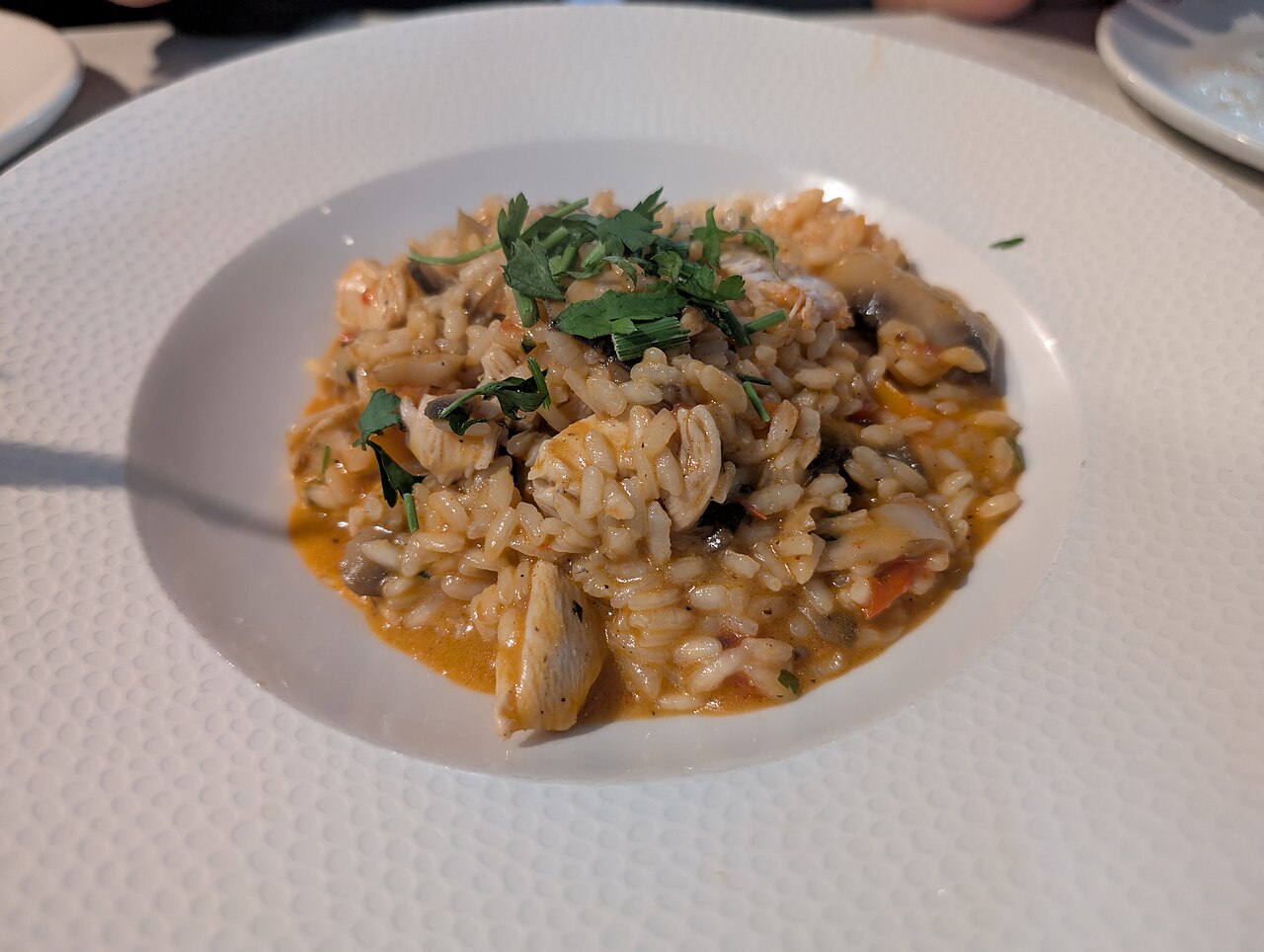
The short answer
Check the grain before adjusting the sauce: a chalky core needs more hot liquid and cooking. Tender rice with a stiff finish needs loosening off the heat. Extra butter or cheese cannot hydrate an undercooked center.
Choose rice that can release starch and retain a center
Carnaroli and Arborio are practical starting points because their grains can contribute creamy starch while retaining some structure. Long-grain rice behaves differently and should not be expected to make the same dish under an identical schedule. Do not rinse the risotto rice for this method; its surface starch is useful. Measure the stock but keep a little extra hot unsalted liquid nearby, since grain age, pan width and simmer intensity all influence the amount needed.
Brown mushrooms outside the rice
Mushrooms contain water that first needs to evaporate before their surfaces brown. Spread them in a wide pan and cook in batches rather than steaming a large pile. Reserve some for the finish so the bowl has recognizable browned pieces as well as mushroom flavor throughout. Adding all mushrooms raw to the simmering rice gives a different softer result and can cloud timing with extra liquid. Season modestly because the final cheese and stock contribute additional salt.
Match each addition to the movement in the pan
Add enough hot stock to keep the rice fluid and gently simmering. Stir regularly, reaching the corners and base, without beating the grains continuously. Wait until most of the previous addition has been taken up, but do not leave the pan to dry and stick. If liquid disappears almost immediately, the burner may be too fierce for the amount of rice. If the mixture hardly moves at all, it may need more heat rather than a longer silent soak.
Taste the grain before finishing the sauce
Near the expected endpoint, lift out a grain and bite it carefully. A pleasant slight resistance is different from a dry chalky core. If the core is still hard, keep cooking with hot stock before adding the final butter and cheese. Fat makes the mouthfeel richer but cannot hydrate an undercooked center. Compare two or three grains from different places in the pan when the batch is large, especially if a small burner heats only the middle of a broad pot.
Finish off the heat and expect movement
When the rice is ready, remove the pan from the burner and beat in the measured butter and finely grated Parmesan. Add stock to obtain a flowing consistency. A spoon drawn through should leave a path that closes readily rather than a rigid trench. On a warm plate, the risotto should spread gently when tapped. That fluid finish is not the same as serving undercooked rice in excess broth: both the grain and the surrounding sauce need their own check.
Compare risotto and paella by their intended structure
Both dishes contain rice and stock, but the successful endpoint is different. Risotto aims for tender grains held in a flowing starch-rich sauce, with regular movement and an off-heat finish. A paella-style method spreads rice across a shallow pan, relies on a planned absorption stage and generally avoids repeated stirring. Transferring the same ladle-by-ladle method between them changes the result, even if the rice varieties look similar. Before borrowing a fix, identify whether the problem is an underhydrated grain, unwanted free liquid or the wrong surrounding texture for that dish. Extra cheese cannot make a paella into a correctly cooked risotto, and leaving finished risotto on the heat to dry does not create an equivalent paella. Pan area, grain variety and the role of stirring must be considered together. The common useful check is the grain center; the desirable sauce or base around it is recipe-specific.
Separate the measured stock allowance from the finishing reserve
The recipe’s stock quantity is a planning allowance, not an instruction to force every drop into the pan or to stop while the grain is chalky. Keep the bulk of the stock hot and have separate unsalted hot water available if the stock is already strongly seasoned. Near tenderness, reduce the size of each addition so you can finish without a large pool of excess liquid. Note whether the pan is broad and evaporative or narrow with a slow simmer before blaming the rice for using more or less than expected. Butter and cheese belong after the grain check. Once they enter, reassess seasoning before deciding whether more stock is suitable or plain hot water is the better loosener.
Choose the right next step
| Observation | What distinguishes it | Decision |
|---|---|---|
| Firm grain, dry pan | The grain still has a chalky core and little liquid remains around it. Adding the final cheese now may give a richer mouthfeel while the center stays insufficiently hydrated. | Continue with hot stock and gentle cooking before finishing. If the stock is strongly salted, use suitable unsalted liquid for further hydration. Taste another grain after it has had time to absorb, not immediately after a ladle enters. |
| Tender grain, rigid finish | The rice is pleasant to bite but holds a stiff mound. This is primarily a finishing-consistency question, so a long additional simmer risks overcooking grains that are already ready. | Loosen off the heat with a small amount of hot stock, mix and check the spread on a warm plate. Serve promptly. A second spoonful may be needed while portioning, because the last serving waits longer than the first. |
| Tender grain, excess loose broth | The center is cooked, but liquid gathers separately around it. That differs from the desirable continuous creamy movement and should not be diagnosed as a reason to add still more stock. | Fold gently and allow only a brief controlled adjustment if the grain can tolerate it. For the next attempt, reduce the final stock additions. Extra butter is not a dependable remedy for a large excess of water. |
A practical checklist
- Keep stock hot and reserve extra unsalted liquid.
- Brown watery mushrooms separately.
- Maintain a gentle active simmer without letting the base dry.
- Taste the grain before adding final dairy.
- Loosen off the heat and serve on warm shallow plates.
Related questions
Why does my risotto stand in a mound?
It may simply need more hot stock at the finish, especially after standing. Add a little, fold or beat gently and check the flow again. If the grains themselves are overcooked and broken, extra liquid changes consistency but cannot restore their original structure.
Can I prepare risotto completely before guests arrive?
A fully finished pan continues absorbing liquid and is difficult to hold at its best. Preparing stock, mushrooms, grated cheese and chopped onion ahead is more predictable at home. Restaurant partial-cooking systems involve additional cooling and finishing controls and should not be assumed from a brief shortcut.
Does constant stirring make it creamier?
Regular movement is useful, but frantic stirring can damage grains and is not a substitute for suitable rice and correct hydration. Keep the pan from sticking, distribute liquid and taste near the end. The final fat-and-stock adjustment contributes as much to the served texture as the stirring rhythm.
Written as a practical editorial guide. We do not claim personal test results or professional qualifications. Read our editorial approach.