Coconut and peanuts give richness, while tamarind and measured sweetness keep the sauce from feeling heavy. A home pot should maintain a quiet simmer, with the vegetables added only when the meat has begun to yield.
Slow Beef Massaman Curry
Includes a 10-minute rest after cooking; allow longer gentle simmering if the beef is not tender.
Planning totals add preparation, cooking and listed waits. Overlapping stages may shorten the schedule; ingredient and equipment differences can lengthen it.
Ingredients
Times and base yield refer to the original recipe. Scaling quantities does not automatically change pan size, temperature or cooking time.
Step-by-step method
The steps describe the base batch (4 servings). The calculator changes the ingredient list only; amounts written in the steps, equipment and timing remain for that base batch.
Step 1
Fry curry paste in the thick portion of coconut milk over moderate heat until aromatic.
Step 2
Add beef and turn it through the paste, then add remaining coconut milk and stock.
Step 3
Simmer gently, partially covered, for 75–90 minutes until the beef begins to yield.
Step 4
Add potatoes and onion and continue cooking until both beef and potatoes are tender.
Step 5
Stir in peanuts and season gradually with tamarind, fish sauce and palm sugar.
Step 6
Rest for 10 minutes, then check the balance and skim only excess surface fat.
Why this version works
Choose chuck and leave time for its variation
Cut 800 grams of chuck into similarly sized cubes, trimming large hard fat but keeping fine marbling and connective tissue. A lean steak cut may dry out during a long simmer and is not an upgrade here. The stated timing is a planning estimate: different pieces of chuck can need longer. Start in a heavy pot with enough room for the curry paste and coconut to heat without catching. When checking tenderness, use a piece from the middle of the batch rather than the smallest cube, and look for a fork entering easily without every piece falling apart.
Use the coconut can across the two cooking stages
Spoon a little of the thicker coconut portion into the pot with the three tablespoons of massaman paste, keeping the remainder ready to dilute the base after the beef enters. Add the 400 ml stock with it so the 800 g chuck has enough liquid for a gentle simmer. Before the potatoes join, check whether the beef has begun yielding and whether more hot unsalted liquid is needed. The pantry guide explains stabilized coconut products; this recipe’s priority is retaining a workable braising liquid until both meat and potatoes are tender.
Add potatoes after the meat begins to soften
The potatoes should be in substantial even chunks that survive the remaining simmer. Test the beef before adding them: it should have lost its initial toughness, even if it is not fully tender. If still very resistant, continue with the meat alone and replenish hot stock as needed. Onion wedges go in later for the same reason; they should soften without disappearing completely. A lid left slightly ajar controls evaporation. A hard boil wastes liquid, can break vegetables and makes it harder to synchronize the pot without overcooking one component.
Balance rich sauce with a measured sour finish
Tamarind, fish sauce and palm sugar are finishing adjustments, not a fixed guarantee across every brand of paste and concentrate. Add part, stir and taste with a piece of potato or a spoon of rice. Potatoes and beef absorb seasoning, while tasting sauce alone exaggerates its strength. Peanuts contribute texture but soften during prolonged storage, so reserve a few fresh ones for serving if desired. If the curry has a deep surface fat layer, skim excess rather than trying to remove every droplet. The sauce should remain spoonable enough to surround rice.
Let the beef set the potato schedule
The potatoes enter only after the chuck begins to yield. If the beef still resists strongly at that point, continue its gentle simmer before adding potatoes rather than starting a countdown that will leave the vegetables collapsing while the meat stays firm. Keep enough unsalted liquid available to maintain the sauce during the extended cook. Once both components are ready, adjust tamarind, fish sauce and sugar against a bite containing potato as well as beef. Potato softens the perceived intensity of the sauce, so seasoning the liquid alone can lead to an overly forceful result.
Ingredient choices and substitutions
Choose beef with connective tissue and fine marbling. Massaman curry pastes differ in salt and spice strength, so taste before adding all the fish sauce. Tamarind concentrate may need dilution depending on the brand.
Fixes for this recipe
| What you notice | Likely reason | What to do |
|---|---|---|
| Tender potatoes beside tough beef | Vegetables entered before the chuck was close enough to tender. | Remove potato pieces gently and continue the beef with sufficient liquid. Return potatoes only to warm through once the meat yields, rather than boiling everything until the vegetables dissolve. |
| Rich but flat coconut flavor | The sauce lacks aromatic paste, salt balance or a measured acidic finish. | Taste with rice and adjust one element at a time. Add tamarind gradually; a large sour addition does not replace a weak spice base. |
| A salty thick paste at the bottom of the pot | Liquid evaporated during the long cook and seasoning became concentrated. | Add hot unsalted stock, loosen gently and reassess before adding fish sauce. Keep the lid positioned to limit evaporation while tough beef still needs time. |
Recipe-specific questions
Can I cook massaman in a slow cooker?
It is a possible adaptation, but evaporation and timing differ. Develop the paste first if the appliance allows or use a separate pan, reduce added stock initially and add potatoes when they can finish without disintegrating. Follow safe appliance guidance.
Is beef tender when it reaches a safe minimum temperature?
Not necessarily. A slow-cooking cut can be safely hot yet still resist a fork. This recipe needs time for tenderness as well as safe cooking, so the meat’s texture determines when the braising stage is complete.
Can peanut butter replace the whole peanuts?
It thickens the sauce and gives a more uniform nut flavor, but removes their textural role. If using it as a variation, choose unsweetened peanut butter, add a little at a time and reduce other sweetness before judging balance.
Serving and storage
Jasmine rice provides a plain background, while a fresh cucumber side cuts through the coconut richness. Avoid adding several other sweet coconut dishes to the same meal, which reduces contrast rather than making the curry more distinctive.
Cool curry in shallow portions and refrigerate, keeping rice separate. Reheat with a small addition of water or stock because potatoes absorb sauce while standing. Stir carefully around soft vegetables, and add any reserved fresh peanuts after heating if a little crunch is desired.
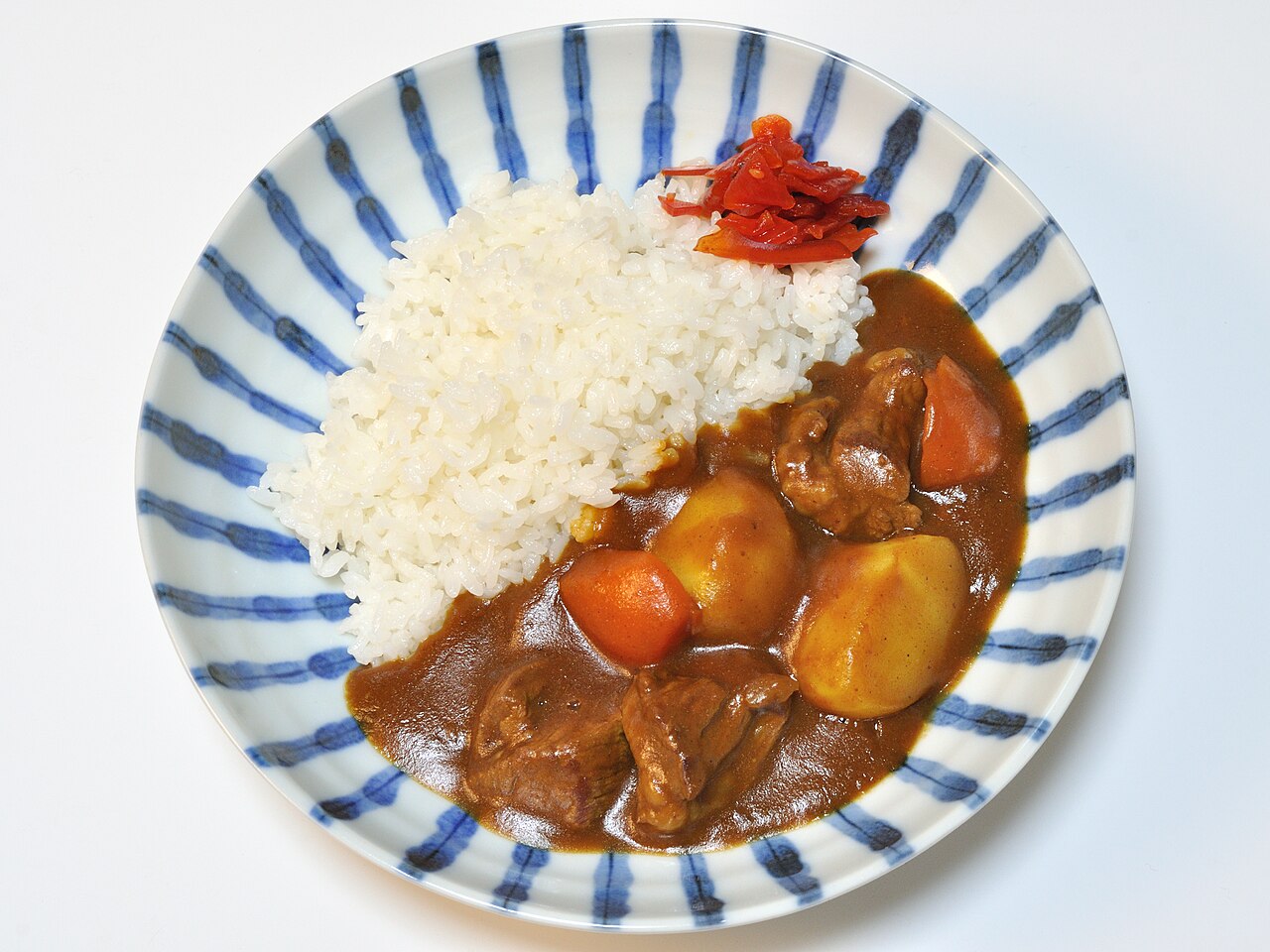
An AI-assisted editorial guide, not independently kitchen-tested. The photograph is a serving example. How we prepare and correct our guides.
For safe handling, consult FDA guidance. Send recipe corrections by email to ZYS10.