This recipe uses a prepared curry roux, so the product's strength matters as much as the spoon measurements. Cook the chicken and vegetables first, then dissolve the roux off the heat before the brief final simmer.
Japanese Chicken Curry
Planning totals add preparation, cooking and listed waits. Overlapping stages may shorten the schedule; ingredient and equipment differences can lengthen it.
Ingredients
Times and base yield refer to the original recipe. Scaling quantities does not automatically change pan size, temperature or cooking time.
Step-by-step method
The steps describe the base batch (4 servings). The calculator changes the ingredient list only; amounts written in the steps, equipment and timing remain for that base batch.
Step 1
Brown the chicken lightly in oil, then remove to a plate.
Step 2
Cook the onion in the same pan until softened and lightly golden.
Step 3
Add carrots, potatoes, stock and chicken, then simmer for 20 minutes.
Step 4
Check the chicken reaches 74°C / 165°F and the vegetables are tender.
Step 5
Turn off the heat and dissolve the curry roux into the liquid in small pieces.
Step 6
Add grated apple and simmer gently for 5 minutes, stirring to prevent sticking, then serve beside rice.
Why this version works
Choose the roux block before committing the liquid
Japanese curry roux contains fat, flour, spices and seasoning in a concentrated form. Different brands use different block weights and recommend different water amounts. The written 70 g is a starting point for this home batch; compare it with the packet instructions and adjust gradually rather than adding the whole package. Mild, medium and hot labels describe that producer's range, not a universal heat scale. Check for wheat, dairy and other allergens. A curry powder alone does not provide the same thickening and seasoning and cannot replace the roux gram for gram.
Give onion time to sweeten without burning
Slice the onion evenly and cook it after the chicken has browned lightly. It should soften and gain some golden edges, creating a gentle sweetness that supports the curry spices. The grated apple adds another small sweet-fruity note, but it is not a remedy for an onion base burnt black. Brown chicken in manageable batches so excess liquid does not prevent color. Thigh pieces remain forgiving during the later simmer; breast can work but should be checked earlier and removed temporarily if it finishes before the potatoes.
Cut vegetables for a shared finish
Carrots can be slightly smaller than potatoes because dense carrot pieces may take longer to soften. Use potatoes that retain some shape rather than ones that dissolve immediately into the sauce. Add stock and simmer until the vegetables are genuinely tender and chicken reaches the stated safe temperature before adding roux. Once the sauce thickens, heat moves less freely and the bottom catches more easily. Trying to finish hard potatoes in a thick floury sauce often leads to a scorched base before their centers become soft. Test a piece directly with a knife.
Dissolve off the heat and finish gently
Turn the burner off and break the roux into small pieces so it melts into the hot liquid without forming dry lumps. Stir around the corners and base, then return to low heat for the short cooking stage that removes a raw flour impression. The sauce continues thickening while standing. Keep a little hot water nearby and loosen gradually until it moves easily around the vegetables. Do not add extra soy sauce automatically: commercial curry roux is already seasoned, and concentrating it through a long uncovered boil may make it much saltier than expected.
Treat the roux quantity and sauce volume as a pair
A curry block contains thickening and seasoning, so adding another piece changes more than color. Check the package's liquid guidance against the measured stock before cooking, and remember that vegetables and evaporation also affect the finished volume. Dissolve a portion off the heat, simmer gently and reassess before adding more. If the sauce is already salty but too thick, extra roux moves it in the wrong direction. Serve some sauce with plain rice when judging its strength; tasting only the thick sauce can tempt unnecessary sweetness or dilution.
Ingredient choices and substitutions
Choose a roux block with a heat level you enjoy and check its wheat, dairy and other allergen information. Waxy potatoes hold their shape. Unsalted stock gives more control because commercial roux is already seasoned.
Fixes for this recipe
| What you notice | Likely reason | What to do |
|---|---|---|
| The sauce tastes powdery. | The roux dissolved but did not receive enough gentle cooking afterward. | Simmer briefly while stirring the bottom carefully. Add a little hot water if the sauce is already very thick so the flour can cook without scorching. |
| Brown flecks and a burnt smell rise from the base. | Thick curry sat over excessive heat without enough stirring. | Transfer the unburnt upper portion to a clean pot without scraping the scorched layer into it. Loosen and reheat gently; extra sweetness cannot remove burnt flavor. |
| The curry becomes almost solid as it cools. | The roux concentration is high and starch continues setting after cooking. | Add hot water gradually when reheating and stir thoroughly before judging. Check the package ratio next time rather than assuming every block matches the written weight. |
Recipe-specific questions
Can curry powder replace the block?
Only with a separate method that supplies fat, flour and seasoning. Powder is mostly a spice component, so simply adding 70 g would be excessive and would not reproduce the same sauce. Use a from-scratch roux formulation if avoiding prepared blocks is important.
Why add only a tablespoon of apple?
The goal is a subtle rounded sweetness, not a fruit sauce. Onion and the commercial roux may already contribute sugar. Taste before increasing the apple, especially with a sweet mild block, and avoid treating extra sweetness as the automatic correction for every strong spice note.
Can the vegetables be roasted separately?
Yes, as a texture variation. Add fully cooked pieces near the end so they retain browned edges, and make sure enough liquid remains for the sauce. This changes the integrated soft vegetable style of the written recipe but can be useful when working with leftover roasted vegetables.
Serving and storage
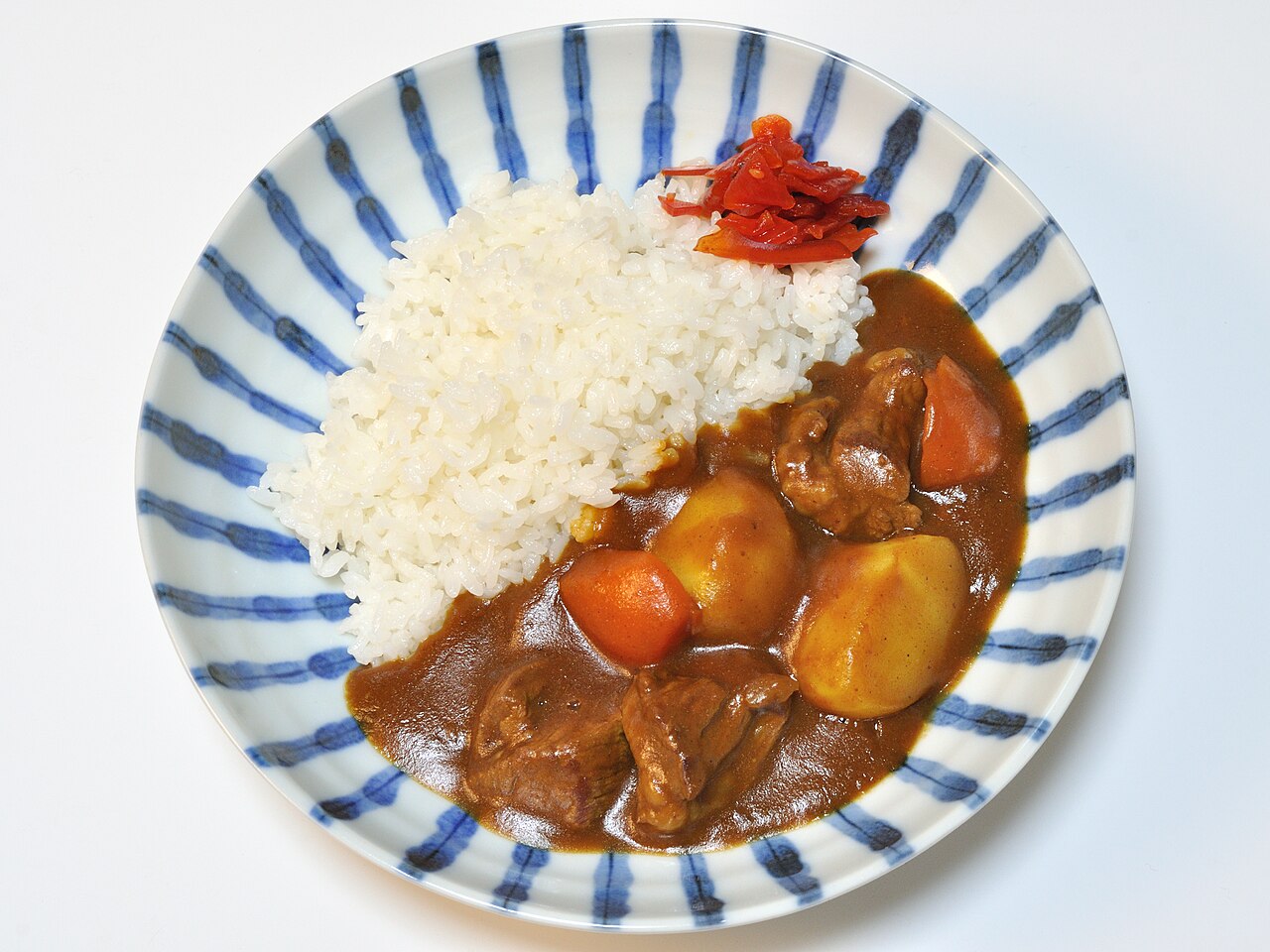
Serve beside plain short-grain rice, leaving a little rice uncovered for contrast. Pickled vegetables or a fresh cucumber side can balance the rounded sauce, while additional salty bottled condiments are usually unnecessary until the curry itself has been tasted.
Cool curry in shallow containers rather than leaving a deep pot warm for hours. Store rice separately, cooling it rapidly and using refrigerated rice within twenty-four hours. Reheat curry thoroughly while stirring and add water as needed; the thick sauce heats unevenly if left unmoved. Freeze sauce portions with the expectation that potatoes may soften or become grainier after thawing.
An AI-assisted editorial guide, not independently kitchen-tested. The photograph is a serving example. How we prepare and correct our guides.
For safe handling, consult FDA guidance. Send recipe corrections by email to ZYS10.