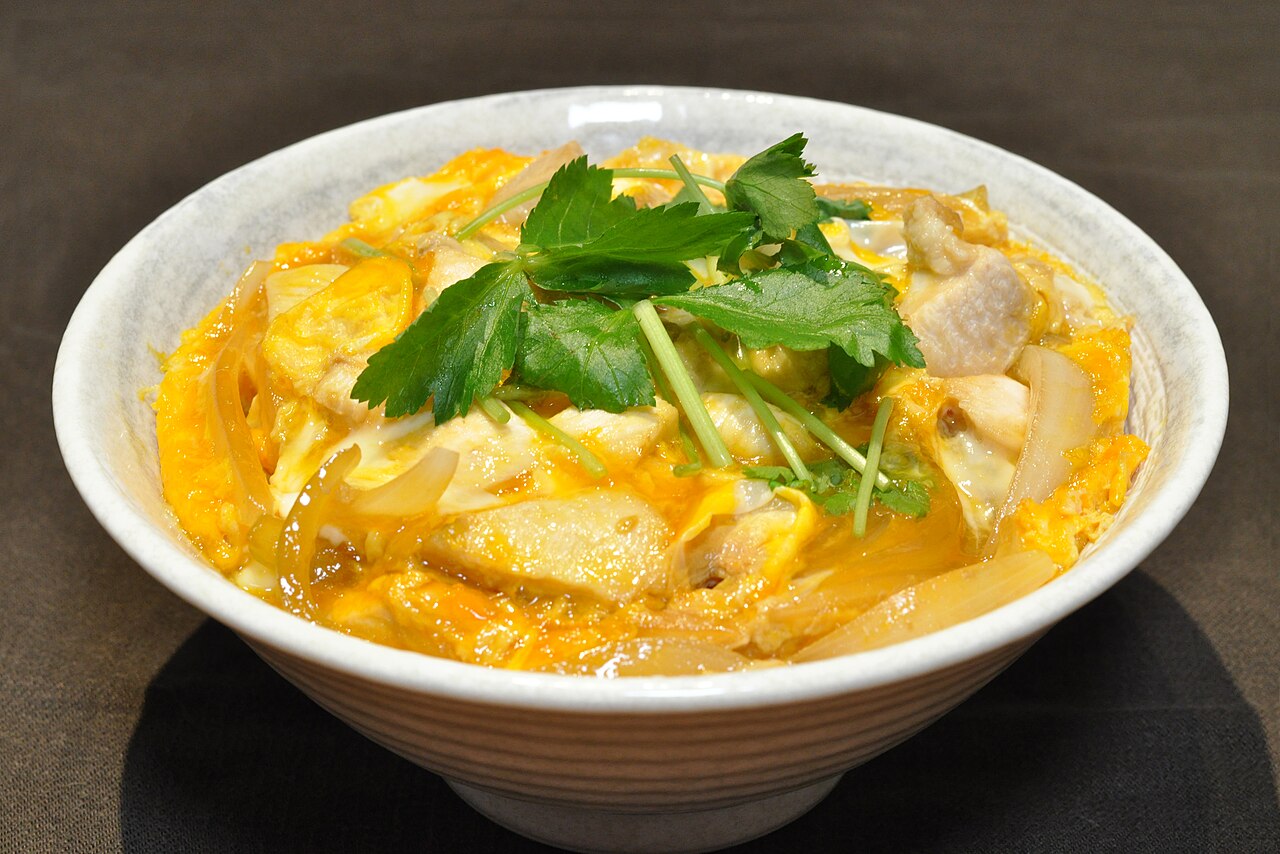
The broth should flavor the rice without turning the bowl into soup. A shallow pan and modest simmer make it easier to cook the chicken fully before the delicate egg stage begins.
Chicken & Egg Oyakodon
Planning totals add preparation, cooking and listed waits. Overlapping stages may shorten the schedule; ingredient and equipment differences can lengthen it.
Ingredients
For fractional eggs, beat an extra egg or yolk and measure the required fraction.
Times and base yield refer to the original recipe. Scaling quantities does not automatically change pan size, temperature or cooking time.
Step-by-step method
The steps describe the base batch (4 servings). The calculator changes the ingredient list only; amounts written in the steps, equipment and timing remain for that base batch.
Step 1
Combine dashi, soy sauce, mirin and sugar in a shallow skillet and bring to a gentle simmer.
Step 2
Add onion and cook for 4 minutes until beginning to soften.
Step 3
Add chicken in an even layer and simmer until the thickest pieces reach 74°C / 165°F.
Step 4
Beat the eggs loosely, leaving a little separation between white and yolk.
Step 5
Pour the loosely beaten eggs around the cooked chicken, cover and cook gently until the egg is set throughout. Check the center of this chicken-and-egg mixture reaches 74°C / 165°F.
Step 6
Divide hot cooked rice among bowls and slide the chicken, egg and a little broth over the top. Finish with thinly sliced spring onions.
Why this version works
Use a shallow layer for predictable timing
Slice the onion thinly and cut chicken thighs into bite-size pieces of similar thickness. A wide shallow skillet exposes them evenly to the simmering broth, while a narrow deep saucepan stacks some pieces above the liquid. The 200 ml dashi is a relatively small amount deliberately: onion and chicken contribute additional moisture. Let the onion begin softening before the meat enters. If the pan dries before the chicken cooks, add a small splash of dashi or water rather than adding more soy sauce, which would increase salinity at the same time.
Taste the broth with plain rice in mind
The mixture of dashi, soy, mirin and sugar should be assertive enough to season the unseasoned rice below it, but not harshly salty. Different soy and mirin products change that balance. Mirin-style seasonings can contain added salt or substantial sweetness, so check the label and hold back a little sugar when necessary. If alcohol avoidance is required, select an appropriate alcohol-free product rather than promising that a brief simmer removes every trace. A spoonful of cooked rice with a little broth is a better tasting sample than the concentrated liquid alone.
Cook chicken before the eggs enter
Thigh meat tolerates the short simmer well and stays tender more readily than thin breast slices that continue cooking under egg. Check one of the thickest pieces reaches the stated safe poultry temperature. The egg stage is too short and gentle to act as a dependable rescue for an undercooked chicken center. Once the meat is ready, spread it evenly through the pan and reduce excessive broth slightly if needed. The finished bowl should receive a little savory liquid, not the entire contents of a watery pan that overwhelms the rice.
Beat eggs loosely and avoid vigorous stirring
Beat the eggs only until loosely combined so ribbons of white and yolk remain visible. Pour around the cooked chicken in a controlled stream, cover and let the heat set the egg without vigorous stirring. This version cooks the chicken-and-egg topping to 74°C / 165°F throughout; a liquid center is not its endpoint. Lift a section with a broad spoon once set rather than breaking it into crumbs. If the bottom starts sticking before the middle is ready, lower the heat and cover instead of forcing a fiercer boil. Finish with the listed spring onions after portioning over hot rice.
Portion the broth according to the rice underneath
The topping should season the cooked rice, but the amount of liquid transferred is a serving decision. Use a broad spoon to lift chicken and set egg, then add broth selectively rather than tipping the entire skillet over the bowls. Taste a bite that includes rice before adding more soy at the table. If one bowl has much less rice, it also needs less concentrated liquid. Keep the spring onion finish fresh and separate, and divide the chicken evenly before pouring extra broth so the last serving does not receive mostly onion and sauce.
Ingredient choices and substitutions
Thighs tolerate simmering well and remain juicy. Japanese short-grain rice absorbs the broth while staying pleasantly cohesive. Use fresh eggs and pasteurized eggs if planning a softer finish.
Fixes for this recipe
| What you notice | Likely reason | What to do |
|---|---|---|
| The rice becomes soupy. | Too much dashi was used or the pan did not reduce before the egg stage. | Use a slotted broad spoon to transfer the topping and add broth selectively. Reduce the liquid a little earlier in the next batch instead of cooking the finished eggs until dry. |
| The egg is tough and broken into crumbs. | It boiled vigorously or was stirred repeatedly after pouring. | Lower the heat for the next portion and let the egg set with minimal movement. Add a small fresh garnish for contrast rather than trying to reverse overcooked protein with more liquid. |
| Chicken pieces finish at different times. | Their thickness varied or they were stacked in a deep pan. | Turn and separate pieces and check the thickest directly. For the next batch, use a shallow layer and cut more evenly before starting the fast simmer. |
Recipe-specific questions
Can all four bowls be made together?
Yes, if the skillet is broad enough for an even layer and you can portion it promptly. A small pan may work better in two batches. Keep cooked rice hot safely while finishing, rather than letting bowls stand partly assembled during a long wait.
Is a runny yolk necessary?
No. Texture preferences vary, and a fully set version is an appropriate choice. The useful distinction is gentle cooking that avoids rubbery egg, not leaving every egg undercooked. Pasteurized eggs may be considered when a softer finish is specifically intended.
What can replace dashi?
A mild unsalted chicken or vegetable stock gives an accessible home adaptation, though it lacks dashi's particular aroma. Do not replace it with a strongly salted stock cube at full strength without reconsidering the soy sauce. Taste the resulting broth before the eggs are added.
Serving and storage
A small cucumber pickle or lightly dressed greens balances the sweet-savory bowl. Keep the rice plain and hot, with spring onion added at the end, so the chicken broth remains the primary seasoning rather than competing with a second heavy sauce.
Oyakodon is best assembled fresh because the egg firms and rice absorbs more broth while standing. For advance preparation, cook the chicken-onion base and refrigerate it safely, then reheat thoroughly and add fresh egg near serving. Cool rice rapidly if storing it, ideally within one hour, and use refrigerated rice within twenty-four hours.
An AI-assisted editorial guide, not independently kitchen-tested. The photograph is a serving example. How we prepare and correct our guides.
For safe handling, consult FDA guidance. Send recipe corrections by email to ZYS10.