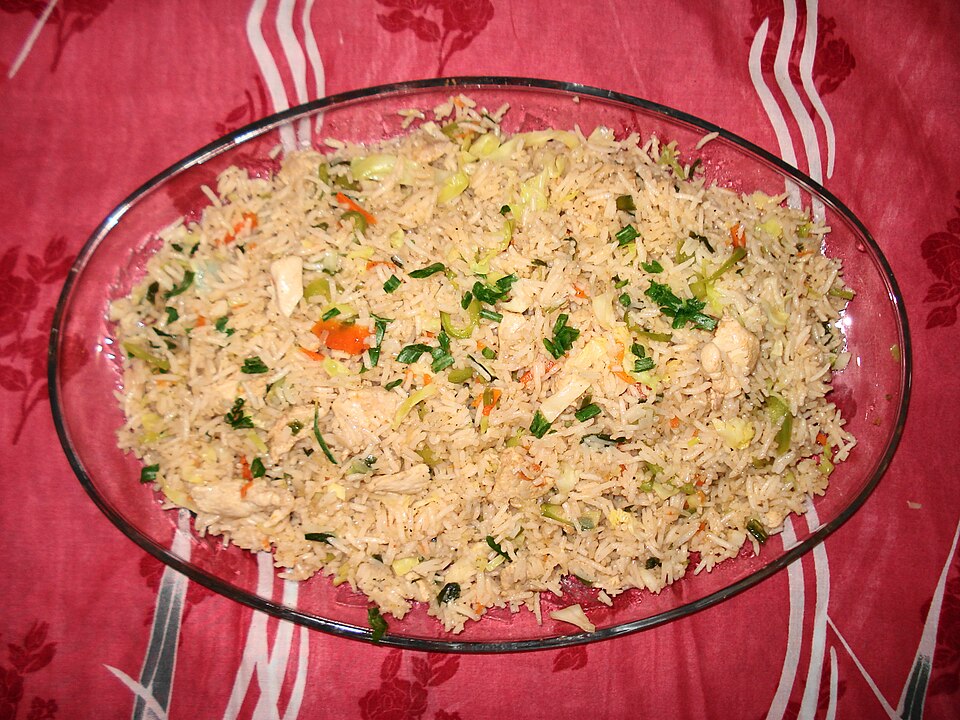
Loose chilled rice, soft egg pieces and restrained seasoning give a more satisfying result than a crowded pan of wet grains. The scallion whites cook early, while the greens and a little sesame oil provide a fresh final aroma.
Simple Egg Fried Rice
Planning totals add preparation, cooking and listed waits. Overlapping stages may shorten the schedule; ingredient and equipment differences can lengthen it.
Ingredients
For fractional eggs, beat an extra egg or yolk and measure the required fraction.
Times and base yield refer to the original recipe. Scaling quantities does not automatically change pan size, temperature or cooking time.
Step-by-step method
The steps describe the base batch (4 servings). The calculator changes the ingredient list only; amounts written in the steps, equipment and timing remain for that base batch.
Step 1
Break chilled rice into loose grains before heating the pan.
Step 2
Beat eggs lightly and slice spring onion whites separately from the greens.
Step 3
Heat half the oil and scramble eggs until just set, then remove.
Step 4
Add remaining oil and spring onion whites, then rice and peas in a wide layer.
Step 5
Toss until steaming hot throughout, add soy sauce around the edge and return the eggs.
Step 6
Finish with white pepper, sesame oil and spring onion greens.
Why this version works
Start with cooked rice handled safely
The recipe needs 700 grams of cooked chilled rice. Cool newly cooked rice quickly in shallow containers, ideally within one hour, and refrigerate; do not leave it on the counter overnight to become dry. Long-grain rice gives a loose result, but its original water ratio still matters. Very wet freshly cooked rice does not become ideal simply by chilling briefly. Break clumps before heating the skillet, using a spoon or clean hands without crushing the grains. Keep the rice cold until preparation is ready so it does not undergo unnecessary warm holding.
Cook eggs as a separate soft component
Beat four eggs only until whites and yolks combine, then scramble in half the oil. Remove while set but still tender, because they return to the hot pan later. Leaving them in the skillet through the entire rice heating stage produces dry tiny fragments. The empty pan then has room for spring onion whites and grains. Frozen peas can enter in their measured small quantity if free of large ice clumps. If the pan is small, divide both rice and other components so each batch has enough surface contact rather than making one large steaming pile.
Use pan space before adding more oil
A broad skillet around 28–30 centimetres is helpful, but batch size still depends on the burner. Spread rice into a relatively thin layer, allow brief contact and fold so cold grains reach the hot surface. The rice must become steaming hot throughout; a hot bottom under a cold mound is not enough. If grains stick, first check crowding and moisture rather than adding repeated tablespoons of oil. A well-heated seasoned wok or suitable non-stick pan gives more tolerance, while stainless steel requires more careful heat and release control.
Keep seasoning light enough to taste the egg
One tablespoon of light soy is intentionally modest for this amount of rice and egg. Add it across the hot pan so it distributes, then return eggs and fold gently. White pepper brings warmth without requiring a visibly dark sauce. Half a teaspoon of sesame oil is a finishing accent; a large quantity can dominate and make the dish feel heavy. Spring onion greens should remain noticeable and fresh. Taste a complete spoonful before adding more soy, especially if the rice was already seasoned during its first cooking. The goal is separate savory grains rather than brown color at any cost.
Separate seasoning coverage from a dark color
The soy allowance is deliberately modest for a batch whose egg, spring onion and rice should remain noticeable. Spread the sauce across a broad area of the pan and toss rather than pouring it over one unmoving clump. If the color is uneven, break up the rice and improve distribution before adding more soy. A paler grain is not automatically unseasoned, particularly once sesame oil and white pepper are present. Return the cooked egg late enough to stay in visible pieces instead of repeatedly crushing it while trying to color every grain identically.
Ingredient choices and substitutions
Use rice that was cooled quickly, ideally within one hour, and refrigerated for no more than 24 hours. Long-grain rice gives a loose texture, while other varieties create different results. Frozen peas can go in directly if small and free of ice clumps.
Fixes for this recipe
| What you notice | Likely reason | What to do |
|---|---|---|
| Rice stays clumped and steams instead of frying | It was too wet, not separated or cooked as an oversized batch. | Loosen clumps before cooking and use smaller batches. Do not smash them forcefully against the pan, which breaks grains and releases more starch. |
| Egg tastes dry and disappears into crumbs | It remained in the pan while cold rice took time to heat. | Scramble separately, remove while tender and return only near the end. A fresh egg added to a finished clumpy pan is not a substitute for controlling the first egg stage. |
| The rice is greasy but still stuck | Extra oil was used to compensate for excessive moisture or crowding. | Reduce batch size and prepare drier safely chilled rice next time. Use a broad appropriate pan, allowing grains contact rather than trapping a thick layer above the heat. |
Recipe-specific questions
Do I need rice that is exactly one day old?
No. The useful qualities are a sufficiently dry surface, separate grains and safe cooling and storage. Chilling helps texture, but the calendar age does not repair rice that was cooked very wet or held unsafely.
Can I use brown rice for egg fried rice?
Yes as a variation, with a firmer bite and more pronounced grain flavor. It must already be fully cooked and safely chilled. Keep the same batch-size discipline and adjust the seasoning after tasting rather than assuming it needs twice as much soy.
Why not use dark soy to make the color richer?
Dark soy adds more than color and can shift sweetness and texture. This simple egg-led version deliberately uses light soy sparingly. A pale golden result is not a defect if the grains are hot, separate and properly seasoned.
Serving and storage
Serve beside a vegetable dish, steamed fish or a modestly sauced main. The simple rice is most useful as a contrast; pairing it only with other salty starch dishes makes its soft egg and scallion less noticeable.
Plan the amount carefully because this recipe already reheats cooked rice. Use safely chilled rice within 24 hours and reheat only once until steaming hot throughout. Avoid cooling and refrying the finished batch repeatedly. Keep garnishes clean and prepare only the portions you expect to eat.
An AI-assisted editorial guide, not independently kitchen-tested. The photograph is a serving example. How we prepare and correct our guides.
For safe handling, consult FDA guidance. Send recipe corrections by email to ZYS10.