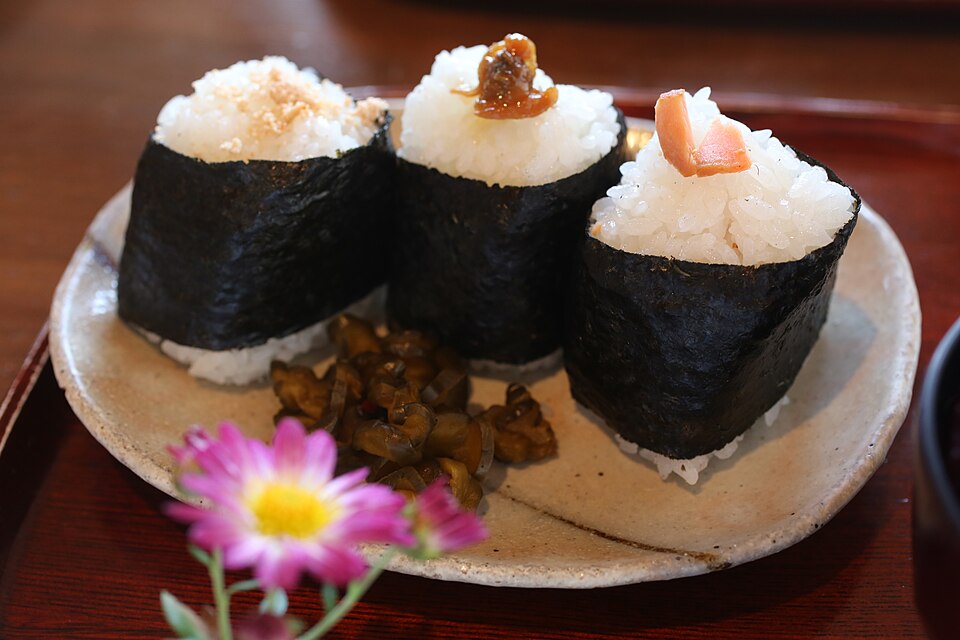
They should hold together when lifted yet separate into tender grains when eaten. This version uses fully cooked salmon inside plain salted short-grain rice; it is not sushi rice and does not need a sweet vinegar dressing.
Simple Salted Onigiri
Plus soaking and resting
Planning totals add preparation, cooking and listed waits. Overlapping stages may shorten the schedule; ingredient and equipment differences can lengthen it.
Ingredients
Times and base yield refer to the original recipe. Scaling quantities does not automatically change pan size, temperature or cooking time.
Step-by-step method
The steps describe the base batch (8 onigiri, about 4 servings). The calculator changes the ingredient list only; amounts written in the steps, equipment and timing remain for that base batch.
Step 1
Rinse rice gently until the water becomes less cloudy, then soak for 20 minutes.
Step 2
Drain and add the measured fresh water, cook covered according to the rice package and rest for 10 minutes.
Step 3
Fluff the rice and let it cool only until comfortable to handle, keeping it covered.
Step 4
Moisten clean hands with water and a tiny pinch of salt, or use food-safe wrap.
Step 5
Cup a portion of rice, add a small amount of fully cooked salmon and close with more rice.
Step 6
Shape gently into triangles, sprinkle with sesame and wrap with nori just before eating.
Why this version works
Choose Japanese short-grain rice rather than any sticky grain
The rice must have enough natural cohesion to hold a shape without being mashed. Japanese short-grain rice sold as sushi rice is a useful choice, but glutinous sticky rice is a different ingredient with a different texture. The 300 g quantity can make about eight modest rice balls, depending on the cooked yield and filling size. Rinse gently and drain before adding the measured fresh cooking water. Because rice brands and cookers vary, use the package or cooker guidance when it conflicts with a memorized universal ratio rather than forcing a dry or waterlogged result.
Shape warm rice without compressing it into a block
After cooking and the covered rest, fluff gently and let the rice cool only until it can be handled comfortably. Cold refrigerated rice is harder and less willing to join without pressure. Lightly damp hands prevent sticking, but dripping wet hands add water and make the surface slippery. Food-safe wrap offers a practical alternative when shaping feels difficult. Cup a portion, close it around the filling and make a few gentle turns into a triangle or round. The aim is to connect the outside grains, not crush all the air from the center.
Keep the salmon filling small and dry enough
Use fully cooked salmon with bones and skin checked carefully, then flake it into small pieces. A little seasoning can be helpful, but very wet sauces make the center harder to enclose and can leak through the rice. Divide the 120 g salmon into modest portions so a clear rice border remains around each. Overfilling often causes cracks because the shaping pressure pushes fish through a thin wall. If using leftover fish, ensure it was cooled and refrigerated correctly before it becomes a ready-to-eat filling; shaping rice does not provide another cooking stage.
Add nori according to the texture you want
Nori wrapped around warm rice softens quickly from steam. That can be pleasant, but it is different from the crisp snap of a sheet added at the table. Keep strips dry in a sealed package until needed if crispness matters. Salt on the hands is primarily seasoning here, not a method that makes salmon-filled rice safe to leave warm for hours. For a packed meal, plan chilled transport and prompt eating. The shape may look sturdy and portable, but the rice and fish still need the same careful temperature handling as other cooked food.
Divide the filling before shaping warm rice
Lay out eight small salmon portions before handling the rice. This makes the filling allowance visible and prevents the first few rice balls from taking most of it. Shape with enough rice around every side to enclose the salmon; pressing a large exposed lump into a thin shell makes handling harder. If a portion will be carried rather than eaten immediately, keep the nori separate for its texture and follow the stated chilling guidance. Tight wrapping does not replace safe handling of the cooked rice or fish.
Ingredient choices and substitutions
Choose rice labeled Japanese short-grain or sushi rice, but do not season it with sushi vinegar for this version. Fully cooked salmon should be cooled safely before use. Keep nori sealed away from humidity.
Fixes for this recipe
| What you notice | Likely reason | What to do |
|---|---|---|
| The rice balls crumble when lifted. | A loose long-grain variety was used, the rice was too dry or it cooled fully before shaping. | Use the rice as a bowl meal rather than crushing it into hard blocks. For the next batch choose appropriate short-grain rice and shape while comfortably warm. |
| The middle feels dense and gummy. | The rice was overwatered or repeatedly squeezed to compensate for loose shaping. | Use lighter pressure and smaller fillings next time. Check the rice cooking stage separately; shaping cannot restore distinct grains once the rice has become a wet paste. |
| The nori becomes chewy before lunch. | Moisture from warm rice softened the sheet during storage. | Pack nori separately and wrap just before eating if a crisp texture is preferred. Softened nori is a texture change, not by itself proof that the rice has been stored safely. |
Recipe-specific questions
Can brown rice be substituted?
Short-grain brown rice can form a variation but needs its own cooking water and time and may hold together less readily. Do not swap a dry long-grain brown rice into the written white-rice method. Start with smaller rounds and modest filling while judging its cohesion.
Should the rice contain sushi vinegar?
Not in this version. Onigiri use plain cooked rice with a little surface salt, while sushi rice has a separate vinegar seasoning. Adding that dressing changes the flavor and moisture, and it should not be assumed to replace chilled storage for a fish-filled packed meal.
Can onigiri be frozen?
Rice balls can be frozen individually without nori, but a filling's suitability still matters. Wrap well, thaw or reheat safely and add fresh nori later. Salmon-filled reheated onigiri will differ from freshly shaped warm rice, so avoid claiming freezing preserves an identical texture.
Serving and storage
Serve two small rice balls with vegetables and a light soup for a simple meal. A separate piece of crisp nori and a little sesame give contrast without making the filling so elaborate that the rice loses its central role.
Eat freshly shaped onigiri promptly or cool rapidly, ideally within one hour, and refrigerate. Use refrigerated rice within twenty-four hours, and keep salmon-filled portions chilled during transport. Do not leave them warm overnight or assume a salty exterior protects the interior. If reheating, heat once until steaming throughout and allow a brief safe handling pause before eating.
An AI-assisted editorial guide, not independently kitchen-tested. The photograph is a serving example. How we prepare and correct our guides.
For safe handling, consult FDA guidance. Send recipe corrections by email to ZYS10.