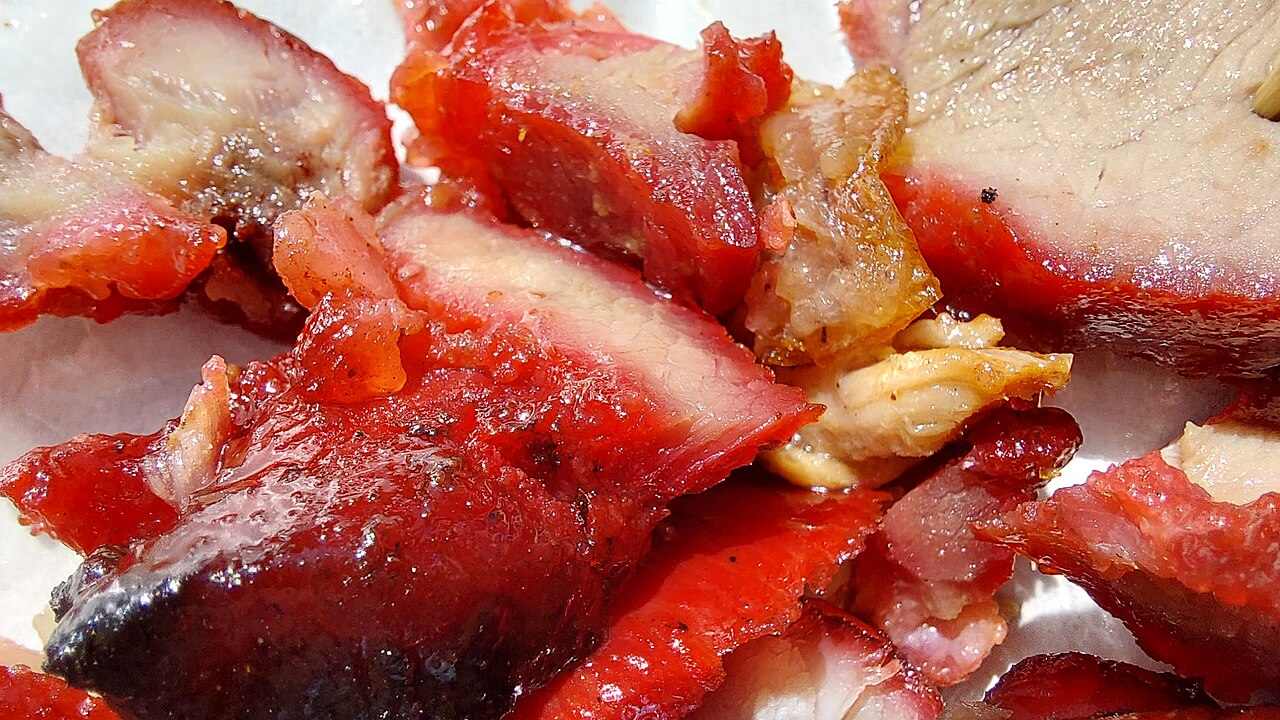
The method is a domestic adaptation, with no claim of traditional roasting equipment. Choosing shoulder, draining excess marinade and watching the final honey coat matter more than forcing an artificially bright red color.
Oven-Roasted Char Siu
Includes 8–24 hours refrigerated marinating and at least 3 minutes resting after cooking.
Planning totals add preparation, cooking and listed waits. Overlapping stages may shorten the schedule; ingredient and equipment differences can lengthen it.
Ingredients
Times and base yield refer to the original recipe. Scaling quantities does not automatically change pan size, temperature or cooking time.
Step-by-step method
The steps describe the base batch (4 servings). The calculator changes the ingredient list only; amounts written in the steps, equipment and timing remain for that base batch.
Step 1
Mix hoisin, half the honey, soy sauces, bean curd if using, five-spice and garlic.
Step 2
Coat pork and marinate refrigerated for 8–24 hours, reserving no raw marinade for serving.
Step 3
Set pork on a rack over a lined tray and roast at 190°C / 374°F for 25 minutes.
Step 4
Mix remaining honey with water and brush over the pork.
Step 5
Continue roasting for 15–20 minutes, turning and glazing until caramelized and at least 63°C / 145°F.
Step 6
Rest for at least 3 minutes before slicing thinly across the grain.
Why this version works
Cut shoulder into consistent roasting strips
The 900 grams of pork should be divided into long strips of similar thickness, roughly three to four centimetres where practical, rather than a mixture of thin tails and large blocks. Trim large hard fat but leave fine marbling for succulence. Place them on a rack so heated air can reach the underside and drips do not turn the surface into a braise. A lined tray beneath makes cleanup easier, but keep foil clear of the heating element. Very lean loin can be used as a variation, although its margin before dryness is narrower.
Read the prepared sauces before making marinade
Hoisin, light soy, dark soy and optional fermented red bean curd all bring salt and sweetness in different proportions. Mix before adding raw pork and taste a small safe amount. The bean curd adds fermented flavor and color, but is optional in this version. Check whether the product is red fermented bean curd rather than an unrelated sweet red-bean paste. Five-spice is potent and should support the pork, not overwhelm it. Use the refrigerator for the eight-to-twenty-four-hour marinade and turn strips within the container so exposure is reasonably even.
Dry the coating before adding fresh honey
Lift strips from the marinade and let excess drip before arranging on the rack. The first roasting stage sets and dries the existing coating. Brushing a thick layer of honey from the start can burn before the center reaches its target. Mix the reserved honey with measured water so it can be brushed thinly later. Turn carefully and apply light coats, allowing each to color rather than flooding the tray. Use clean utensils and a clean glaze mixture; marinade that touched raw pork must not become an uncooked finishing sauce.
Use temperature and rest before slicing
The glaze can become dark and glossy before the interior is ready, so check the thickest strip directly. The guide uses at least 63°C / 145°F followed by a minimum three-minute rest for intact pork. Some cooks prefer shoulder cooked further for a different texture, but that is an additional choice rather than proof that red-brown glaze indicates safety. If the outside colors too fast, lower the oven heat or shield loosely. Slice across the grain after resting so long muscle fibers do not make the thin slices chewy. Spoon only clean cooked juices over the portions.
Separate the finishing glaze before raw pork enters
Half the honey goes into the marinade and half is kept for the clean water-honey glaze. Set the finishing portion aside with a separate clean brush before handling raw meat so it remains a clearly distinct mixture. Thin strips and thick strips also need separate checks even if they share the same tray. Apply the finishing glaze in light passes rather than leaving a deep sugary puddle beneath the pork. The rack keeps the meat above those drips; a dark tray residue is not a reliable guide to the internal temperature of the strips above it.
Ingredient choices and substitutions
Choose a shoulder piece that can be cut into long even strips. Hoisin and fermented bean curd differ in salt and sugar, so taste the marinade before it touches raw meat. Honey should be fluid enough to brush thinly.
Fixes for this recipe
| What you notice | Likely reason | What to do |
|---|---|---|
| Black sticky glaze before cooked pork | Honey coats were too thick, strips were uneven or the oven heat was too intense. | Lower the temperature, cover loosely if needed and verify the center. Use thin later glaze applications and more consistent strips for the next batch. |
| Pale wet undersides | Pork sat directly in pooled marinade instead of on a rack. | Drain excess marinade and raise the strips above the tray. Turn as directed so the coating can dry and color on more than one surface. |
| Thin slices still feel stringy | The meat was cut along the muscle grain or the cut was exceptionally lean. | Identify the direction of fibers before slicing and cut across them. Rest first, use a sharp knife and keep slices thin rather than trying to shred undercooked connective tissue. |
Recipe-specific questions
Does char siu need artificial red food coloring?
No. This version relies on browning and optional fermented red bean curd for its appearance and flavor. A natural brown-red finish is acceptable; a particular restaurant color is not a reason to overcook the pork or add unnecessary ingredients.
Can the leftover raw marinade be served as sauce?
Not without thorough cooking. Keep a separate clean finishing glaze as this recipe does, or boil marinade properly before any use. A brush that touched raw pork should not be dipped into the clean serving sauce.
Will a large whole shoulder roast use the same timing?
No. The listed method is for long strips that expose more surface area and cook relatively quickly. A whole roast has different center-heating and tenderness requirements and should not use the same forty-five-minute estimate.
Serving and storage
Rice and steamed greens keep the sweet glaze in balance. Char siu can also fill buns or top noodle bowls, but use a modest additional sauce so its caramelized exterior remains the main accent.
Cool slices or strips promptly and refrigerate with a little clean cooked juice. Reheat covered gently so thin pieces do not dry before becoming hot. For noodles or fried rice, add small cooked pieces near the end instead of subjecting them to another long roast.
An AI-assisted editorial guide, not independently kitchen-tested. The photograph is a serving example. How we prepare and correct our guides.
For safe handling, consult FDA guidance. Send recipe corrections by email to ZYS10.