This recipe keeps the filling focused on bacon, eggs and cream rather than treating the tart as a container for every leftover. Plan the chilling and blind-baking stages before mixing the custard.
Quiche Lorraine
Includes 45 minutes pastry chilling and about 15 minutes resting after baking.
Planning totals add preparation, cooking and listed waits. Overlapping stages may shorten the schedule; ingredient and equipment differences can lengthen it.
Ingredients
For fractional eggs, beat an extra egg or yolk and measure the required fraction.
Times and base yield refer to the original recipe. Scaling quantities does not automatically change pan size, temperature or cooking time.
Step-by-step method
The steps describe the base batch (1 deep 24 cm quiche, 6 servings). The calculator changes the ingredient list only; amounts written in the steps, equipment and timing remain for that base batch.
Step 1
Rub cold butter into flour, add water gradually and bring together without overworking, then chill for 30 minutes.
Step 2
Roll pastry into a deep 24 cm tart tin, about 4 cm deep, without stretching. Prick the base and chill for 15 minutes. A shallow tin may not hold all the custard.
Step 3
Line with baking paper and weights, bake at 190°C / 374°F for 20 minutes, then remove weights and bake 5 minutes more.
Step 4
Cook bacon until lightly crisp and drain excess fat.
Step 5
Whisk eggs with cream, milk, nutmeg and pepper and scatter bacon over the pastry base.
Step 6
Pour custard into the shell without exceeding its rim; bake any surplus separately in a small ramekin. Bake at 170°C / 338°F for 30–35 minutes, checking the bacon-and-egg filling reaches 74°C / 165°F, then rest for about 15 minutes.
Why this version works
Fit the pastry to the tin without stretching
The quantities suit a 24-centimeter tart tin, preferably with a removable base. Roll the chilled dough a little wider than the tin and lower it in loosely, pressing into the corners without pulling the sheet taut. Stretched dough tends to shrink back during baking. Leave a modest overhang until the shell has set, and patch small holes with spare pastry. The listed cold water is a starting amount because flour absorption varies; add just enough to make the crumbs hold together. A smooth elastic bread-like dough is not the objective for this short crust.
Blind bake until the base loses its raw look
Baking weights support the sides during the first stage, but they also shield the base from direct heat. Removing them for the final few minutes is therefore important. Look for a base that appears dry and lightly colored rather than greasy and translucent. If the bottom remains pale, give it a little more time before adding liquid custard. Place the tin on a preheated sturdy tray to help the underside cook, and protect the rim if it colors quickly. A wet filling cannot compensate for a shell that was still raw when filled.
Balance salt and rendered bacon fat
Two hundred grams of bacon bring substantial salt as well as flavor. Cook the pieces separately, then drain them rather than pouring all the rendered fat into the tart. Thick evenly cut lardons stay juicy more readily than tiny scraps fried until hard. Taste a cooked piece before seasoning the custard; it may need pepper and nutmeg but little added salt. Smoked bacon creates a different flavor from unsmoked lardons, so choose deliberately. This version contains no cheese; adding Gruyère would be an enjoyable variation rather than a necessary correction to the ingredient list.
Read the center instead of waiting for a rigid top
The cream-and-milk custard should quiver as one soft mass in the center when the tin is moved gently. It should not slosh like uncooked liquid, but it also should not balloon dramatically or crack into dry islands. Moderate oven heat allows the edge and center to finish closer together. If a deep tin changes the filling depth, begin judging doneness with that geometry in mind instead of adding minutes mechanically. Rest the baked quiche before removing the outer ring so the custard firms slightly and the pastry can support the filling when sliced.
Check tin capacity before pouring the whole custard
A deep and a shallow tin with the same diameter hold different amounts once pastry and bacon occupy the bottom. Set the baked shell on a stable tray before pouring, and stop with enough rim exposed to move it without spilling. Any surplus custard can bake separately in a small heatproof dish and needs its own doneness check. Do not increase the pastry wall by stretching a thin patch upward after blind baking. For repeat preparation, note the tin's depth as well as its width so the same formula produces a comparable filling layer.
Ingredient choices and substitutions
Choose a deep tart tin before mixing the custard: diameter alone does not define capacity. Cold butter and plain flour suit the shortcrust, while thick-cut lardons give distinct bacon pieces. Unsweetened US heavy cream can replace double cream here for a less rich filling; keep the separate milk allowance rather than replacing all dairy with milk.
Fixes for this recipe
| What you notice | Likely reason | What to do |
|---|---|---|
| Custard leaks through the shell. | A hole or thin corner opened in the rolled pastry. | Patch visible defects before blind baking. If a leak develops during filling, keep the tin on a rimmed tray; do not try lifting a hot loose-bottomed tin with liquid underneath. |
| The filling is grainy and has a watery edge. | Egg proteins tightened too much through excessive heat or baking time. | Serve the current quiche with a fresh side and use gentler baking next time. Extra cream added after baking cannot reverse a curdled custard. |
| The pastry sides slide down. | The dough was stretched, warm or insufficiently supported. | Chill the fitted shell, use weights that reach the corners and avoid pulling the pastry during lining. Let the dough relax before returning it to the oven. |
Recipe-specific questions
Can I use bought shortcrust pastry?
Yes. Choose an unsweetened pastry and follow its handling instructions, while retaining the blind-baking stage. Check sheet size and thickness so the 24-centimeter tin is lined without a very thin stretched patch.
Does lower-fat milk make an equivalent filling?
No. Replacing most cream with milk changes richness and the relationship between liquid and egg. It may still make a useful tart, but the same texture and baking behavior should not be promised.
Should quiche be served straight from the oven?
Allow it to settle first. A brief rest improves cutting and lets the bacon and dairy flavors become clearer. Keep food safety in mind afterward rather than treating room-temperature service as unlimited holding time.
Serving and storage
Choose bitter leaves with a sharp mustard dressing or sliced tomatoes. A creamy potato side duplicates the tart's richness and makes the meal less varied in texture.
The pastry can be made and refrigerated ahead. Keep uncooked custard separate until the shell is ready. Cool baked leftovers promptly and refrigerate; warm slices in a moderate oven to restore the base better than a long microwave cycle, checking that reheated filling is thoroughly hot.
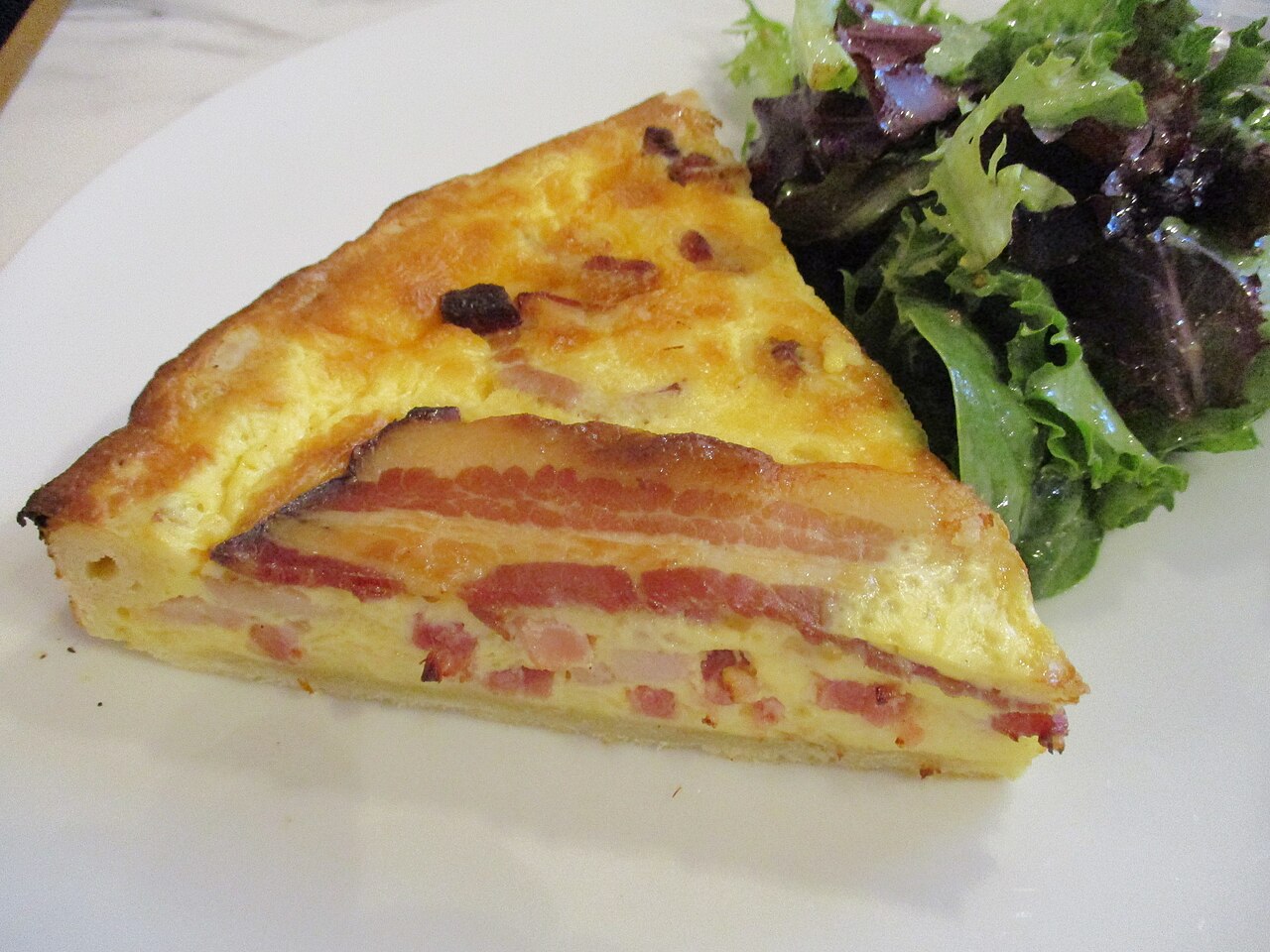
An AI-assisted editorial guide, not independently kitchen-tested. The photograph is a serving example. How we prepare and correct our guides.
For safe handling, consult FDA guidance. Send recipe corrections by email to ZYS10.