In this four-serving version, 400 g pasta, 150 g guanciale and 90 g Pecorino create a strongly savory base. The important decisions are how much rendered fat to retain, how finely to grate the cheese and when to introduce the eggs.
Spaghetti Carbonara
Planning totals add preparation, cooking and listed waits. Overlapping stages may shorten the schedule; ingredient and equipment differences can lengthen it.
Ingredients
For fractional eggs, beat an extra egg or yolk and measure the required fraction.
Times and base yield refer to the original recipe. Scaling quantities does not automatically change pan size, temperature or cooking time.
Step-by-step method
The steps describe the base batch (4 servings). The calculator changes the ingredient list only; amounts written in the steps, equipment and timing remain for that base batch.
Step 1
Render the guanciale gently in a wide skillet for 8–10 minutes until crisp at the edges, then turn off the heat.
Step 2
Whisk the yolks, whole egg, cheese and pepper into a thick paste in a large bowl.
Step 3
Boil spaghetti in moderately salted water until just short of al dente, reserving 300 ml of the starchy cooking water.
Step 4
Transfer the warm pasta to the guanciale off the heat, adding rendered fat gradually rather than automatically pouring in every drop. Use a roomy heatproof bowl if the skillet still holds strong heat.
Step 5
Stir the egg mixture into the pasta off the heat, adding warm pasta water a tablespoon at a time until glossy.
Step 6
Serve immediately on warm plates with extra pepper, keeping the sauce fluid rather than thick and sticky.
Why this version works
Why three yolks and one whole egg?
Yolks contribute fat and emulsifying components, while the white supplies water and a firmer-setting protein fraction. The combination gives more body than whole eggs alone without making every portion overwhelmingly rich. Whisk the eggs and cheese before the pasta finishes so the mixture can disperse quickly. A stiff paste at this stage is expected; it is the reserved cooking water that transforms it into sauce. If avoiding undercooked eggs is important, use pasteurized eggs and follow their handling instructions rather than assuming a brief contact with hot pasta proves safety.
Choose guanciale by fat and seasoning
A piece with distinct fat and lean layers renders more predictably than a handful of very lean scraps. Start it in a cool or moderately warm pan and let the fat emerge gradually. Small cubes give crisp corners and softer centers; very tiny dice can become hard before the pasta is ready. Taste a cooked piece before salting the water heavily. Pancetta gives a useful alternative with less jowl character, while smoked bacon brings a noticeable smoky flavor. Neither substitution needs a compensating addition of cream.
Stage the four portions before the final toss
For this 400 g batch, set the egg-cheese bowl beside the pasta pot before draining. Keep the 150 g guanciale and its rendered fat separate enough to control how much fat enters the bowl. Transfer the pasta while warm, then incorporate the prepared paste and spoonfuls of cooking water. Divide between four plates immediately rather than finishing one serving completely while the remaining spaghetti waits. The linked sauce guide compares causes of curds, cheese grains and oil separation; the recipe’s immediate job is to keep this batch moving.
Read the sauce before plating
Lift a bundle with tongs and let it fall. The strands should separate with a glossy film, while a little fluid sauce remains underneath. If they land as a solid clump, add another small spoon of warm water and toss again. Finely grated cheese disperses more evenly than thick shreds, which can remain granular even when the eggs are handled well. Warm shallow plates slow the final thickening, but avoid plates so hot that they continue cooking the sauce aggressively. Portion promptly and finish with pepper rather than a heavy mound of extra cheese.
Judge seasoning in the complete pasta bite
Pecorino, guanciale and cooking water season the same mouthful, so tasting each separately does not reveal the final balance. Before dividing the pasta, take a small cooked strand with sauce and a piece of pork. If that bite is salty, stop adding reserved salted water and use a little plain warm water for any further loosening. More cheese would thicken and salt it simultaneously. Pepper can add aromatic contrast without increasing either salt or dairy. This tasting order matters particularly when switching the brand of cured pork while keeping the written weights unchanged.
Ingredient choices and substitutions
Look for guanciale cut from cured pork jowl. Pancetta is a practical substitute, but smoked bacon adds a different flavor. Buy a wedge of Pecorino and grate it very finely; pre-shredded cheese often melts unevenly.
Fixes for this recipe
| What you notice | Likely reason | What to do |
|---|---|---|
| The eggs have formed small curds. | The mixture met excessive direct or retained heat. | Remove it from the hot pan immediately. Warm water may loosen the surrounding sauce, but it cannot turn cooked egg curds back into a smooth emulsion. Use a cooler bowl next time. |
| Oil gathers beneath otherwise smooth pasta. | The proportion of rendered pork fat exceeds what the water and egg mixture can hold. | Toss in a small amount of starchy water. If a large fat pool remains, spoon some away before continuing rather than adding more cheese indiscriminately. |
| The pasta tastes too salty. | Guanciale, Pecorino and heavily salted cooking water have compounded one another. | Use unsalted warm water for the final loosening. For the next batch, salt the pasta water moderately and taste the cooked pork before deciding on additional seasoning. |
Recipe-specific questions
Can Parmesan replace all the Pecorino?
It can make a milder home variation, but the sharper sheep's-milk character will be reduced. Begin with the same finely grated weight, then judge salt only after tossing. A mixture of both cheeses is another practical choice; it does not require changing the egg quantity automatically.
Why is cream absent from this recipe?
The liquid structure comes from egg, rendered fat and pasta water. Cream would create a different sauce and can hide whether the emulsion is working. If the pasta seems dry, try water first: adding more fat to a water-starved mixture often makes it heavier without improving its flow.
Can the egg-cheese paste be prepared earlier?
It can be mixed shortly before cooking and kept refrigerated until needed. Do not leave raw eggs beside a warm hob throughout a long meal preparation. Grate cheese and cut guanciale in advance, then make the finished pasta only when everyone is ready to eat.
Serving and storage
A lemon-dressed chicory or rocket salad supplies bitterness and freshness beside the rich pasta. Keep the side simple and serve it separately so acidic dressing does not dilute the carbonara.
Carbonara is best cooked in the amount needed for one meal. Refrigerated leftovers require thorough reheating, which changes the delicate egg sauce into a firmer coating. If saving a portion, cool and refrigerate promptly, then reheat gently with a splash of water; regard the changed texture as a leftover adaptation, not a restoration of the original emulsion.
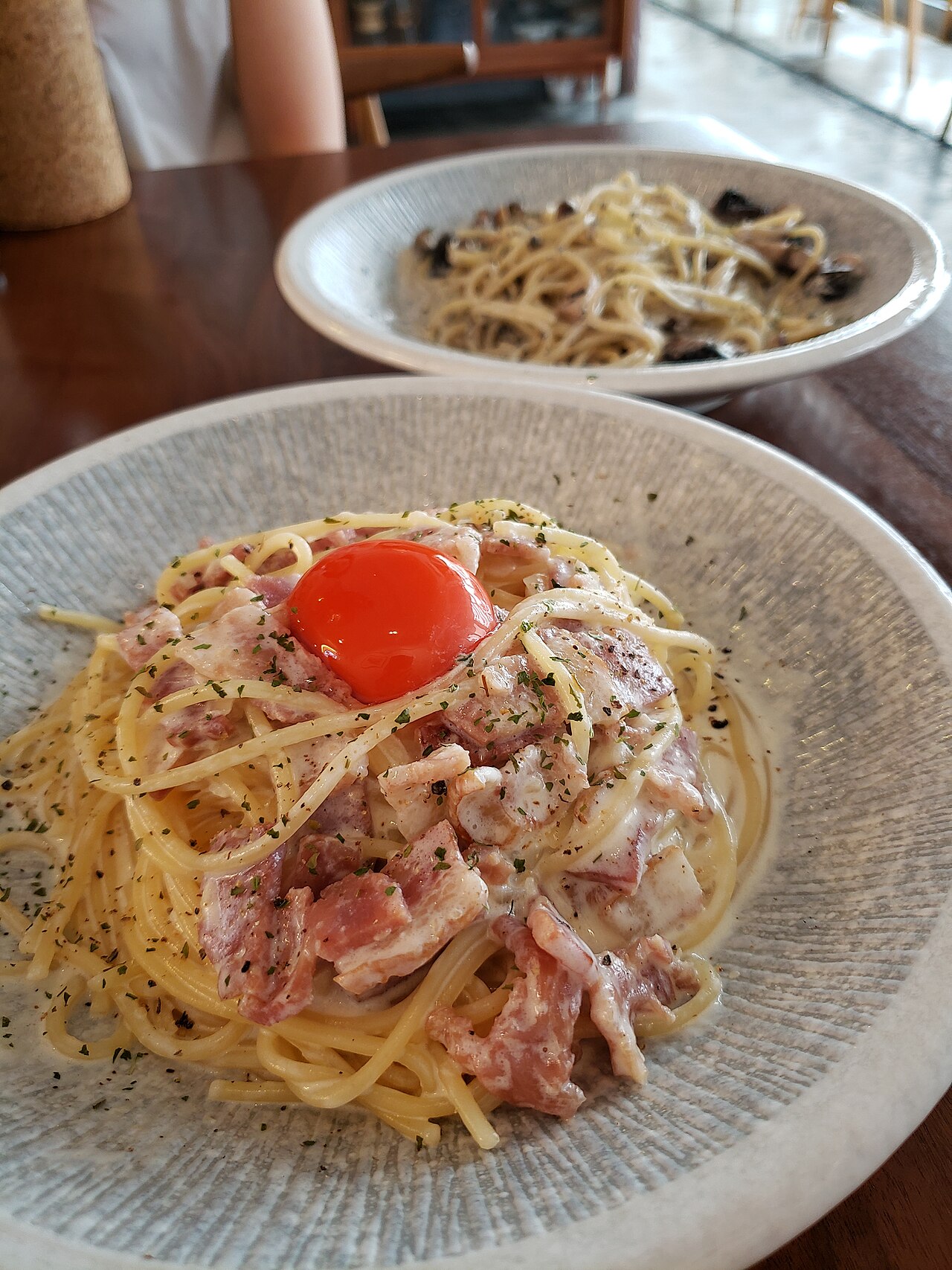
An AI-assisted editorial guide, not independently kitchen-tested. The photograph is a serving example. How we prepare and correct our guides.
For safe handling, consult FDA guidance. Send recipe corrections by email to ZYS10.