The sauce in this version starts as a concentrated paste, then becomes fluid with starchy pasta water. Most mistakes happen when the pesto is treated like a tomato sauce and cooked directly over a strong flame.
Basil Pesto Pasta
Planning totals add preparation, cooking and listed waits. Overlapping stages may shorten the schedule; ingredient and equipment differences can lengthen it.
Ingredients
Times and base yield refer to the original recipe. Scaling quantities does not automatically change pan size, temperature or cooking time.
Step-by-step method
The steps describe the base batch (4 servings). The calculator changes the ingredient list only; amounts written in the steps, equipment and timing remain for that base batch.
Step 1
Toast the pine nuts lightly in a dry pan, then let them cool completely.
Step 2
Crush the garlic with a small pinch of salt, then work in the basil and pine nuts using a mortar or short food-processor pulses.
Step 3
Stir in finely grated Parmesan and olive oil to form a loose paste.
Step 4
Boil the pasta until al dente and reserve 250 ml of cooking water before draining.
Step 5
Toss the pasta with pesto off the heat and add a little pasta water until the sauce clings lightly.
Step 6
Taste for salt and add lemon only if the basil and oil need a small lift.
Why this version works
Buy basil for aroma and usable leaf weight
The 60 g quantity refers to leaves rather than a bunch weighed with thick stems. Choose tender leaves with a clear sweet fragrance and remove damaged blackened ones. Wash only when needed and dry thoroughly; trapped water dilutes the paste unpredictably and makes leaves harder to crush evenly. Do not insist on tiny imported leaves when good fresh local basil is available. The useful purchase is enough fragrant usable leaf material. Large mature leaves can work, though their tougher veins may require slightly more processing and give a less delicate texture.
Use short pulses rather than continuous high speed
A mortar gives control over texture but is not a requirement for a good home meal. If using a processor, let the toasted nuts cool first and pulse the garlic, basil and nuts briefly. Scrape the sides between pulses rather than running the machine continuously until everything warms. Add cheese and oil without excessive beating. A completely smooth puree and a more textured crushed pesto are both possible preferences, but a coarse garlic lump is unpleasant in either. Start with one small clove; raw garlic remains obvious because this sauce is not simmered.
Taste oil and nuts before they enter the bowl
Extra-virgin olive oil ranges from mild and fruity to intensely bitter and peppery. The full 90 ml becomes a noticeable part of the sauce, so an oil you dislike on its own is unlikely to improve under basil. Pine nuts should smell sweet and nutty rather than paint-like or stale. Toasting is optional in some pesto traditions, but this version uses a light toast for a warmer flavor. Stop before dark brown patches form. Walnuts provide a more robust, slightly tannic alternative and should be identified as a variation.
Distribute the pesto across this pasta batch
Set aside the pesto while the 400 g pasta finishes, and reserve cooking water before draining. Put the warm pasta in a roomy bowl, fold through part of the pesto, then add the rest where the strands or twists remain bare. Loosen gradually so no single serving receives an oily spoonful from the bottom. Divide promptly between four plates. If making fewer servings, reduce the ingredient amounts rather than holding a fully dressed half-batch while the first portions are eaten; fresh basil aroma and the pasta’s moisture balance are easier to preserve at serving time.
Choose what to leave out before adding another flavor
This formulation already combines pungent garlic, salty Parmesan, rich nuts and aromatic oil. A large handful of extra cheese or another raw garlic clove changes that balance more than its small appearance suggests. Taste a dressed piece of pasta rather than a spoonful of concentrated pesto before deciding on the optional lemon. If the pesto is forceful, distribute it with reserved water across the pasta first. Acidity is useful only when the complete bite needs it; it cannot remove bitterness from burnt nuts or replace the fragrance of tired basil.
Ingredient choices and substitutions
Choose small tender basil leaves without blackened edges. Taste the olive oil first: an intensely bitter oil can overwhelm the herbs. Walnuts work as an economical variation, though they change the character of the pesto.
Fixes for this recipe
| What you notice | Likely reason | What to do |
|---|---|---|
| The pesto is bitter. | The nuts were overtoasted, the oil was harsh or mature basil supplied a stronger edge. | Taste each ingredient before adding more cheese. Diluting with mild oil and extra fresh basil may soften bitterness, but burnt nuts usually require a new batch. |
| A yellow oil puddle remains below the pasta. | The concentrated paste lacks enough water to distribute the fat. | Add warm pasta water one spoon at a time and toss thoroughly. More olive oil will not solve a sauce whose main problem is insufficient water. |
| The sauce becomes dull green immediately. | The basil met excessive heat or was processed while the ingredients were warm. | Remove the dish from direct heat and finish promptly. The color cannot be fully restored, so keep the next batch cool and toss it off the burner. |
Recipe-specific questions
Must lemon juice be added?
No. Lemon is optional here, and a large amount can make the sauce taste more like a citrus dressing. Taste the basil, oil and cheese combination first. A small amount may be useful when the finished pasta feels heavy, but it should not cover stale nuts or poor-quality oil.
Can the pine nuts be omitted for an allergy?
Omitting them changes the texture and flavor but is possible. Do not automatically replace them with another nut without checking the diner's needs, and consider cross-contact from the cheese, processor and packaged ingredients. A nut-free adaptation should be described accurately rather than assumed safe from its name.
How can pesto be prepared without a mortar?
A small processor, finely chopped knife method or sturdy bowl and pestle can all work. Process in short stages and scrape often. The goal is even distribution with an aroma you enjoy, not proving that one tool is mandatory for a recognizable basil sauce.
Serving and storage
Ripe tomatoes and a crisp vegetable side bring useful contrast. Add extra Parmesan sparingly at the table; the written sauce already contains enough aged cheese to contribute a clear savory finish without needing a thick additional layer.
Refrigerate unused pesto promptly in a clean covered container and use it soon. A thin oil layer can reduce surface browning but does not make pesto shelf-stable or remove the need for refrigeration. Freeze small portions for a longer hold. Store undressed cooked pasta separately where possible, since reheating already dressed pasta reduces the fresh basil fragrance.
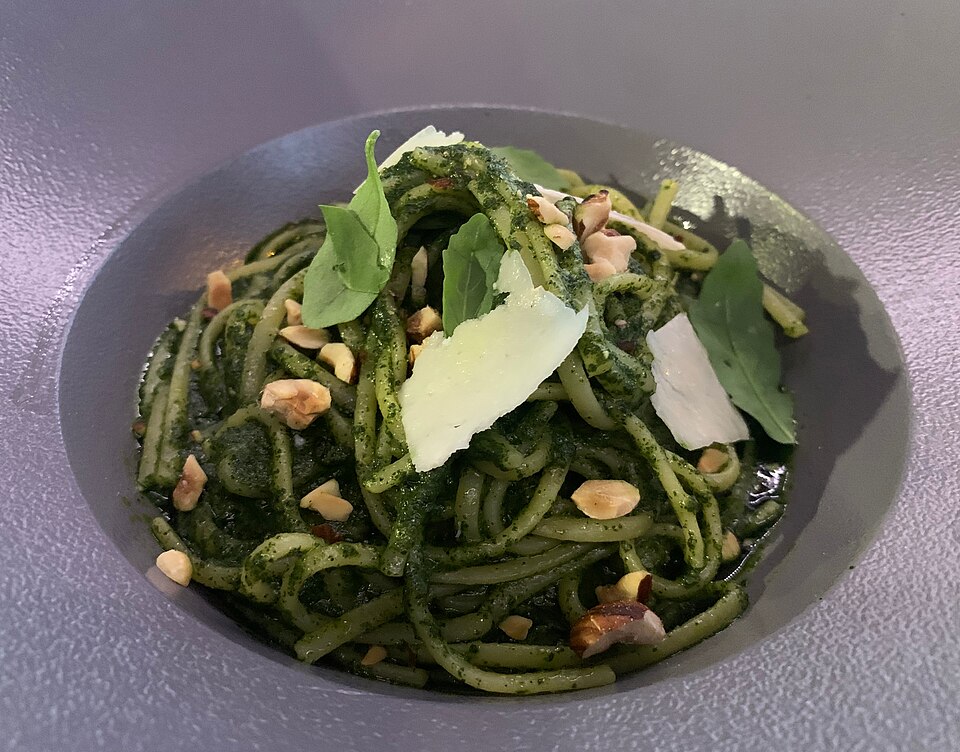
An AI-assisted editorial guide, not independently kitchen-tested. The photograph is a serving example. How we prepare and correct our guides.
For safe handling, consult FDA guidance. Send recipe corrections by email to ZYS10.