Its 325 ml water to 500 g flour gives a manageable 65 percent hydration, useful for learning hand stretching in a home kitchen. Success depends less on decorative shaping than on a fully heated base, a restrained topping and enough dough relaxation.
Margherita Pizza
Allow 2 hours initial fermentation, 12–24 hours refrigerated fermentation and about 2 hours warming. Bake four small pizzas successively, 8–12 minutes each; surface preheating can overlap dough warming.
Planning totals add preparation, cooking and listed waits. Overlapping stages may shorten the schedule; ingredient and equipment differences can lengthen it.
Ingredients
Times and base yield refer to the original recipe. Scaling quantities does not automatically change pan size, temperature or cooking time.
Step-by-step method
The steps describe the base batch (4 small pizzas). The calculator changes the ingredient list only; amounts written in the steps, equipment and timing remain for that base batch.
Step 1
Mix flour, water and yeast, rest for 20 minutes, then knead in the salt until the dough becomes elastic.
Step 2
Cover and ferment for 2 hours at room temperature, then refrigerate for 12–24 hours.
Step 3
Divide into four balls and let them relax at room temperature for 2 hours before shaping.
Step 4
Heat a baking steel or heavy inverted tray at 250°C / 482°F for at least 45 minutes.
Step 5
Divide tomatoes, drained mozzarella and basil among four pizzas. Stretch one dough ball, spread with a thin layer of tomato seasoned to taste, and add its mozzarella portion. Keep the other balls covered until needed.
Step 6
Bake one pizza at a time for 8–12 minutes until the rim is deeply colored, then add basil and olive oil.
Why this version works
Treat fermentation as a condition, not a deadline
The refrigerator stage gives the dough time to develop flavor while slowing its expansion. Place it in a container with room to grow and cover it so a dry skin does not form. A very warm kitchen can accelerate the initial two-hour rise considerably. Before shaping, the divided balls should feel relaxed and slightly aerated rather than cold and rigid. If one springs back aggressively, cover it and wait another short interval. Do not knead in extra flour merely because the first stretch feels resistant; resistance and stickiness are different problems.
Make small rounds that suit a domestic oven
Each ball weighs roughly 210 g before topping, so begin with a modest round around 22–25 cm wide. Push gas outward from the middle and leave a slightly thicker rim. Lift and rotate the dough over your knuckles without pulling one narrow point until it tears. A rolling pin is a usable fallback, but it compresses more of the edge bubbles and gives a flatter result. Shape only the pizza you are about to bake; a wet topped pizza waiting on the peel becomes harder to launch.
Balance tomato water and mozzarella water
The full topping allowance divides into approximately 75 g tomato and 60 g mozzarella per pizza. Those are modest portions deliberately: a home oven cooks more slowly than a very hot specialist pizza oven. Drain torn mozzarella on paper or in a sieve before use. Spread tomatoes thinly enough that the dough remains visible in places, and avoid pouring loose can liquid into the center. If using low-moisture mozzarella, expect a drier, more uniformly melted cheese layer rather than the soft milky patches of fresh mozzarella.
Divide the toppings before the first pizza enters the oven
Set out four small topping portions: about 75 g tomato and 60–65 g drained mozzarella for each dough ball. Keep the remaining balls covered while the first round bakes. Dress only the next pizza, not all four in advance, so wet tomato does not sit against the uncooked centers. Use the first pizza to judge the oven position, leaving the remaining topping quantities consistent. The pizza guide covers equipment and base-color diagnosis in depth; these portions keep the written Margherita formulation comparable from one round to the next.
Match dough-ball size to the four-pizza schedule
The flour and water quantities produce four small dough portions, not four full-size takeaway pizzas. Decide their approximate size before warming the balls, and make sure each stretched round fits the baking surface with room for safe loading. A wider stretch from the same ball produces a thinner center, so the quoted bake interval becomes a checking window rather than a guarantee. Keep the topping allowance divided into four portions even if the rounds look modest. Increasing dough diameter and topping weight together makes it harder to identify why a later pizza behaves differently.
Ingredient choices and substitutions
Choose strong flour with roughly 12–13 percent protein and canned tomatoes that taste sweet without added sugar. Fresh mozzarella must be drained thoroughly. A home oven needs restrained toppings more than expensive equipment.
Fixes for this recipe
| What you notice | Likely reason | What to do |
|---|---|---|
| The middle folds like wet cloth. | The topping released too much water or the baking surface was insufficiently heated. | Drain cheese, reduce tomato quantity and extend preheating. A finished pizza can be returned briefly to a hot lower surface, but a saturated center may remain soft. |
| The dough tears near the center. | Stretching pressure concentrated in one spot or the center was made excessively thin. | Lay it down and pinch the tear gently closed without adding a thick flour patch. Redistribute the dough gradually and keep the next round a little smaller. |
| The underside tastes bitter or dusty. | Loose bench flour burned on the hot surface. | Use only enough flour to prevent sticking and shake excess from the peel. Check the surface between pizzas and remove burnt debris safely according to the equipment instructions. |
Recipe-specific questions
Can ordinary all-purpose flour work?
Yes, although a lower-protein flour may stretch differently and give less chew. Keep the first dough at the written water amount rather than increasing hydration for appearance. If it feels very soft, use rests and gentle handling before deciding that more flour is necessary.
Is a pizza steel compulsory?
No. An inverted heavy baking tray is a practical starting point. It generally stores less heat than a thick steel, so a small thin pizza and careful preheating become especially useful. Do not place an unsuitable non-stick tray under a high grill or exceed its rated temperature.
How should four pizzas be served together?
The stated baking interval applies to an individual pizza, and domestic ovens often need serial batches. Serve the rounds as they finish and share slices, or keep early ones briefly on a rack in a warm oven. Tight stacking traps steam and softens the base.
Serving and storage
Serve with a simple green salad or a few raw vegetables. Add basil after baking for a clear fresh aroma, and keep strongly flavored dips away from the first slice so the tomato, dairy and crust remain easy to taste.
Refrigerate unused dough covered and use it within the practical storage period recommended for your yeast dough. Freeze divided dough if a longer delay is needed, thawing in the refrigerator before bringing it to a workable temperature. Cool cooked pizza promptly; reheat on a hot skillet or tray to refresh the underside instead of relying only on microwave heat.
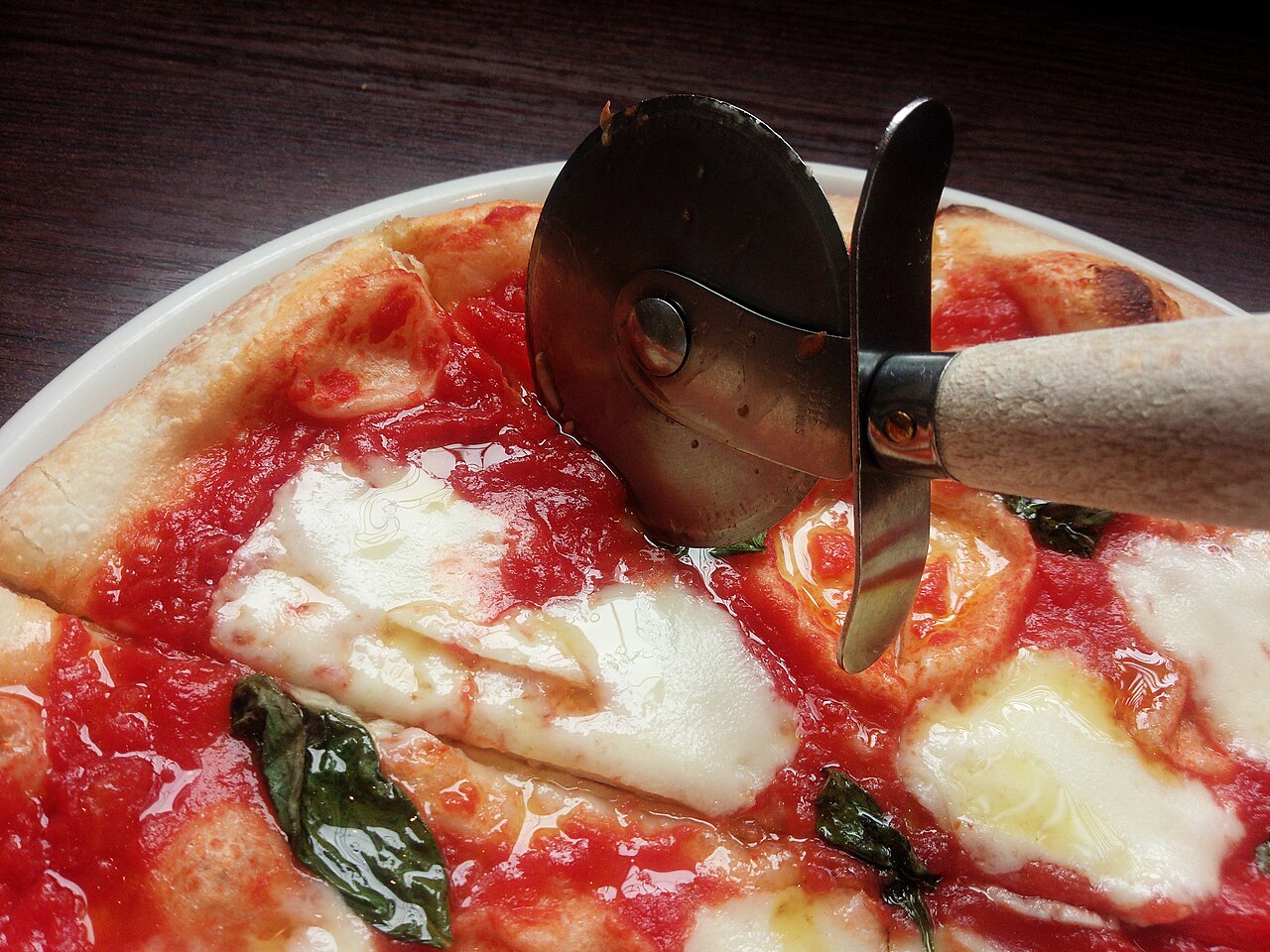
An AI-assisted editorial guide, not independently kitchen-tested. The photograph is a serving example. How we prepare and correct our guides.
For safe handling, consult FDA guidance. Send recipe corrections by email to ZYS10.