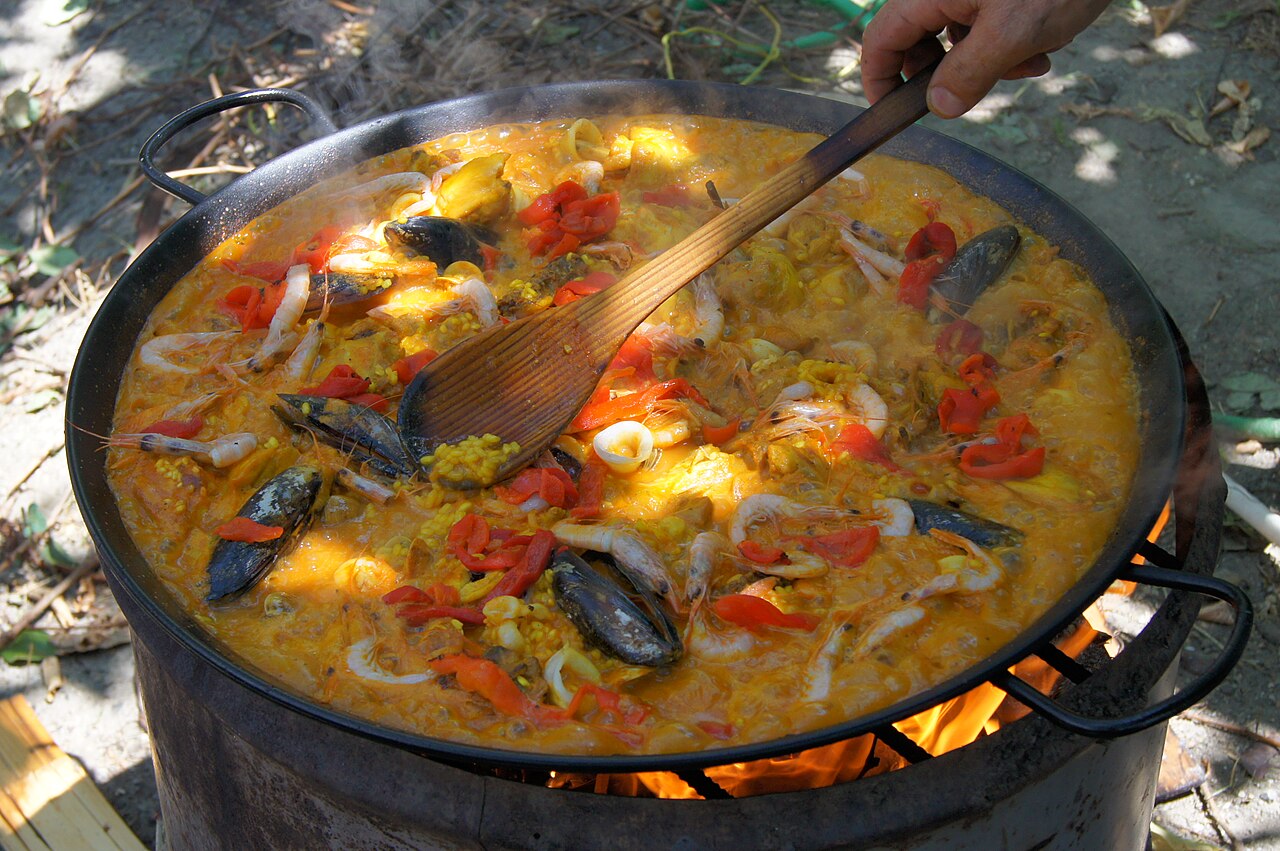
Begin with a concentrated sofrito, use a wide shallow pan and add delicate seafood later. The rice should absorb a flavorful stock while remaining distinct, with any toasted base treated as a bonus rather than the only measure of success.
Home-Style Seafood Paella
Includes 5–10 minutes resting after cooking.
Planning totals add preparation, cooking and listed waits. Overlapping stages may shorten the schedule; ingredient and equipment differences can lengthen it.
Ingredients
Times and base yield refer to the original recipe. Scaling quantities does not automatically change pan size, temperature or cooking time.
Step-by-step method
The steps describe the base batch (4 servings). The calculator changes the ingredient list only; amounts written in the steps, equipment and timing remain for that base batch.
Step 1
Warm stock with saffron and keep hot.
Step 2
Cook pepper in olive oil in a wide shallow pan, add garlic and grated tomatoes and reduce to a thick sofrito.
Step 3
Stir in paprika briefly, then rice, and pour in hot stock.
Step 4
Arrange squid and simmer without frequent stirring for 12 minutes.
Step 5
Add shrimp and mussels and continue until rice is tender, shrimp reach 63°C / 145°F and mussels open, discarding unopened mussels.
Step 6
Rest off the heat for 5–10 minutes under a loose clean towel before serving.
Why this version works
Match the rice quantity to the pan
The 320 grams of bomba rice need a broad shallow layer, roughly suited to a 34-centimeter paella pan on a heat source that reaches its base. A much smaller saucepan creates a deep mound with different evaporation and uneven cooking. A very large pan over a tiny burner can leave the outer rice firm while the center dries. For an ordinary home hob, choose a pan the burner can heat sensibly and rotate it carefully if needed. Do not increase rice quantities without preserving layer depth. A rice variety with different absorption behavior may also need a different stock amount.
Let the sofrito become a seasoning base
Cook the pepper before adding garlic, then give the grated tomatoes enough time to lose their watery appearance. The mixture should look concentrated and leave a brief clear trail when moved with a spoon. This base seasons every grain, so it deserves more attention than a last-minute decorative topping. Add paprika only briefly before the rice and liquid, because scorched paprika is bitter. Warm saffron in the stock so it disperses rather than leaving one strongly colored patch. Use a stock that tastes good but not aggressively salty; reduction and shellfish juices will increase its intensity.
Manage absorption without stirring it into risotto
Once stock is distributed and the rice lies evenly, avoid frequent circular stirring. The aim is distinct grains rather than a creamy starch suspension. Keep a little extra hot stock available because burner strength, pan diameter and rice age affect evaporation. Near the end, taste grains from more than one area. If the surface is dry but the center is chalky, add a small amount of hot stock around the edge and continue gently. A lid or loose cover may help a stubborn final hydration stage, but it also changes the surface texture, so use it as a correction rather than routine constant covering.
Add seafood according to how quickly it cooks
Squid rings enter before shrimp and mussels in this version. Avoid leaving shrimp in the pan from the beginning, where they can become tight before the rice softens. Choose similar-sized shrimp and check safe doneness directly. Mussels should come from a reliable supplier: discard damaged shells and live ones that fail to close when tapped before cooking, then discard those that remain closed afterward. The final rice rest allows moisture to settle, but it is not an opportunity to leave seafood lukewarm for a long time. Serve from the pan soon after the rest, with lemon offered separately.
Distinguish rice-liquid adjustment from seafood timing
Inspect the rice before adding the quick-cooking seafood. If the grains are still firm and the pan is almost dry, a small hot-stock adjustment belongs at that stage rather than after delicate shrimp are already waiting to finish. Distribute mussels with room to open and keep squid from forming one thick central pile. The stock allowance is tied to rice variety, pan and heat, so avoid pouring in extra cold liquid merely to cover every shell. A wide shallow rice layer and a deep seafood soup need different methods even when the ingredients look similar.
Ingredient choices and substitutions
Bomba rice tolerates absorption well; other short-grain rice needs different liquid timing. Buy live mussels from a reliable supplier and discard cracked shells or those that do not close when tapped before cooking.
Fixes for this recipe
| What you notice | Likely reason | What to do |
|---|---|---|
| Rice is firm around the outer pan. | The burner heats the center more strongly than the edges. | Rotate the pan carefully and add hot stock where needed. Next time match pan size to the heat source or use a more evenly heated cooking arrangement. |
| The base smells burnt before rice is tender. | Heat stayed too high after liquid diminished. | Reduce heat immediately and add a little hot stock if the grains still need hydration. Do not scrape blackened material into the rice or treat every burnt base as desirable socarrat. |
| Seafood is rubbery by serving time. | It entered too early or stayed over heat while rice problems were corrected. | Add delicate pieces later and lift cooked shrimp out temporarily if further rice cooking is needed. Return them only for a short warm-through. |
Recipe-specific questions
Can arborio replace bomba rice?
It can make an adapted rice dish, but its absorption and starch release differ. Keep extra hot stock available and judge the grain rather than expecting the same liquid volume to behave identically.
Should I chase a crust on my first attempt?
Cook the rice and seafood correctly first. A lightly toasted base requires careful final heat control, while an acrid black base is simply burnt. Do not sacrifice a properly hydrated center for a crust.
Can frozen seafood be used?
Yes, when thawed safely and drained thoroughly. Check whether products are raw or already cooked, because cooked seafood belongs near the end for warming rather than receiving the full raw-seafood cooking stage.
Serving and storage
A simple tomato salad or lightly dressed leaves provide freshness. Serve lemon wedges individually so diners can choose acidity without pouring extra liquid over the whole pan.
Plan seafood paella close to serving. Cool leftovers quickly in shallow containers, paying particular attention to safe cooked-rice handling, refrigerate and use promptly. Reheat only once until thoroughly hot; seafood will become firmer, so a small fresh batch is preferable to repeated reheating.
An AI-assisted editorial guide, not independently kitchen-tested. The photograph is a serving example. How we prepare and correct our guides.
For safe handling, consult FDA guidance. Send recipe corrections by email to ZYS10.