Its success depends on stopping the rice before it becomes fully tender, keeping enough moisture in the chicken base, and sealing the pot for a quiet final steam. The goal is fragrant separate grains with variation between the layers, not a uniformly stirred rice casserole.
Layered Chicken Biryani
Plan 2–8 hours marinating, 30 minutes rice soaking and 15 minutes final resting. Rice soaking and some preparation can overlap marinating.
Planning totals add preparation, cooking and listed waits. Overlapping stages may shorten the schedule; ingredient and equipment differences can lengthen it.
Ingredients
Times and base yield refer to the original recipe. Scaling quantities does not automatically change pan size, temperature or cooking time.
Step-by-step method
The steps describe the base batch (4 servings). The calculator changes the ingredient list only; amounts written in the steps, equipment and timing remain for that base batch.
Step 1
Mix the chicken with yogurt, ginger, minced garlic, biryani masala and a modest amount of salt, considering any salt in the masala. Refrigerate for 2–8 hours.
Step 2
Fry onions in ghee until golden, remove half and cook the chicken with the rest until nearly tender.
Step 3
Rinse and soak rice for 30 minutes, then boil in ample salted water until about three-quarters cooked and drain.
Step 4
Layer the partially cooked rice over chicken with mint, coriander, reserved onions and saffron soaked in milk.
Step 5
Cover tightly and cook on the lowest heat for 25 minutes, using a heat diffuser if needed.
Step 6
Check the chicken reaches 74°C / 165°F, rest covered for 15 minutes and lift through the layers gently.
Why this version works
Plan the rice and chicken as two converging tasks
Marinate the 800 grams of chicken in the refrigerator, then begin the onions before boiling the rice. Once rice is parboiled it should not wait for a long unfinished chicken braise. Bone-in pieces should be similar in thickness; small drumsticks and very large breast pieces will not finish together reliably. Use a heavy pot broad enough to spread the chicken in a reasonably even layer. The sauce around it should be moist and aromatic, but not resemble a large soup. If chicken is tender early, take the pan off the heat while draining the rice.
Make the parboil a texture check
The phrase three-quarters cooked describes a state rather than a percentage measurable by the clock. After soaking and boiling, a grain should have lengthened and softened outside while retaining a firmer interior. Taste a cooled grain and compare several, because aged basmati and younger rice differ. Drain thoroughly but do not rinse away all the aroma with a long cold wash. The final covered stage supplies more steam, so fully tender rice at this point is likely to become soft and broken after layering. A large pot of boiling water provides more even initial hydration than a cramped saucepan.
Keep the onion and saffron layers distinct
Two thinly sliced onions provide both the cooking base and a finishing layer. Aim for golden rather than blackened pieces; onions continue darkening slightly after leaving hot fat. Spread the reserved portion on a plate so steam does not immediately soften it. Saffron should be steeped in warm milk before drizzling across the rice, producing varied patches rather than an artificially uniform color. Mint and coriander add a fresh upper aroma. Do not blend all these components into the chicken sauce if you want the finished dish to retain contrasts between bites.
Seal, diffuse and rest before lifting
A well-fitting lid retains the steam that completes the rice. If the lid leaks heavily, a sheet of foil beneath it can improve the seal, kept clear of flame. Use the lowest effective heat and a diffuser if your pot has a thin base. The aim is gentle steam, not vigorous bubbling heard from the bottom. After cooking, leave the lid on for the stated rest so moisture redistributes. Lift from the side with a broad spoon, reaching down through the chicken and rice. Stirring repeatedly crushes grains and merges the layers you worked to build.
Check the chicken layer before rice hides it
Before covering with rice, spread the chicken across the pot and inspect the liquid around it. The layer needs enough moisture for the covered finish but should not resemble a deep soup that will swamp the partially cooked rice. Keep the reserved browned onions visible for the top rather than stirring every component together. Once layered, a buried large chicken piece is difficult to check without disturbing the rice, so compare piece size early. The final temperature check remains necessary; a sealed lid and fragrant steam do not establish the center's doneness.
Ingredient choices and substitutions
Choose aged basmati with long intact grains. Similar-sized bone-in chicken pieces cook more evenly. A heavy pot protects the bottom layer; a thin saucepan makes scorching more likely.
Fixes for this recipe
| What you notice | Likely reason | What to do |
|---|---|---|
| Soft rice with little grain definition | The rice was fully cooked before layering or the chicken base carried too much liquid. | Do not stir it further. Serve gently and shorten the parboil next time, checking grains rather than relying on one fixed minute count for every basmati brand. |
| A dry firm top layer | Steam escaped or too little moisture remained in the base. | Sprinkle a small amount of hot water over the dry area, cover tightly and steam gently a little longer. Avoid pouring a large cup into one spot, which creates unevenly wet rice. |
| Scorched bottom before tender chicken | The burner was too strong or chicken pieces were not sufficiently cooked before layering. | Move the unburnt portion to a clean pot without scraping up blackened deposits. For the next batch, bring chicken closer to tenderness first and use a heavier base or diffuser. |
Recipe-specific questions
Can boneless chicken replace the bone-in pieces?
Yes, but it generally reaches doneness sooner. Use generous thigh pieces and shorten the initial chicken cook, checking directly rather than extending it to match bone-in timing. Keep enough sauce for the rice to finish steaming.
Do I have to buy a special biryani pot?
No. A heavy casserole with a close-fitting lid works for this home method. The important features are stable low heat, room for the layers and a lid that retains steam, rather than a particular decorative shape or brand.
Should the chicken be completely raw under the rice?
Not in this recipe. Some biryani traditions use a raw-meat method, but that requires a different balance of meat size, marinade, liquid and steam time. Do not substitute that sequence while retaining these timings.
Serving and storage
Cucumber raita provides cool acidity against the scented rice. A simple onion salad adds crunch. Avoid several strongly sweet or creamy sides that obscure the onion, mint and saffron notes in the biryani itself.
Divide leftover biryani into shallow containers and cool rice quickly, ideally within one hour, before refrigerating. Use refrigerated rice within 24 hours and reheat once until steaming hot throughout. A deep covered pot cools slowly; transferring to portions matters more than simply placing the lid back on the casserole.
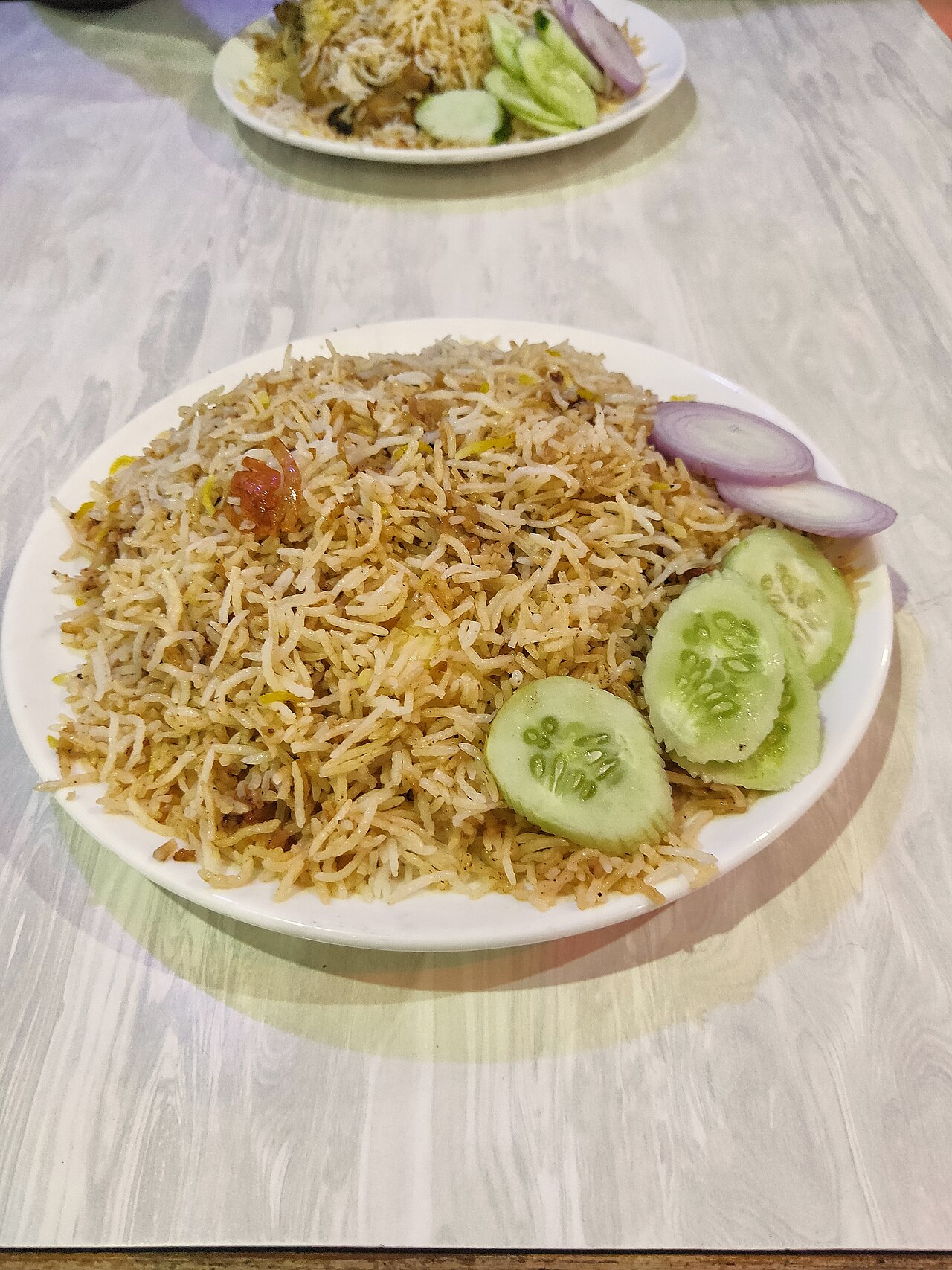
An AI-assisted editorial guide, not independently kitchen-tested. The photograph is a serving example. How we prepare and correct our guides.
For safe handling, consult FDA guidance. Send recipe corrections by email to ZYS10.