The dough here is intentionally firm and enriched with oil. It should produce a crisp shell with a tender filling, rather than a soft bread-like wrapper or an excessively blistered fried pocket.
Crisp Potato Samosas
Plus 30 minutes dough resting
Planning totals add preparation, cooking and listed waits. Overlapping stages may shorten the schedule; ingredient and equipment differences can lengthen it.
Ingredients
Times and base yield refer to the original recipe. Scaling quantities does not automatically change pan size, temperature or cooking time.
Step-by-step method
The steps describe the base batch (4 servings). The calculator changes the ingredient list only; amounts written in the steps, equipment and timing remain for that base batch.
Step 1
Rub oil into flour and salt, add water gradually and knead into a firm dough, then rest covered for 30 minutes.
Step 2
Boil potatoes until tender, drain and crush into small rough pieces.
Step 3
Toast cumin in the tablespoon of filling oil, add ginger, peas and ground spices, then fold in potatoes, season the filling to taste and cool.
Step 4
Roll dough into ovals, cut each in half and form cones using a little water to seal.
Step 5
Fill without overpacking and seal the open edges firmly.
Step 6
Fry in batches at 155–160°C / 311–320°F until crisp and evenly golden, draining on a rack.
Why this version works
Rub in the oil before adding water
With 250 grams of flour, the 60 millilitres of oil are part of the shell structure rather than merely a way to stop sticking. Rub them together until the flour feels evenly sandy before adding water gradually. A squeezed handful should show some cohesion. Do not pour in all the water automatically if the flour already forms a firm dough. Knead only until smooth enough to handle, then cover for the full rest. Strong bread flour encourages more chew and resistance, so ordinary plain flour is a more suitable starting point for this pastry.
Make a filling that can sit in a cone
Boil potatoes until a knife enters without a hard center, then drain thoroughly and let steam escape before crushing. Leave small rough pieces instead of producing a smooth puree. Thawed peas should not carry ice or a puddle of water into the pan. Cook ginger and spices briefly before folding in potatoes, spreading the mixture so visible moisture can escape. Cool completely before shaping; a warm filling softens dough and creates condensation inside the wrapper. Taste the cooked mixture now, when salt and spice can be adjusted evenly rather than sprinkled into individual cones.
Seal a clean edge without overfilling
Roll even ovals and cut each across the middle to create semicircles. Join the straight edges into a cone with a narrow strip of water, pressing firmly enough to remove a floury gap. Fill only to a level that leaves clean dough at the open rim. Potato trapped in the seam prevents a reliable seal. The wrapper should not be stretched so thin that a pea pushes through it, nor left thick at the folded tip. Compare the first shaped cone before repeating: a smaller uniform batch is easier to fry than mixed sizes with bulky bottoms.
Use a moderate fry for a cooked shell
The suggested 155–160°C / 311–320°F oil is intentionally lower than many quick fries. The pastry needs time to dry and cook before its surface darkens. Add only a few samosas so the temperature does not plunge, and turn them gently for even color. They should become a consistent golden shade rather than develop dark patches while the seams remain pale. Drain on a rack, leaving air beneath them. If preparing for a party, shape in advance and refrigerate, but fry close to serving; tightly covering hot cooked samosas traps steam and softens the shell.
Allocate dough and filling before rolling every cone
Divide the rested dough into equal portions and make one filled cone before rolling the rest. Compare its shell thickness and filling volume with the remaining potato mixture. A thin patch at the seam is more vulnerable than a uniformly modest shell, while an enormous cone needs a different frying check from the small ones. Keep flour away from the wet sealing edge so it can adhere cleanly. If some filling remains, serve it separately; stretching the last dough portion almost transparent changes the cook more than leaving a little potato unused.
Ingredient choices and substitutions
Use ordinary plain flour rather than strong bread flour. Floury potatoes hold the spices well when roughly crushed. Frozen peas are convenient and should be drained of surface water before joining the filling.
Fixes for this recipe
| What you notice | Likely reason | What to do |
|---|---|---|
| A browned shell with doughy inner seams | Oil was too hot or folded dough was excessively thick. | Lower the frying temperature and give the shell a longer gentle cook. Shape a less bulky seam next time, and do not judge readiness solely by the first dark patch outside. |
| Samosas open and leak potato | The rim was contaminated with filling, too dry to seal or overfilled. | Keep a clear border, use a little water and pinch the seam securely. Repair a torn wrapper before frying rather than relying on the oil to hold the filling inside. |
| A tough shell that resists biting | The dough was strongly kneaded, too wet or made with high-protein flour. | Use plain flour, incorporate oil thoroughly and add only enough water for a firm dough. Keep the rest covered so rolling does not require excessive force. |
Recipe-specific questions
Can these potato samosas be baked instead?
They can be adapted for baking, but will have a different shell and need a light oil coating and longer oven time. Do not expect the stated frying time or texture to transfer directly. Bake a small test piece before committing a party batch.
How can I check the potato filling seasoning safely?
The potatoes and peas are already cooked, so taste a spoonful once it has cooled enough. Aim for a clearly seasoned filling because the pastry is relatively plain. Add salt evenly to the bowl rather than seasoning each wrapper separately.
Should the dough be as soft as naan dough?
No. This shell needs a firmer dough that rolls and seals without behaving like elastic bread. The incorporated oil gives tenderness. Adding water until it resembles naan dough makes handling less reliable and changes the fried texture.
Serving and storage
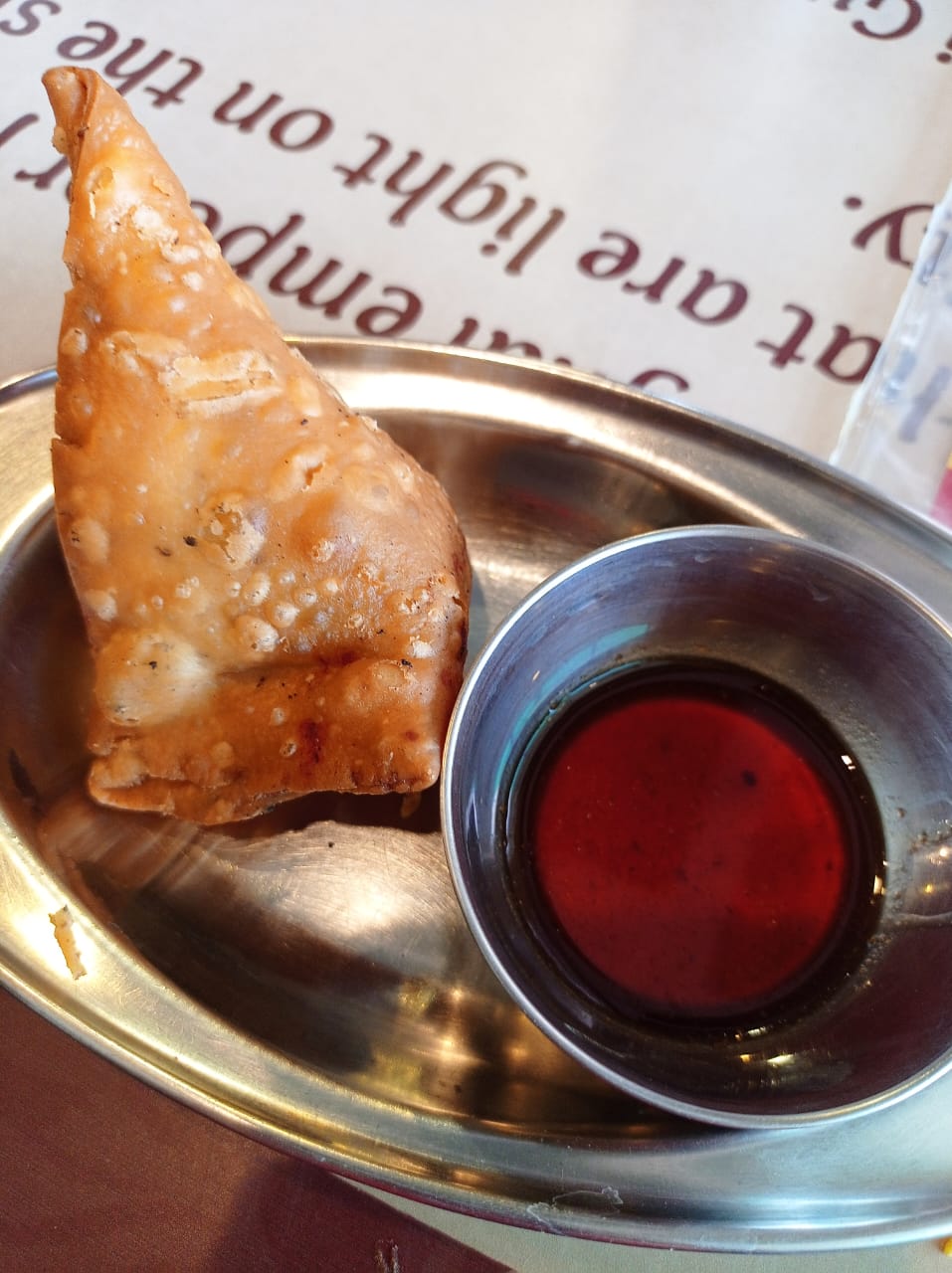
Mint chutney gives a fresh herbal contrast, while tamarind sauce brings sweet acidity. Offer either in a separate dish so the pastry stays crisp, and keep accompanying drinks or sides milder than the spiced filling.
Keep cooled filling and dough separately refrigerated if delaying assembly. Store shaped uncooked samosas covered so the surface does not dry, and fry promptly. Cooked leftovers should cool before refrigeration; reheat uncovered in an oven or air fryer for better crispness than a covered microwave.
An AI-assisted editorial guide, not independently kitchen-tested. The photograph is a serving example. How we prepare and correct our guides.
For safe handling, consult FDA guidance. Send recipe corrections by email to ZYS10.