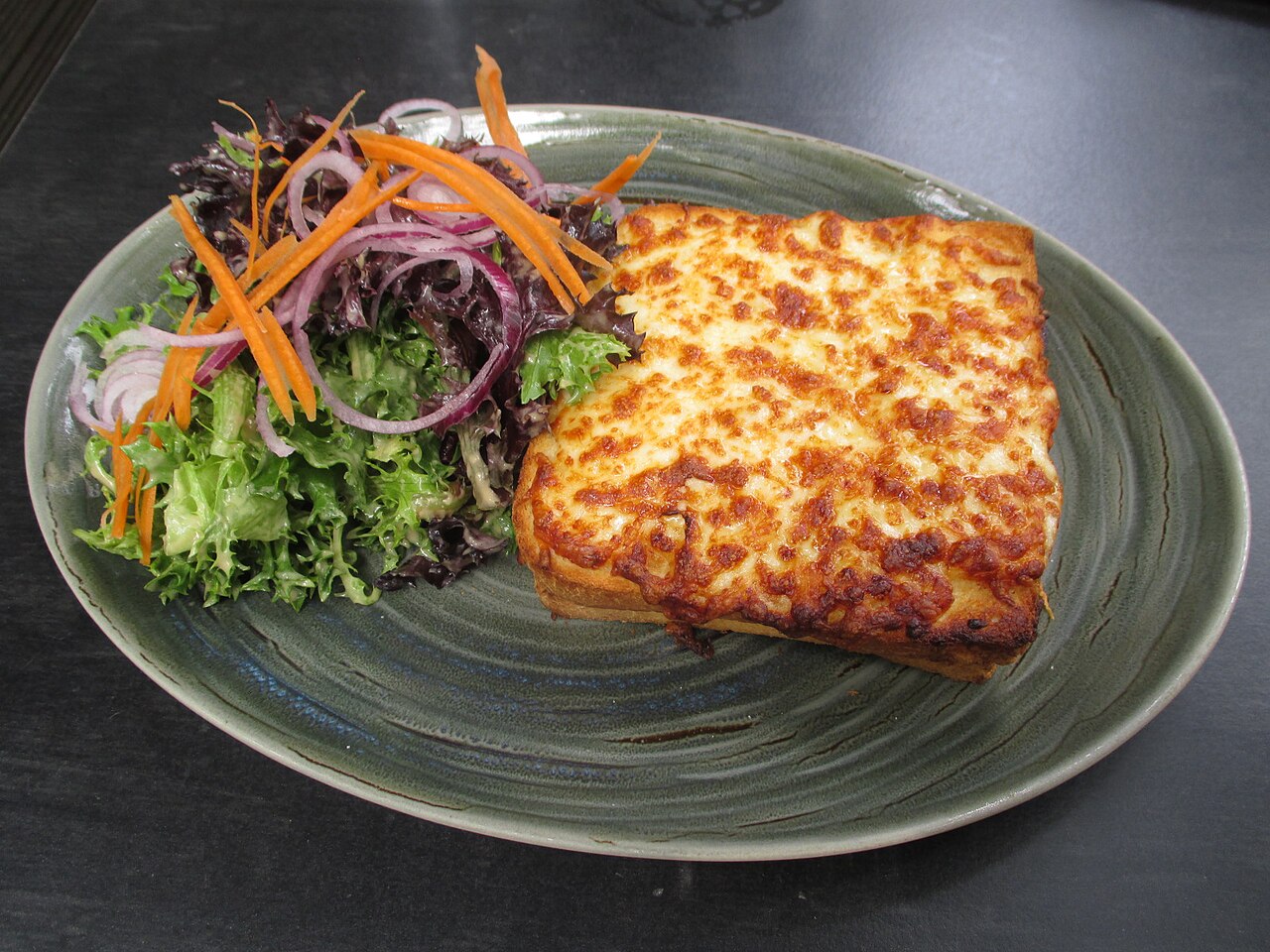
A spreadable béchamel, evenly sliced ham and a measured cheese layer let the sandwich heat through before its top becomes too dark. Prepare the salad before the final grill stage.
Golden Croque Monsieur
Planning totals add preparation, cooking and listed waits. Overlapping stages may shorten the schedule; ingredient and equipment differences can lengthen it.
Ingredients
Times and base yield refer to the original recipe. Scaling quantities does not automatically change pan size, temperature or cooking time.
Step-by-step method
The steps describe the base batch (4 servings). The calculator changes the ingredient list only; amounts written in the steps, equipment and timing remain for that base batch.
Step 1
Melt butter, stir in flour for 2 minutes and whisk in milk gradually.
Step 2
Simmer the béchamel until smooth and thick enough to spread, then add nutmeg.
Step 3
Spread bread lightly with Dijon and a thin layer of béchamel.
Step 4
Add ham and half the cheese, close the sandwiches and place on a baking tray.
Step 5
Spread tops with remaining béchamel and cheese.
Step 6
Bake at 200°C / 392°F for 12–15 minutes, then grill briefly until golden and bubbling.
Why this version works
Choose bread that can carry a sauce
Eight slices make four sandwiches in this version. Pick a sturdy white loaf or pain de mie with a close but resilient crumb, cut roughly a centimeter thick. Very soft thin supermarket slices can collapse beneath warm béchamel, while a highly open sourdough lets sauce leak through large holes. Slightly stale bread is useful because it absorbs moisture more slowly, but stale should not mean hard and unpleasant. If your loaf is exceptionally soft, toast its cut faces lightly before assembly. Keep that toast pale because it will receive another oven cook under the cheese.
Cook béchamel to a spreading consistency
The 30 grams each of butter and flour thicken 300 milliliters of milk into a relatively firm sauce. Cook the flour briefly without browning, then add milk gradually while whisking into the corners of the pan. The finished sauce should sit on a spoon and spread in a thin layer rather than run like milk. It will thicken further as it stands, so loosen with a little warm milk if it becomes pasty. Nutmeg is an accent, not the main flavor. Taste before adding salt because ham, mustard and Gruyère all contribute seasoning later.
Distribute the filling without making a tall center
Spread Dijon thinly and arrange the ham so each bite contains some, trimming folded piles that would make the middle much thicker than the edge. Divide the cheese between the inner filling and top rather than putting all of it beneath the grill. A little interior cheese binds the bread and ham, while the top provides the browned crust. Béchamel should cover the upper slice without spilling in a deep pool around it. Leave space between sandwiches on the tray so hot air can reach their sides and steam can escape from underneath.
Use oven heat first and intense top heat last
The oven stage warms the ham and melts the interior cheese. The short grill or broiler finish colors the upper layer only after the center is hot. If the sandwich starts under fierce top heat, the cheese can burn while the interior remains barely warm. Watch continuously during the final stage because grated cheese changes quickly from golden to black. A rack set over a tray can help the base stay drier if your bread tends to soften. Let the sandwiches stand briefly before cutting so hot sauce does not pour out across the board.
Allocate béchamel between the filling and the top
The sauce is deliberately thick enough to spread, so decide how much belongs inside each sandwich and reserve the rest for the four tops. A heavy internal layer makes the ham and cheese slide when cut, while a nearly bare top loses the intended sauce-and-cheese finish. Let béchamel cool slightly if it is too fluid to spread comfortably, without leaving perishable components unrefrigerated for a long assembly. Use bread slices of similar size so the last sandwich does not receive a disproportionately thick coating merely to use up the pan.
Ingredient choices and substitutions
Choose fully cooked ham and a good melting cheese such as Gruyère. Slightly stale sturdy bread can work well. Thin sandwich bread becomes saturated quickly and is less reliable under a generous topping.
Fixes for this recipe
| What you notice | Likely reason | What to do |
|---|---|---|
| The topping slides off the bread. | The béchamel was runny or applied too thickly to a sloping sandwich. | Thicken the sauce before assembly and keep the ham layer level. Use a thin coating that reaches the corners instead of a mound in the middle. |
| The top burns but the cheese inside is firm. | The grill was used before the sandwich warmed in the oven. | Move the tray farther from intense top heat and finish the center at a gentler temperature. Reserve broiling for the final short coloring stage. |
| The bottom is soft and damp. | Soft bread absorbed sauce while sitting on a flat tray. | Lightly toast the bread before filling or use a rack for the oven stage. Assemble close to baking rather than leaving filled sandwiches standing for hours. |
Recipe-specific questions
Is a fried egg part of croque monsieur?
Not in this version. Adding an egg creates the familiar croque madame direction. Cook the egg separately and place it on the finished sandwich so its timing does not interfere with browning the cheese.
Can another cheese replace Gruyère?
A smooth-melting nutty cheese such as Emmental can work, with a milder flavor. A dry hard cheese alone may brown before it melts smoothly, while fresh mozzarella adds more water than this topping needs.
Can I prepare the béchamel the night before?
Yes. Cool it promptly with the surface covered, refrigerate and warm gently with a little milk before spreading. Assemble the sandwiches later so the bread does not spend the night absorbing sauce.
Serving and storage
A mustard-dressed green salad, radishes or a few sharp pickles cut through the dairy-rich sandwich. Another creamy side is less useful than something cold, crisp and acidic.
Keep components separate when planning ahead. Refrigerate leftover baked sandwiches promptly and reheat in the oven until thoroughly hot; the crust may be restored somewhat, but the bread will be softer than when freshly assembled. Avoid using repeated grill cycles to heat a cold center.
An AI-assisted editorial guide, not independently kitchen-tested. The photograph is a serving example. How we prepare and correct our guides.
For safe handling, consult FDA guidance. Send recipe corrections by email to ZYS10.