A dessert firm enough to bounce like rubber has lost much of its appeal. With 600 ml dairy and 6 g powdered gelatin, this version balances creaminess with enough structure for careful unmoulding, while glasses remain an easier serving choice.
Vanilla Panna Cotta
Plus at least 6 hours chilling
Planning totals add preparation, cooking and listed waits. Overlapping stages may shorten the schedule; ingredient and equipment differences can lengthen it.
Ingredients
Times and base yield refer to the original recipe. Scaling quantities does not automatically change pan size, temperature or cooking time.
Step-by-step method
The steps describe the base batch (4 servings). The calculator changes the ingredient list only; amounts written in the steps, equipment and timing remain for that base batch.
Step 1
Sprinkle gelatin evenly over cold water and leave it to bloom for 5–10 minutes.
Step 2
Warm cream, milk and sugar gently until steaming, stirring until the sugar dissolves without boiling.
Step 3
Take off the heat and stir in the bloomed gelatin until no granules remain.
Step 4
Add vanilla and strain the mixture into a jug, then let it cool slightly.
Step 5
For unmoulding, lightly oil four moulds with the optional teaspoon of oil; glasses need no oil. Divide the mixture between them and refrigerate for at least 6 hours.
Step 6
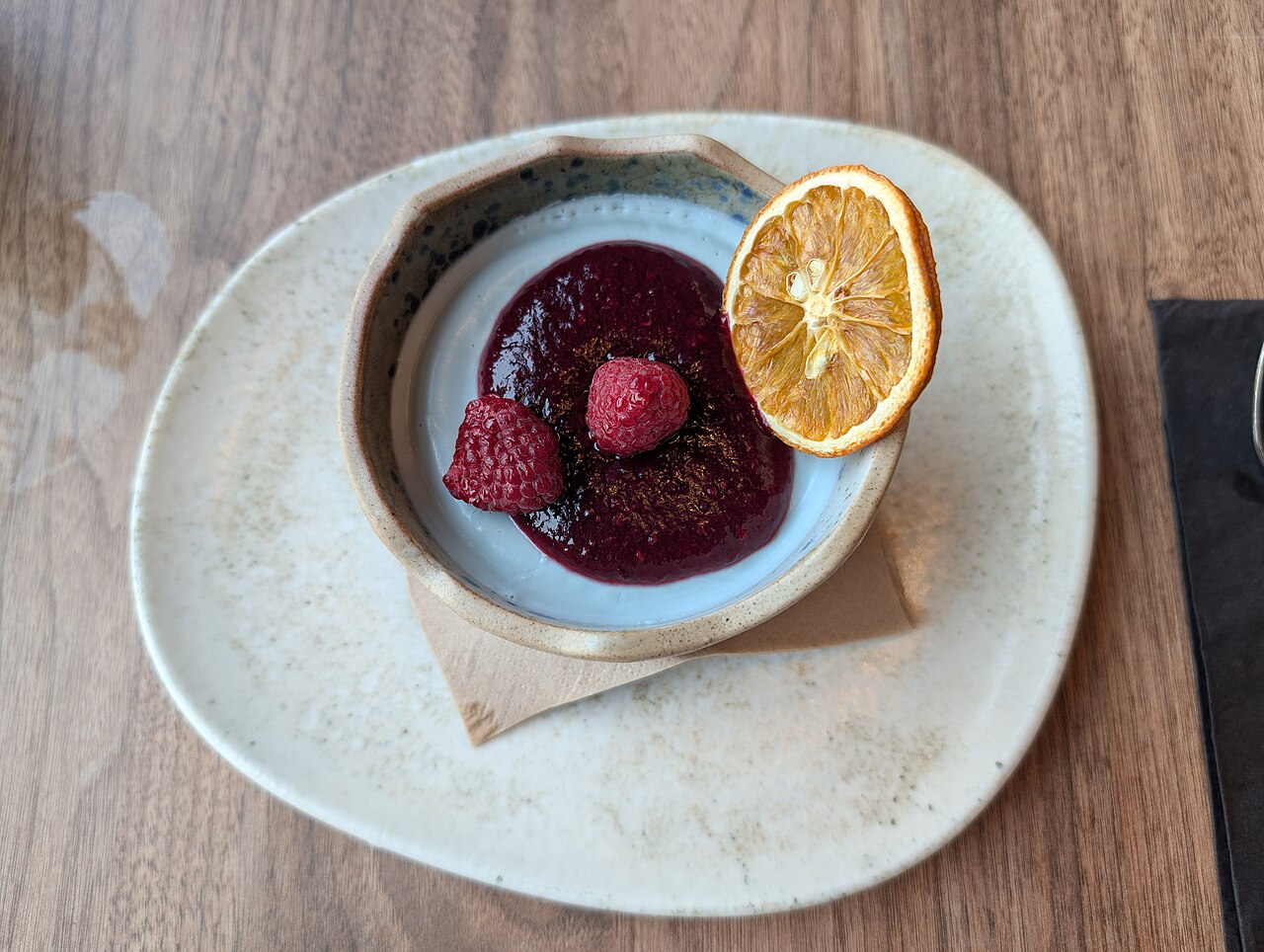
Crush half the berries with lemon juice, fold in the rest and spoon over the set cream.
Why this version works
Understand the dairy ratio before substituting
The written mixture uses 400 ml rich cream and 200 ml whole milk. British double cream is typically richer than American heavy whipping cream, so using the latter produces a somewhat lighter dessert rather than an exact match. Whole milk introduces water and reduces the feeling of pure cream. Replacing all the dairy with low-fat milk changes both richness and setting behavior. Coconut products also vary in fat and stabilizers, so a dairy-free version should be treated as its own formulation rather than a guaranteed direct substitution by volume.
Bloom the gelatin evenly
Sprinkle the powder across the full surface of the measured cold water instead of dropping it into one compact heap. Leave it until the granules hydrate into a soft mass. Dry pockets are harder to dissolve and can produce an uneven set. Warm the dairy and sugar only until steaming, remove from the heat and stir the bloomed gelatin through thoroughly. A fine sieve catches any remaining undissolved fragments before portioning. Do not repeatedly boil the finished mixture in an attempt to make it set faster; the setting happens during cooling, not through aggressive reduction.
Use the package conversion for gelatin sheets
Gelatin leaves are sold in different sizes and strengths, so a casual instruction to replace six grams of powder with a fixed number of sheets can mislead. Follow the manufacturer's conversion and blooming directions for the specific product. Agar is not a direct gelatin equivalent either: it requires a different heating method and creates a more brittle texture. For this recipe, plain powdered gelatin is the most straightforward way to preserve the intended soft wobble without testing an unfamiliar conversion during preparation for guests.
Choose a container that suits your confidence
Four small glasses eliminate the risk of unmoulding and let the dessert remain very delicate. For moulds, use smooth interiors and only a trace of neutral oil, wiping away visible excess. Chill on a level refrigerator shelf for at least six hours. To release, dip the outside briefly into warm water and loosen carefully; leaving it in hot water too long melts the outer layer. Spoon berry topping on only after the cream is set. Fresh fruit liquid mixed into the dairy changes acidity and water balance, so keep this version's topping separate.
Choose the setting product before mixing the dairy
The specified gelatin is a weighed powder, not a promise that one sachet or one leaf from every brand is equivalent. Check the packet for its weight and intended setting use before starting. If replacing powder with leaves, follow the manufacturer's conversion for that product rather than multiplying by a universal sheet count. Keep the recipe's cold blooming water separate from the dairy allowance. Increasing gelatin solely to guarantee an easy unmould can produce a firmer dessert than intended; serving in glasses is a presentation choice that does not require making the cream rigid.
Ingredient choices and substitutions
Use fresh dairy and plain gelatin with a known setting strength. Leaf gelatin varies by brand, so convert using the package instructions instead of assuming a universal sheet count. Vanilla paste can replace extract.
Fixes for this recipe
| What you notice | Likely reason | What to do |
|---|---|---|
| The panna cotta remains liquid overnight. | The gelatin quantity was mismeasured, not fully hydrated or incompletely dissolved. | Check the product and scales before attempting another batch. A soft dessert can be served as a sweet cream, but adding more dry gelatin directly to a cold portion will create lumps. |
| The set is stiff and rubbery. | Too much gelatin was used or a sheet conversion was guessed. | Serve small portions with plenty of berries for this batch. Next time return to the specified weight and verify the product instructions instead of increasing gelatin for easier unmoulding. |
| A thick skin appears at the top. | The warm dairy stood exposed while cooling or the surface was left uncovered for a long interval. | Strain before pouring and cool without prolonged open standing. Cover the dishes once cool enough for refrigeration, protecting the surface without pressing it into the liquid. |
Recipe-specific questions
Can the sugar be reduced?
A modest reduction is possible if the topping is sweet, but the dessert should still taste rounded when cold. Taste the warm dairy mixture cautiously with a clean spoon before adding gelatin. A large change is better made as a deliberate recipe variation rather than assumed invisible.
Why are berries served separately?
Their acidity and juice give contrast without interfering with the dairy's set. Some fresh fruits also contain enzymes that affect gelatin when mixed directly into it. Keeping the fruit as a finished topping avoids introducing that extra variable into this basic vanilla version.
Can panna cotta be made two days ahead?
It is well suited to advance preparation when kept refrigerated, covered and handled cleanly. Prepare the berry topping closer to serving for fresher texture. Use the freshness and storage instructions of the dairy products as limits rather than treating gelatin as a preservative.
Serving and storage
Tart berries, gently crushed with lemon, provide a useful contrast to the sweet cream. A small crisp biscuit can add texture on the side, but place it at the table rather than leaving it against the moist dessert long enough to soften.
Keep the set desserts chilled until serving and return unused portions to the refrigerator promptly. Freezing can change the smooth texture and cause moisture release after thawing, so refrigeration is preferable for a short planned hold. Store berries separately and add them with a clean spoon to avoid diluting or damaging the delicate surface.
An AI-assisted editorial guide, not independently kitchen-tested. The photograph is a serving example. How we prepare and correct our guides.
For safe handling, consult FDA guidance. Send recipe corrections by email to ZYS10.