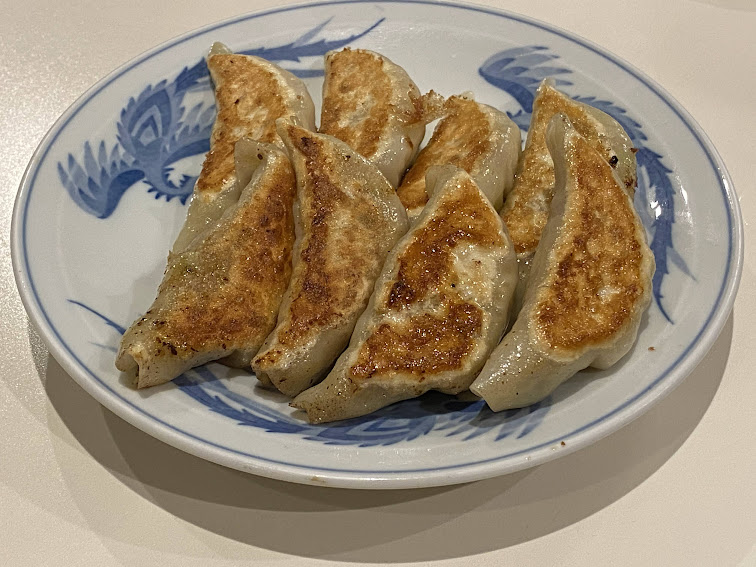
Those textures come from three separate pan stages: browning, covered steaming and uncovered drying. The filling and folding should be complete before that quick cooking sequence begins.
Pan-Fried Pork Gyoza
Plus 10 minutes for cabbage to drain
Planning totals add preparation, cooking and listed waits. Overlapping stages may shorten the schedule; ingredient and equipment differences can lengthen it.
Ingredients
Times and base yield refer to the original recipe. Scaling quantities does not automatically change pan size, temperature or cooking time.
Step-by-step method
The steps describe the base batch (4 servings). The calculator changes the ingredient list only; amounts written in the steps, equipment and timing remain for that base batch.
Step 1
Mix the chopped cabbage with the 0.25 teaspoon salt, rest for 10 minutes and squeeze out the released liquid.
Step 2
Mix cabbage with pork, spring onions, ginger, soy sauce, sesame oil and cornstarch until cohesive.
Step 3
Place a small spoonful of filling in each wrapper, moisten the rim and pleat firmly shut.
Step 4
Work in uncrowded skillet batches, dividing the 2 tablespoons neutral oil and 100 ml water between batches. Begin with a little oil and cook the dumpling bases until light golden.
Step 5
Add that batch’s water carefully, cover and steam for 5–7 minutes, checking the thickest pork filling reaches 71°C / 160°F. If the pan dries before the filling is cooked, carefully add a little more hot water and continue covered.
Step 6
Remove the lid and let the water evaporate so the bases become crisp again.
Why this version works
Remove cabbage water before mixing the filling
Finely chopped cabbage contains enough moisture to loosen the pork mixture as it waits. Salt it lightly, let it stand and squeeze firmly before adding the other ingredients. If using napa cabbage instead of firm green cabbage, expect softer leaves and potentially more released water. Keep the pieces small enough that they do not push through the wrapper. This is not a reason to squeeze the final pork mixture dry: the preparation should remove excess vegetable liquid while retaining enough moisture and fat for a succulent cooked center.
Mix for cohesion without turning it into paste
The pork, squeezed cabbage, aromatics and seasoning should cling together when lifted on a spoon. A short purposeful mix distributes the seasoning and helps the filling hold its shape inside a wrapper. Ground pork with some fat generally gives a softer bite than very lean mince. The small cornflour quantity helps bind released moisture, but it cannot compensate indefinitely for undrained cabbage. Cook a tiny filling sample separately if checking seasoning. Never taste the raw mixture, and keep it chilled if folding will be delayed.
Choose a modest filling quantity and a clean seam
Thirty wrappers divide the filling into small spoonfuls; the exact amount depends on wrapper diameter. Place the filling in the center, leaving a clear border. Moisten only the rim and fold with a simple firm seal before attempting elaborate pleats. Press air out gently, because a large trapped pocket expands during steaming. Keep unused wrappers covered so they remain pliable. If a wrapper tears, replace it or use less filling rather than trying to bury the hole under a thick wet patch that may detach in the pan.
Let the base dry again after steaming
Arrange dumplings with small gaps in a lightly oiled non-stick skillet. Once the bases color, add the measured water carefully and cover immediately, keeping your face away from the steam. Steam until the raw filling is cooked, checking a sample rather than using floating or wrapper translucency as a safety guarantee. Remove the lid and allow water to evaporate. The base may seem stuck while wet; give it time to form a crust again before forcing a spatula underneath. Lift when the bottom is crisp and releases cleanly.
Portion the filling before committing all the wrappers
Start by filling and sealing one wrapper, leaving a clean border. Compare the space used with the remaining filling and wrapper count; wrapper diameter determines whether the batch fits neatly into thirty pieces. If the first parcel needs force to close, use less filling and have extra wrappers available rather than stretching every seam thin. Keep finished gyoza on a lightly prepared tray with space between them. Arrange only one skillet batch at a time near the stove so a tray of completed dumplings does not dry while you fold the rest.
Ingredient choices and substitutions
Choose thin round wrappers labeled for gyoza and keep them covered while working. Ground pork with some fat is more succulent than very lean mince. Finely cut vegetables make folding and even cooking easier.
Fixes for this recipe
| What you notice | Likely reason | What to do |
|---|---|---|
| The seams open in the pan. | The rims dried out, were overfilled or were not pressed firmly enough. | Reduce the spoonful and keep the wrapper border clean. Fold a few at a time with the unused stack covered, and use a simple secure seal instead of loose decorative pleats. |
| The dumplings stick after steaming. | A wet starch layer has not yet dried back into a crust. | Wait over moderate heat until excess water evaporates, then loosen gently. Add a trace of oil around the edge if needed rather than scraping aggressively through soft wrappers. |
| The filling feels watery and the wrapper sags. | Cabbage released liquid after mixing or the dumplings waited too long before cooking. | Drain and squeeze cabbage properly in the next batch. Freeze uncooked excess promptly in a single layer rather than leaving filled dumplings in a damp crowded pile. |
Recipe-specific questions
Can square wonton wrappers be used?
They can enclose a filling, but their shape, thickness and intended cooking method differ. Trimmed or folded square wrappers give a different home adaptation and may brown or steam at a different rate. Round gyoza wrappers are the clearest starting point for this method.
Do frozen gyoza need thawing?
Usually not. Cook from frozen in small batches and allow extra covered steaming time, checking the filling. Thawing softens the wrapper and can make it stick to the tray before it reaches the pan. Keep the frozen pieces separated until cooking.
Can all thirty cook in one skillet?
Only if the skillet has enough flat space without packing them tightly. A home pan often gives better results in two batches. Use fresh measured water for each batch and let the pan recover its heat rather than adding the next cold group into a wet lukewarm surface.
Serving and storage
A small dip of rice vinegar and soy sauce is enough to season a bite without soaking the crisp base. Serve cucumber or lightly cooked greens alongside, and keep dipping bowls individual so a shared platter remains easy to portion.
Freeze uncooked dumplings on a lined tray, then transfer to a closed container once firm. Keep raw filling refrigerated during preparation and do not hold it warm beside the hob. Refrigerate cooked leftovers promptly and reheat thoroughly, understanding that the upper wrapper may become softer after a second steam or microwave warming.
An AI-assisted editorial guide, not independently kitchen-tested. The photograph is a serving example. How we prepare and correct our guides.
For safe handling, consult FDA guidance. Send recipe corrections by email to ZYS10.