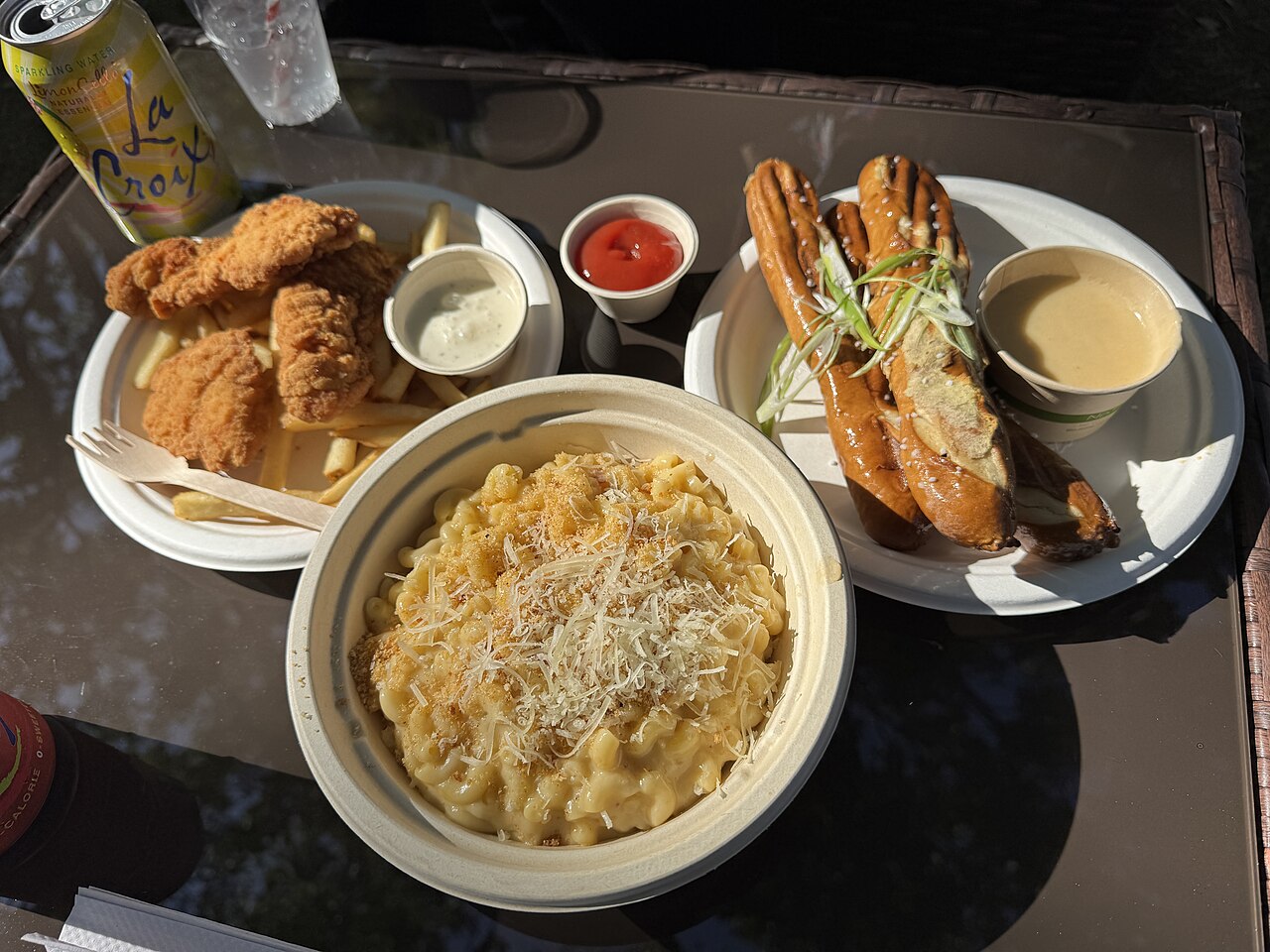
This version uses a flour-thickened milk sauce and two cheeses with different jobs: mature Cheddar for flavor and Monterey Jack for a softer melt. The pasta finishes cooking in the oven, so its first boil deliberately stops early.
Creamy Baked Mac & Cheese
Includes 5 minutes resting after baking.
Planning totals add preparation, cooking and listed waits. Overlapping stages may shorten the schedule; ingredient and equipment differences can lengthen it.
Ingredients
Times and base yield refer to the original recipe. Scaling quantities does not automatically change pan size, temperature or cooking time.
Step-by-step method
The steps describe the base batch (1 pasta bake, 6 servings). The calculator changes the ingredient list only; amounts written in the steps, equipment and timing remain for that base batch.
Step 1
Boil macaroni until two minutes short of the package time and drain.
Step 2
Melt butter, stir in flour and cook gently for 2 minutes.
Step 3
Whisk in milk gradually and simmer until the sauce coats a spoon.
Step 4
Take off the heat, add grated cheeses and mustard powder and stir until melted.
Step 5
Fold in pasta, transfer to a baking dish and top with breadcrumbs mixed with oil.
Step 6
Bake at 190°C / 374°F for 20–25 minutes until bubbling with a golden top, then rest for 5 minutes before serving.
Why this version works
Why the sauce starts with 50 g each of butter and flour
Equal weights make a straightforward roux that can disperse through the milk without leaving a raw flour taste. Cook it gently for about two minutes, stirring around the corners, and keep it pale: a darker roux brings a different flavor and thickening behavior. Add the first milk in small portions, whisking each smooth before the next. Once the mixture loosens, the rest can go in more steadily. Let it simmer before deciding whether it is thick enough; raw flour and cold milk do not reveal the final consistency.
Melt the cheese after the white sauce is ready
Take the smooth thickened milk off the burner before adding finely grated cheese. The sauce retains enough heat to melt it gradually without a hard boil. Mature Cheddar contributes sharpness, while Jack supplies a mild elastic melt. Very old dry Cheddar alone can give a less fluid result, and pre-grated cheese may contain anti-caking ingredients. Stir gently until no large pieces remain. Mustard powder supports the cheese flavor; it should not make the whole dish taste like mustard sauce.
Leave room for the pasta to absorb moisture
Drain the macaroni roughly two minutes before its package time, when it still has a distinctly firm center. It continues hydrating in the sauce during baking. The combined mixture should look a little looser than you want the final serving because pasta and oven evaporation both remove free liquid. Do not rinse the pasta for this method. Its surface helps the sauce adhere, and cooling it under a tap makes the assembly temperature less predictable.
Choose the baking dish by depth, not appearance
A shallow even layer heats more predictably and gives more crumb topping per portion. A small deep casserole can dry at the edges while its center takes longer to bubble. Mix the breadcrumbs with a little oil so they color evenly rather than leaving dusty patches. If the sauce is already hot, baking mainly finishes the pasta and browns the top; extending the oven time simply to obtain a darker crust can sacrifice the creamy interior. Use a brief grill finish only while watching closely.
Make-ahead changes the liquid requirement
Pasta continues absorbing sauce during a refrigerated hold. If assembling ahead, cool the components safely, cover and expect the mixture to look firmer before baking. Add a small amount of milk around the edges if needed rather than pouring a large cold quantity into the center. A chilled dish also needs longer than a hot freshly assembled one to heat through. For the most predictable first result, make and bake in one session, then use that texture as your reference for future advance preparation.
Check the pasta-to-sauce balance before baking
The drained macaroni should be coated generously because it will continue taking up moisture in the oven, but it should not sit in a large pool of plain milk. Fold the pasta through the finished cheese sauce before choosing the baking dish so you can see the actual mixture volume. Keep breadcrumbs mixed with their separate oil allowance for the top; stirring them into the pasta removes their intended contrast. A very shallow dish exposes more topping while a deep one creates more interior, so compare depth rather than assuming a decorative dish is equivalent.
Ingredient choices and substitutions
Grate cheese from a block for smoother melting. Mature Cheddar provides flavor, and Monterey Jack adds a softer melt. Use milk rather than trying to make the whole sauce from cheese alone.
Fixes for this recipe
| What you notice | Likely reason | What to do |
|---|---|---|
| The cheese sauce looks grainy | The cheese overheated or was added to a fiercely bubbling base. | Remove from heat and stir gently with a small splash of warm milk. This may soften the texture but cannot always reverse a fully separated cheese mixture. |
| The baked pasta is dry | The pasta was fully cooked before baking, or the oven stage ran too long. | Serve with a little warm milk folded into the interior. Next time stop the first boil earlier and keep the sauce looser before assembly. |
| The topping is golden but the center is cold | A deep or refrigerator-cold dish needs more heating than the top suggests. | Cover loosely and continue at a moderate oven temperature. Check the center directly; crumb color is not a temperature test. |
Recipe-specific questions
Can I use only mature Cheddar?
Yes, but the result may taste sharper and melt less smoothly, especially with a very dry aged cheese. Keep the sauce off the heat while incorporating it. A blend gives more control over flavor and texture than choosing one cheese solely because it is stronger.
Does extra cheese fix a thin white sauce?
Not reliably. First let the flour-thickened milk simmer and coat a spoon. Adding cheese to an unfinished thin base can leave you with a salty but unstable sauce. Correct the white sauce stage before introducing the cheese.
Can this stay on a buffet for a long time?
Its texture steadily firms as pasta absorbs liquid, so a long warm hold is not its best use. Follow safe hot-holding guidance and replenish with smaller batches where appropriate rather than leaving a large dish to dry out. Do not judge food safety by a still-warm edge.
Serving and storage
Serve with steamed broccoli or a sharply dressed tomato salad. An acidic vegetable side makes the cheese feel more distinct than another creamy accompaniment.
Cool leftovers in shallow covered portions and refrigerate promptly. Reheat thoroughly with a small splash of milk, covered at first to protect the surface. A second long uncovered bake makes the pasta drier; it does not recreate the first crisp top and creamy center.
An AI-assisted editorial guide, not independently kitchen-tested. The photograph is a serving example. How we prepare and correct our guides.
For safe handling, consult FDA guidance. Send recipe corrections by email to ZYS10.