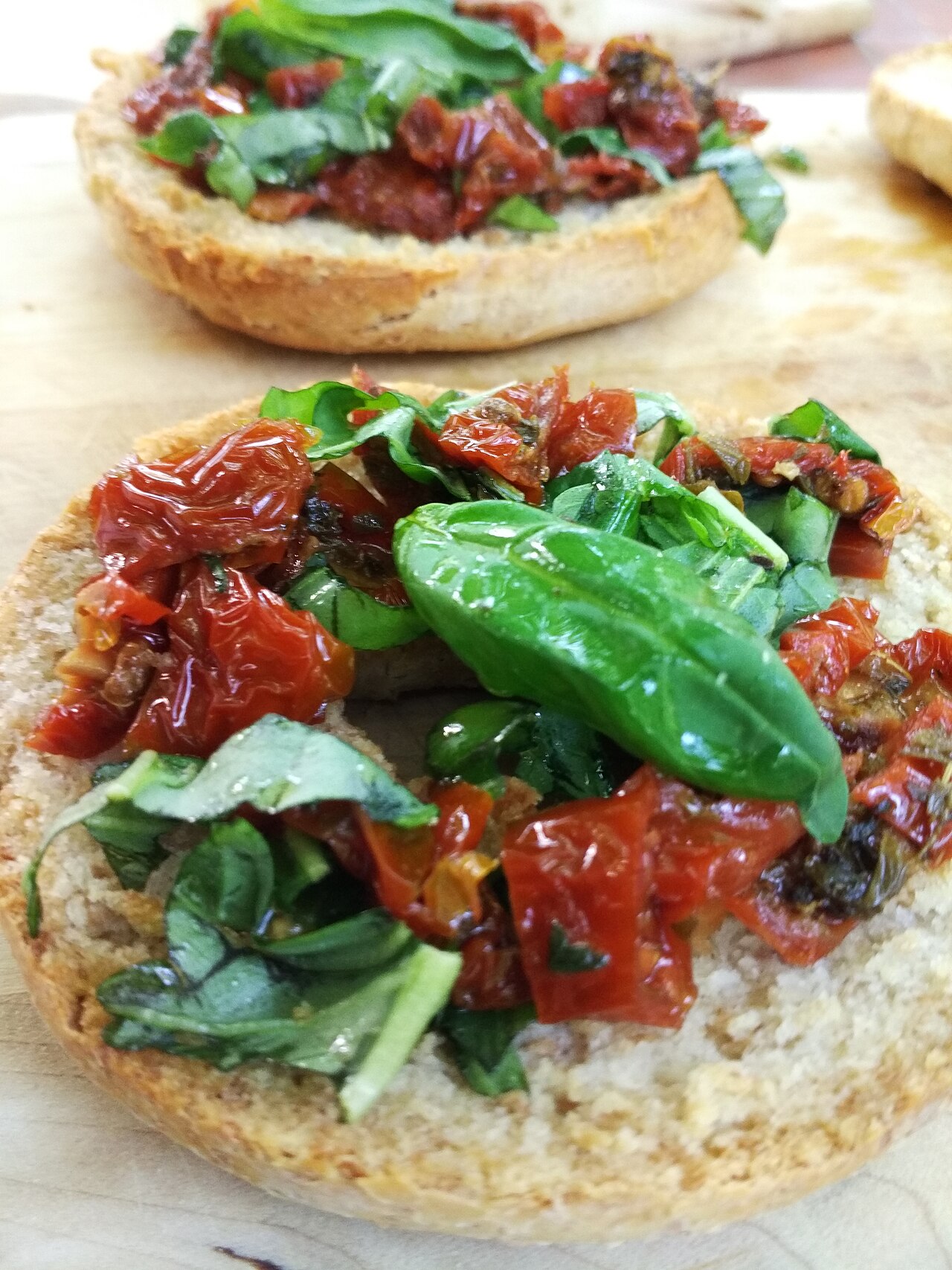
It needs little cooking, so tomato ripeness and the bread's structure remain very obvious. The short salting and draining stage is the main control that prevents a flavorful starter from becoming a wet, difficult-to-lift slice.
Tomato & Basil Bruschetta
Planning totals add preparation, cooking and listed waits. Overlapping stages may shorten the schedule; ingredient and equipment differences can lengthen it.
Ingredients
Times and base yield refer to the original recipe. Scaling quantities does not automatically change pan size, temperature or cooking time.
Step-by-step method
The steps describe the base batch (4 servings). The calculator changes the ingredient list only; amounts written in the steps, equipment and timing remain for that base batch.
Step 1
Dice the tomatoes and place them in a sieve with salt for 10 minutes.
Step 2
Reserve the tomato juices for another use. Tear the 15 g basil, keeping a few pieces aside for the finish.
Step 3
Use 1 tablespoon of the olive oil to brush the bread. Grill or toast until crisp outside but still slightly yielding in the center.
Step 4
Rub one side of each warm slice with the cut garlic, using a light touch.
Step 5
Mix drained tomatoes with the remaining 3 tablespoons of oil, most of the basil and black pepper.
Step 6
Spoon onto the toast immediately before serving and finish with the reserved basil.
Why this version works
Pick tomatoes by aroma and flesh
For the written 600 g quantity, a mixture of ripe medium tomatoes and a few sweet cherry tomatoes can provide useful texture. Firm supermarket tomatoes with little fragrance rarely improve enough through extra oil or salt. Cut away tough stem cores and dice the flesh into pieces that sit comfortably on the bread rather than rolling off as large wedges. There is no need to remove every seed: the goal is to drain loose juice, not discard all the tomato's flavorful interior. A sieve over a bowl allows you to control that moisture without crushing the pieces.
Salt briefly, then decide how much juice to keep
Mix the diced tomatoes with the measured salt and leave them for roughly ten minutes. Water will collect underneath as the surface seasoning dissolves. Save that liquid for soup, a dressing or another cooked dish rather than pouring all of it onto the toast. If the tomatoes are unusually fleshy and dry, a small spoonful of the juice can return to the topping. The drained pieces should look juicy and glossy, not wrung out. This adjustment is more reliable than applying the same draining pressure to every tomato variety.
Toast bread for a crisp surface and forgiving bite
A sturdy country loaf or sourdough supports the topping better than soft thin sandwich bread. Cut slices around 1.5–2 cm thick and brush lightly with oil rather than soaking them. Grill or toast until the outside develops color while the inside retains a little tenderness. Hard dry toast can be awkward to bite and push the tomato off the top. Turn the slices as needed for even color and use a rack if they wait briefly. A flat plate traps steam underneath and removes some of the crispness you just created.
Rub garlic on the warm rough surface
The cut clove releases a little juice as it passes over the toasted crumb. One or two gentle passes may be enough, especially with a fresh strong clove. This technique gives fragrance without large pieces of raw garlic. Tear basil shortly before mixing and add the remaining olive oil to the drained tomatoes, tasting a complete spoonful before assembly. Spoon the topping over each slice only when it can be served. Leaving a tray assembled through a long drinks interval changes the bread from crisp support to a soaked base.
Distinguish bread coverage from topping height
Eight slices divide the tomato mixture into eight toppings, but slice size still matters. Choose a loaf whose slices can carry the tomatoes in a shallow layer, with some toast still visible at the edge. If using very small bread, make more pieces instead of piling the same allowance into unstable towers. Rub garlic before the wet topping goes on so it meets the rough toast. A knife-and-fork mound and a hand-held bruschetta are different serving decisions; the latter needs drained tomato, restrained height and assembly immediately before eating.
Ingredient choices and substitutions
Choose tomatoes by fragrance and ripeness rather than perfect shape. A sturdy sourdough or country loaf holds the topping better than soft sandwich bread. A fruity olive oil suits sweet summer tomatoes.
Fixes for this recipe
| What you notice | Likely reason | What to do |
|---|---|---|
| The bread is soggy before it reaches the table. | The tomatoes retained loose water or the slices were assembled too early. | Toast a fresh batch and add topping at the last moment. Keep the tomato mixture in a separate bowl if guests will serve themselves over an extended period. |
| Raw garlic dominates every bite. | The clove was rubbed too aggressively or finely minced garlic was added as an extra. | Use more plain tomato topping to soften the impression. For the next slices, make only a light pass with the cut clove and taste one before repeating. |
| The topping tastes flat despite plenty of oil. | The tomatoes lack ripeness or the seasoning is insufficiently distributed. | Taste for salt before adding more fat. If tomatoes are genuinely bland, use them in a cooked preparation rather than expecting oil to create missing tomato flavor. |
Recipe-specific questions
Can the bread be toasted ahead?
It can be toasted shortly before serving and held uncovered on a rack. A long covered hold makes it softer, while a long uncovered hold can make it hard. Refresh briefly under the grill if necessary and rub garlic while the surface is warm.
Should the tomatoes be refrigerated?
Keep prepared chopped tomatoes chilled when holding them, then remove only the amount needed for a short serving period. Very cold topping can mute flavor, but leaving a prepared bowl warm for hours is not a useful solution. Prepare a smaller quantity close to the meal when possible.
Is balsamic glaze part of the recipe?
It is not needed for this version. A sweet concentrated glaze can cover the fresh tomato and basil rather than improve them. If you enjoy it, offer a small amount separately and taste the plain topping first so the balance is a conscious choice.
Serving and storage
Serve as a small starter beside a vegetable soup or grilled food. Keep toppings modest enough that a slice can be lifted and bitten without the whole tomato layer sliding away, and offer a plate to catch the occasional juicy crumb.
Keep unused tomato topping in a clean covered container in the refrigerator and use promptly. Store bread separately and assemble new slices only as needed. Once dressed, bruschetta loses its intended contrast; leftovers may be chopped into a bread salad instead, but that is a different preparation rather than crisp toast restored.
An AI-assisted editorial guide, not independently kitchen-tested. The photograph is a serving example. How we prepare and correct our guides.
For safe handling, consult FDA guidance. Send recipe corrections by email to ZYS10.