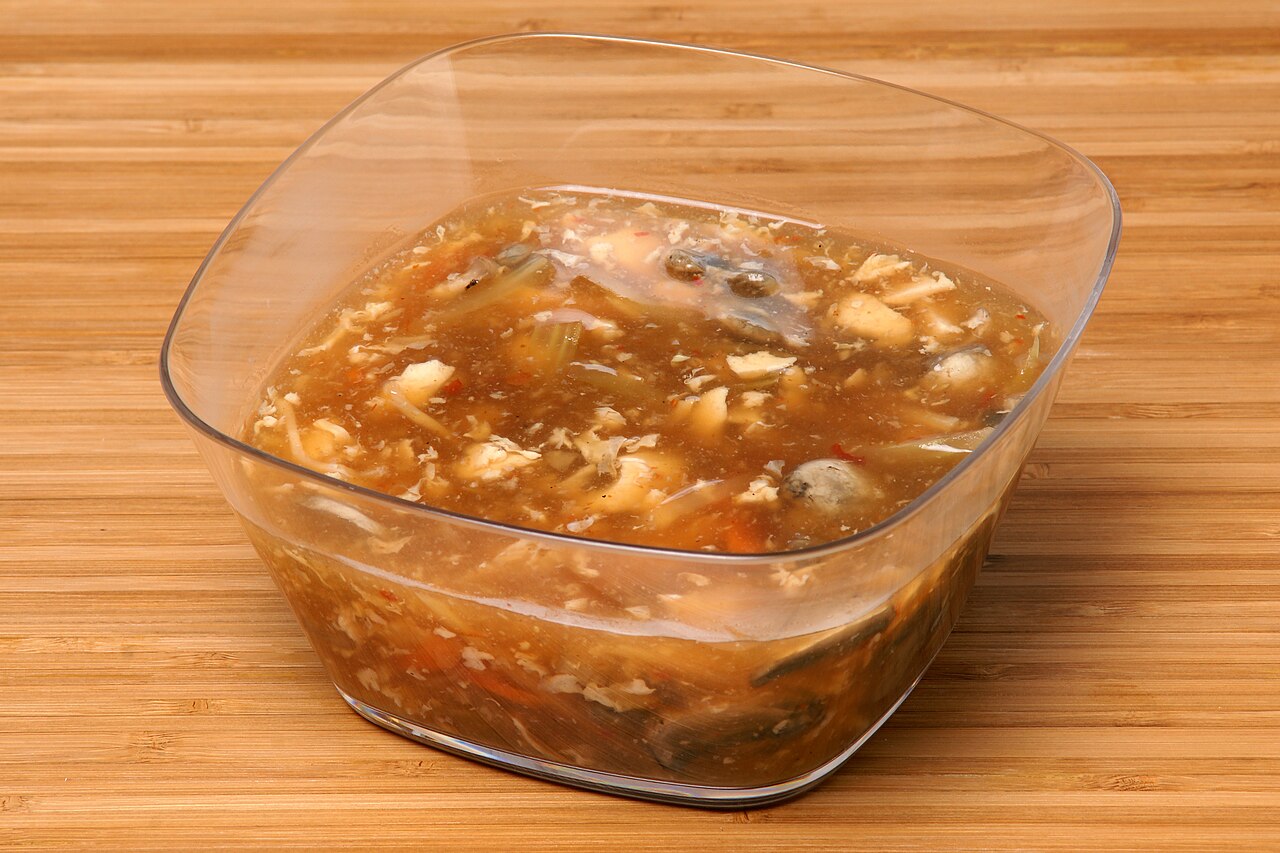
Its light starch body should suspend tofu and egg ribbons without turning into gravy. Cutting the ingredients into comparable fine strips makes the bowl coherent and keeps the cooking stage short.
Hot & Sour Tofu Soup
Planning totals add preparation, cooking and listed waits. Overlapping stages may shorten the schedule; ingredient and equipment differences can lengthen it.
Ingredients
For fractional eggs, beat an extra egg or yolk and measure the required fraction.
Times and base yield refer to the original recipe. Scaling quantities does not automatically change pan size, temperature or cooking time.
Step-by-step method
The steps describe the base batch (4 servings). The calculator changes the ingredient list only; amounts written in the steps, equipment and timing remain for that base batch.
Step 1
Slice tofu, mushrooms and bamboo shoots into fine strips of similar size.
Step 2
Bring stock to a simmer and cook mushrooms and bamboo shoots for 8 minutes.
Step 3
Add tofu and soy sauce and simmer gently for 3 minutes.
Step 4
Mix the 2 tablespoons cornstarch with the 3 tablespoons cold water. Stir the slurry again just before adding gradually to the simmering soup; stop when lightly thickened.
Step 5
Pour beaten eggs in a thin stream while moving the soup slowly to form ribbons. Continue gently until the egg is fully set.
Step 6
Take off the heat and add vinegar, white pepper and sesame oil, then finish with spring onions.
Why this version works
Prepare strips that can share one spoonful
Slice 200 grams of firm tofu, shiitake and bamboo shoots into thin strips rather than large cubes. The shapes should be easy to lift together with broth. Fresh shiitake need only cleaning and slicing, while dried ones must be soaked until tender and stripped of tough stems. Their soaking liquid can contribute flavor after fine straining, but should not be poured in with grit. Bamboo shoots should be drained and prepared according to their package. Firm tofu tolerates this handling better than an extremely delicate silken product, which may disintegrate before serving.
Choose a mild stock before adding concentrated seasoning
The litre of stock should be unsalted or lightly seasoned because soy sauce and vinegar will be added separately. A very strong stock can hide white pepper and the fermented rice-vinegar aroma. Vegetable stock makes a practical meat-free base if all other ingredients are suitable. Simmer mushrooms and bamboo first so they soften before tofu and egg arrive. Keep the simmer gentle enough that the fine strips remain recognizable. Do not add all the vinegar at the beginning and then keep reducing for a long time, since both aroma and concentration will change.
Use slurry to create suspension, not stiffness
Mix the two tablespoons of cornflour with cold water until no dry lumps remain. Stir again immediately before pouring, and begin with part of the slurry. Let the soup bubble gently so you can assess the result before adding the rest. It should lightly coat the spoon and hold ingredients in the liquid, while still pour easily. A thick gummy soup needs more hot stock, not an additional egg. Starch behavior also changes while a batch stands, so a soup that will wait briefly should be kept slightly looser rather than thickened to a rigid final state.
Form egg ribbons and preserve the final aroma
Beat the eggs just until combined. Once the broth is lightly thickened, pour a narrow stream into a gently moving area of the soup. Stirring furiously breaks the egg into tiny clouds; no movement at all can produce one large clump. Allow it to set briefly before lifting through. Add vinegar and white pepper after the main cooking, then taste a cooled spoonful. Their strength becomes clearer when the soup is not scalding. Sesame oil is a small aromatic finish, not the principal cooking fat, and spring onions add freshness just before serving.
Thicken before deciding how much vinegar to add
The broth changes how it carries flavor once the starch and egg are present, so make the final vinegar and white-pepper adjustment after the intended light thickening. Add the vinegar off the heat in stages and taste a cooled spoonful containing tofu or mushroom, not only clear liquid. If the soup is too thick, use unsalted stock or water to adjust body before increasing acid. A larger amount of vinegar may make a stiff soup sharper without making it more pleasant to spoon. Keep sesame oil as a small aromatic finish.
Ingredient choices and substitutions
Fresh shiitake are convenient; dried shiitake need soaking and their strained liquid can deepen the stock. Choose firm tofu that tolerates slicing. Chinese dark rice vinegar has a different profile from sharp white distilled vinegar.
Fixes for this recipe
| What you notice | Likely reason | What to do |
|---|---|---|
| Cornflour lumps float in the broth | Dry starch entered directly or the slurry settled before pouring. | Mix starch thoroughly with cold water and stir again just before use. If lumps already formed, remove them carefully and assess consistency before adding any replacement slurry. |
| Egg appears as tiny cloudy particles | The soup was stirred too rapidly while the egg stream entered. | Use a slower circular motion and allow the ribbons a brief moment to set. Add egg after light thickening so the broth can support its shape. |
| Sourness overwhelms a thin watery bowl | Too much vinegar was added before stock strength and texture were assessed. | Dilute with hot mild stock and restore a light body if needed. Add the final vinegar in stages next time; more white pepper will not cancel excess acid. |
Recipe-specific questions
Can black pepper replace white pepper here?
It makes a different finish with visible dark flecks and a different aroma. White pepper is recommended for the particular warming character of this version. Begin with less of a very strong product and adjust after tasting.
Should the egg be added before the cornflour?
Not in this sequence. Light thickening helps support longer visible egg ribbons. Adding egg to a thin broth and then stirring hard to incorporate slurry tends to break those ribbons into smaller pieces.
Can I use ordinary white distilled vinegar?
It provides acidity but lacks the rounded flavor of dark Chinese rice vinegar. Use cautiously as an adaptation, starting with less. Sweetened sushi vinegar is also different and adds sugar that changes the balance.
Serving and storage
Serve in small bowls beside rice, dumplings or a simply cooked vegetable. Keep other dishes moderately seasoned so the pepper-vinegar balance remains distinct rather than competing with another sharp soup.
Cool promptly and refrigerate in shallow containers. Reheat gently while stirring the bottom, then assess thickness before adding water or slurry. Fresh spring onion and a small final vinegar adjustment can restore aroma; avoid prolonged boiling that breaks tofu and tightens egg ribbons further.
An AI-assisted editorial guide, not independently kitchen-tested. The photograph is a serving example. How we prepare and correct our guides.
For safe handling, consult FDA guidance. Send recipe corrections by email to ZYS10.