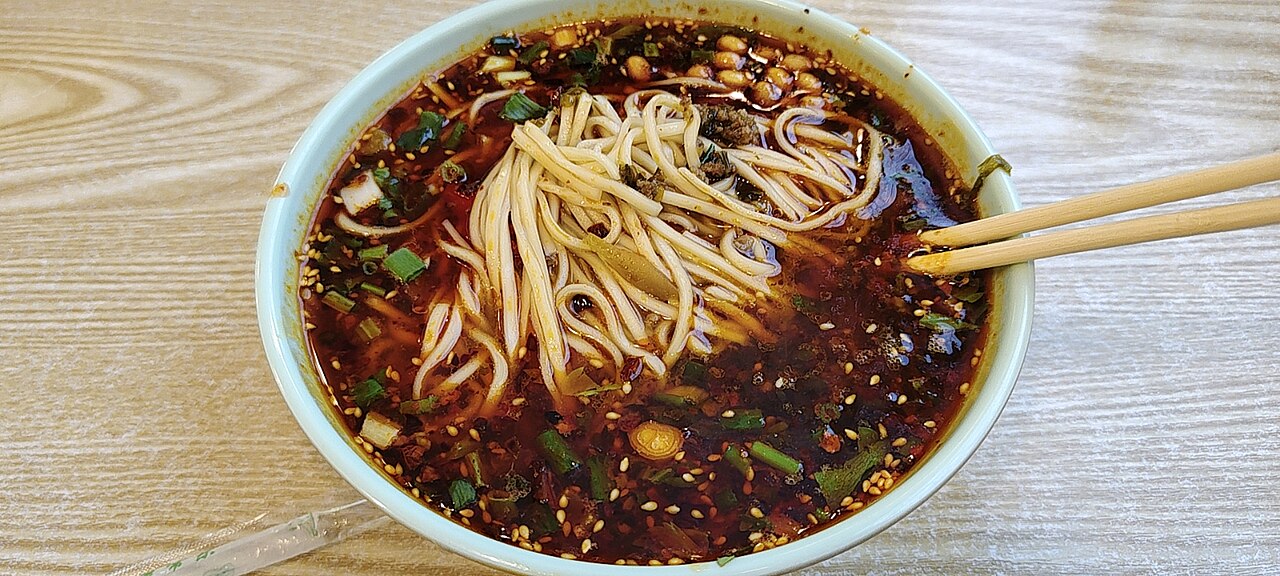
The pork topping provides small browned pieces, while preserved mustard greens add a fermented accent. This home version uses a substantial sesame component; it should remain loose enough to toss rather than form a dense paste at the bottom of the bowl.
Sichuan-Style Dan Dan Noodles
Planning totals add preparation, cooking and listed waits. Overlapping stages may shorten the schedule; ingredient and equipment differences can lengthen it.
Ingredients
Times and base yield refer to the original recipe. Scaling quantities does not automatically change pan size, temperature or cooking time.
Step-by-step method
The steps describe the base batch (4 servings). The calculator changes the ingredient list only; amounts written in the steps, equipment and timing remain for that base batch.
Step 1
Brown pork in a skillet, breaking it into small pieces, until lightly crisp at the edges and at least 71°C / 160°F in the thickest clumps.
Step 2
Add chopped preserved mustard greens and cook briefly to release their aroma.
Step 3
Whisk sesame paste with hot stock gradually until smooth.
Step 4
Stir chile oil, soy sauce, vinegar, Sichuan pepper and minced garlic into the sesame mixture.
Step 5
Cook noodles in fresh water, drain and divide among bowls containing the sauce.
Step 6
Top with pork and spring onions and toss at the table so every strand is coated.
Why this version works
Choose a noodle with spring rather than fragility
Use 400 grams of wheat noodles that retain some bite when cooked. Their thickness determines timing, so the package is a starting point and tasting near the end remains useful. Prepare the sauce and topping before boiling; cooked drained noodles should not wait as a compact cooling mound. Reserve some cooking water for adjustment. A rice-noodle variation changes both texture and sauce absorption, so it is not the direct substitute to choose when trying to understand this method. Warm bowls help keep the sauce fluid while portions are assembled.
Loosen toasted sesame paste gradually
Chinese toasted sesame paste has a stronger roasted character than many pale tahini products. Stir the jar before measuring because solids and oil separate during storage. Mix hot stock into the three tablespoons a little at a time, whisking through any initial tightening until the sauce becomes smooth. Do not assume a briefly thickened stage means the paste has spoiled or needs more oil. Tahini can be used for an accessible variation, but tastes different; a little toasted sesame oil may shift its aroma without making it identical. Keep enough liquid for the noodles’ continued absorption.
Brown pork and assess preserved greens
Cook 250 grams of ground pork in a broad pan, breaking it into small pieces and allowing some edges to color. Avoid a large compact meat patty that is browned outside but uneven within. Preserved mustard greens vary in moisture and salt, so taste a small safe amount and follow product instructions. Chop them finely and add after the meat browns, cooking briefly so their aroma disperses. If they are very wet, drain before adding. They provide a distinct fermented component and cannot be replaced exactly with an equal quantity of fresh cabbage.
Layer the sauce for an adjustable complete bite
Chile oil carries both heat and aroma; its strength depends on the product. Start with the measured amount or less for sensitive diners, keeping the sesame, vinegar and Sichuan pepper roles distinct. Soy sauce should be assessed alongside salty preserved greens. Divide sauce among bowls, add hot drained noodles and top with pork, then toss thoroughly before eating. A spoonful of concentrated sauce alone is not the intended experience. If the final bowl feels heavy, use a little noodle water and a careful acidic adjustment rather than pouring in more oil. Spring onion adds a fresh final note.
Portion the sauce before the noodles start absorbing it
Prepare four bowls with an initial share of the sesame-stock sauce, then divide cooked noodles and topping between them. Keep a little hot unsalted liquid available for final loosening because the noodles continue absorbing after draining. If the sauce tastes strong but feels tight, dilute texture with that liquid rather than another spoon of soy. Stir chile oil before dividing so one bowl does not receive mostly clear oil and another all the settled solids. Keep preserved greens in the pork topping; they provide concentrated savory bites instead of disappearing into an overmixed sesame paste.
Ingredient choices and substitutions
Choose preserved mustard greens sold ready for cooking, and check whether rinsing is recommended. Their salt becomes part of the topping, alongside the sauce’s soy seasoning. The 400 g noodle allowance is for dried wheat noodles; a 400 g bag of already-cooked noodles yields a smaller meal. Keep chile oil separately adjustable if the people eating prefer different heat levels.
Fixes for this recipe
| What you notice | Likely reason | What to do |
|---|---|---|
| Sesame paste sits as thick lumps | It was not stirred in its jar or hot liquid was added without gradual mixing. | Whisk the sauce separately, adding warm stock in small amounts until smooth. Do this before noodles enter rather than trying to break lumps between fragile cooked strands. |
| Noodles become a sticky dry mound | They waited after draining or absorbed all the sauce during assembly. | Toss promptly in warm bowls and add reserved cooking water as needed. Prepare toppings before boiling the noodles so the final stage takes only a brief moment. |
| A salty topping overwhelms the bowl | Preserved greens and soy sauce were combined without tasting their concentration. | Reduce soy initially for very salty greens and distribute the topping in modest amounts. Extra plain noodles can dilute an over-seasoned serving more effectively than sugar. |
Recipe-specific questions
Can peanut butter stand in for sesame paste?
It makes a different nut-based sauce and changes the allergen profile. If using it, choose an unsweetened smooth product and adjust liquid gradually. Do not describe the result as sesame-based or assume it is suitable for someone avoiding nuts.
Should dan dan noodles be served swimming in broth?
This particular version uses enough stock to loosen a coating sauce rather than make a full soup. Other styles differ. Keep the bowl fluid and tossable, adding small quantities of warm liquid as the noodles absorb it.
Can I make the pork topping in advance?
Yes. Cook and chill it promptly, then reheat thoroughly before assembly. Keep it separate from noodles and sauce so each component can be adjusted, and add fresh spring onion after reheating.
Serving and storage
A mild cucumber salad or simply cooked greens gives contrast to the concentrated sesame-chile coating. Keep extra chile oil separate, allowing diners to add heat after the noodles are properly mixed.
Store cooked topping and sauce separately, refrigerated, and cook noodles fresh when possible. Sesame sauce thickens in the cold; whisk in a little warm stock after reheating rather than adding oil automatically. A fully assembled leftover bowl reheats with softer noodles and less distinct topping texture.
An AI-assisted editorial guide, not independently kitchen-tested. The photograph is a serving example. How we prepare and correct our guides.
For safe handling, consult FDA guidance. Send recipe corrections by email to ZYS10.