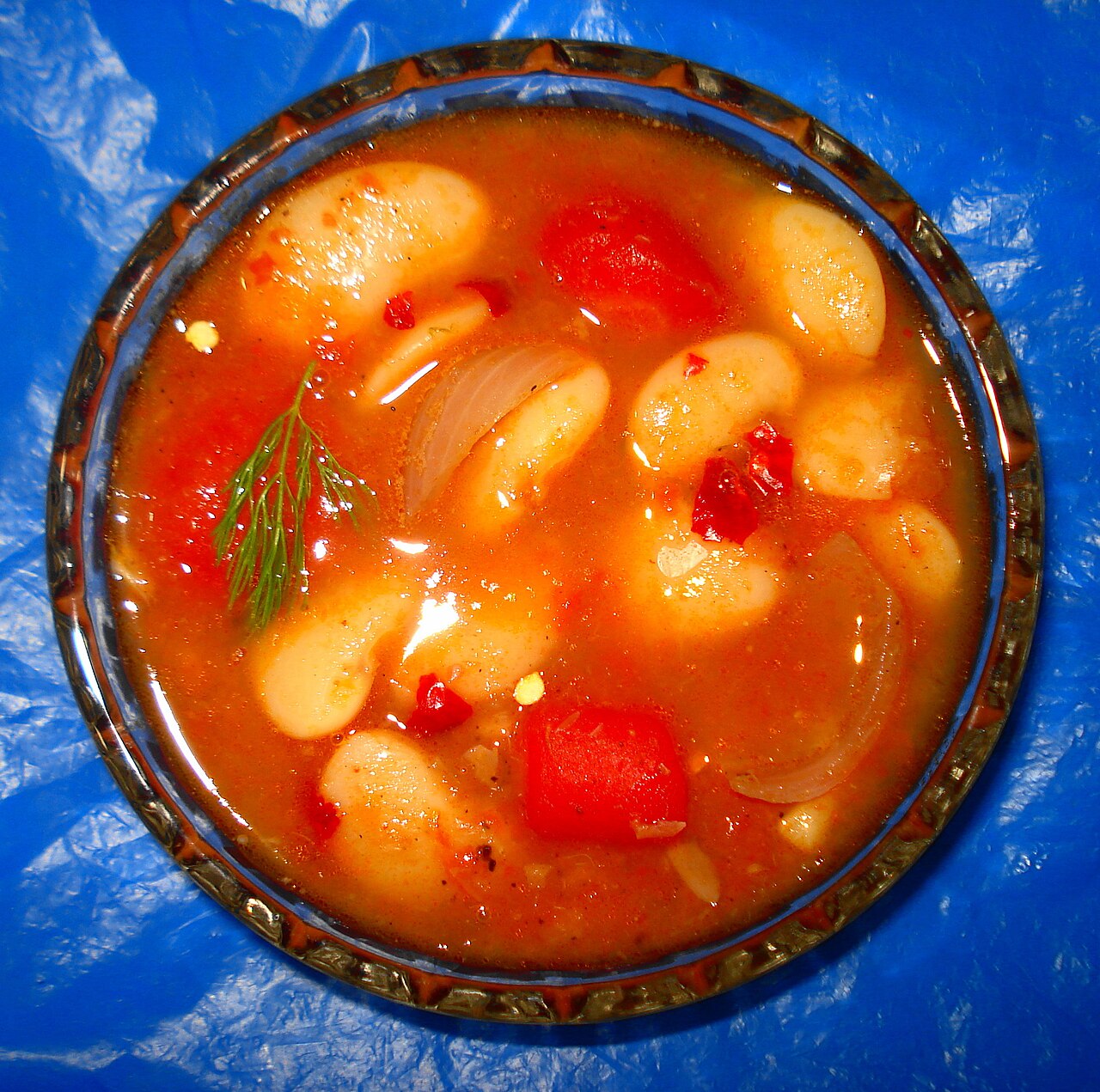
Begin with beans that become creamy before the acidic tomato stage. The texture should be spoonable with intact beans, not a watery broth holding hard centers or a pot reduced to paste.
Greek White Bean Fasolada
Plus overnight bean soaking
Planning totals add preparation, cooking and listed waits. Overlapping stages may shorten the schedule; ingredient and equipment differences can lengthen it.
Ingredients
Times and base yield refer to the original recipe. Scaling quantities does not automatically change pan size, temperature or cooking time.
Step-by-step method
The steps describe the base batch (4 servings). The calculator changes the ingredient list only; amounts written in the steps, equipment and timing remain for that base batch.
Step 1
Soak beans in plenty of water overnight, then drain and rinse.
Step 2
Drain the soaking water. Cover beans generously with fresh water, boil actively for 10 minutes, then simmer until nearly tender. Drain, keeping the measured 1.2 litres fresh soup water separate.
Step 3
In a separate pot, soften onion, carrot and celery in half the olive oil.
Step 4
Add tomatoes, drained beans, bay leaf and the measured 1.2 litres fresh hot water. Add a little more only if needed to keep the beans generously covered.
Step 5
Simmer gently until beans are creamy, then crush a small ladleful to thicken the broth.
Step 6
Remove the bay leaf, finish with remaining olive oil, parsley and lemon, and season to taste.
Why this version works
Check dried beans before planning the meal
The 300 grams of dried white beans should be clean, reasonably fresh and free of damaged pieces. Old beans can cook unevenly even after soaking, so a shop with good turnover is useful. Soak in ample cool water because the beans expand, then drain and use fresh cooking water. Follow the specific package and public food-safety guidance for the bean variety, including a proper initial boil where required. Cannellini or another suitable white bean gives a creamy interior, but different sizes need different timing. The clock is a planning estimate rather than proof that every bean in the pot has softened.
Soften beans before surrounding them with tomato
Test a bean from the first cooking stage before transferring it to the vegetable base. It should be close to tender through the center rather than chalky and resistant. Tomato acidity can make softening more difficult, so adding hard beans to the acidic soup and simply waiting is an unreliable shortcut. Keep hot water available and maintain enough liquid during the simmer. If using canned beans, the long dried-bean stage is unnecessary: drain and rinse them, then simmer briefly in the prepared base. That is a quicker variation with a different schedule, not a reason to boil canned beans for the full listed period.
Build the vegetable base without overpowering it
Dice onion and celery small enough to become part of the broth, with carrot slices or small pieces that remain pleasant in a spoonful. Soften them in part of the olive oil before adding tomatoes. This develops sweetness without relying on a strongly flavored commercial stock. The bay leaf should be easy to remove after simmering. A simple soup makes each ingredient more noticeable, so discard tough celery strings or woody carrot cores where necessary. Do not add several unrelated spice blends to compensate for beans that are still undercooked or a base that has not had time to soften.
Use a small amount of mashed bean for body
Once the beans are creamy, crush a small ladleful and stir it back into the soup. This adds body while leaving most beans intact, avoiding the need for flour or cream. If the mixture thickens heavily while standing, loosen with hot water and taste again before salting. The remaining olive oil belongs near the end for a fresh aroma and smooth mouthfeel. Lemon is an adjustable finish rather than an instruction to make the whole pot sharply sour. Add parsley after the main cooking so its freshness remains visible, then let the soup settle briefly before serving.
Distinguish bean tenderness from soup thickness
A cloudy broth is not proof that every bean center is soft. Check several beans before crushing a small ladleful for body, particularly if the packet contains mixed sizes. Keep the initial boiling water separate from the measured fresh soup water as specified. If you want a thinner bowl, loosen with hot water after the beans are tender and taste again; adding more tomato at that stage also changes acidity and requires further cooking. Olive oil and parsley finish the soup after the major consistency decisions, rather than acting as a disguise for undercooked beans.
Ingredient choices and substitutions
Use fresh dried white beans from a shop with good turnover. Old beans may cook unevenly. Cannellini or similar white beans work; canned beans are a faster variation that needs much less simmering time.
Fixes for this recipe
| What you notice | Likely reason | What to do |
|---|---|---|
| Beans remain hard in a well-flavored tomato broth. | They were added before becoming nearly tender, or the dried beans were old. | Next time finish the initial softening stage before tomato. Continue with sufficient gentle heat and liquid, but avoid promising that a hard old batch will meet the original timetable. |
| The soup turns into a dense bean paste. | Too many beans were crushed or evaporation continued too long. | Add hot water gradually and fold gently. Crush only a small portion for body rather than blending the entire pot. |
| The broth tastes oily instead of rounded. | Oil was added in excess or poured over a very thin unsalted base. | Use the measured amount in stages and establish broth consistency first. Stir gently and taste a full spoonful rather than adding more oil to every perceived weakness. |
Recipe-specific questions
Can I use canned beans for a weeknight version?
Yes. Use an equivalent amount of cooked drained beans rather than 300 grams from a can, since dry and cooked weights differ. Prepare the vegetable base first and simmer only long enough for flavors to combine.
Is stock necessary?
No. This version uses water so beans and vegetables remain central. A mild unsalted vegetable stock is a variation, but a strong stock can make the simple soup taste primarily of the stock product.
Should I blend the soup?
Only a small portion is mashed for body here. Blending the entire pot changes the intended contrast between creamy intact beans and vegetable broth. It can be a useful puree, but it is a different texture.
Serving and storage
Bread, olives and a crisp salad make a balanced meal. Keep brined accompaniments separate so diners can adjust the salty contrast without changing the seasoning of the whole pot.
Cool the soup promptly in shallow containers and refrigerate. It thickens as beans absorb more liquid, so add a little water during reheating and check salt afterward. Heat the portion needed thoroughly rather than repeatedly warming the entire pot. Fresh parsley and finishing oil can be added after reheating.
An AI-assisted editorial guide, not independently kitchen-tested. The photograph is a serving example. How we prepare and correct our guides.
For safe handling, consult FDA guidance. Send recipe corrections by email to ZYS10.