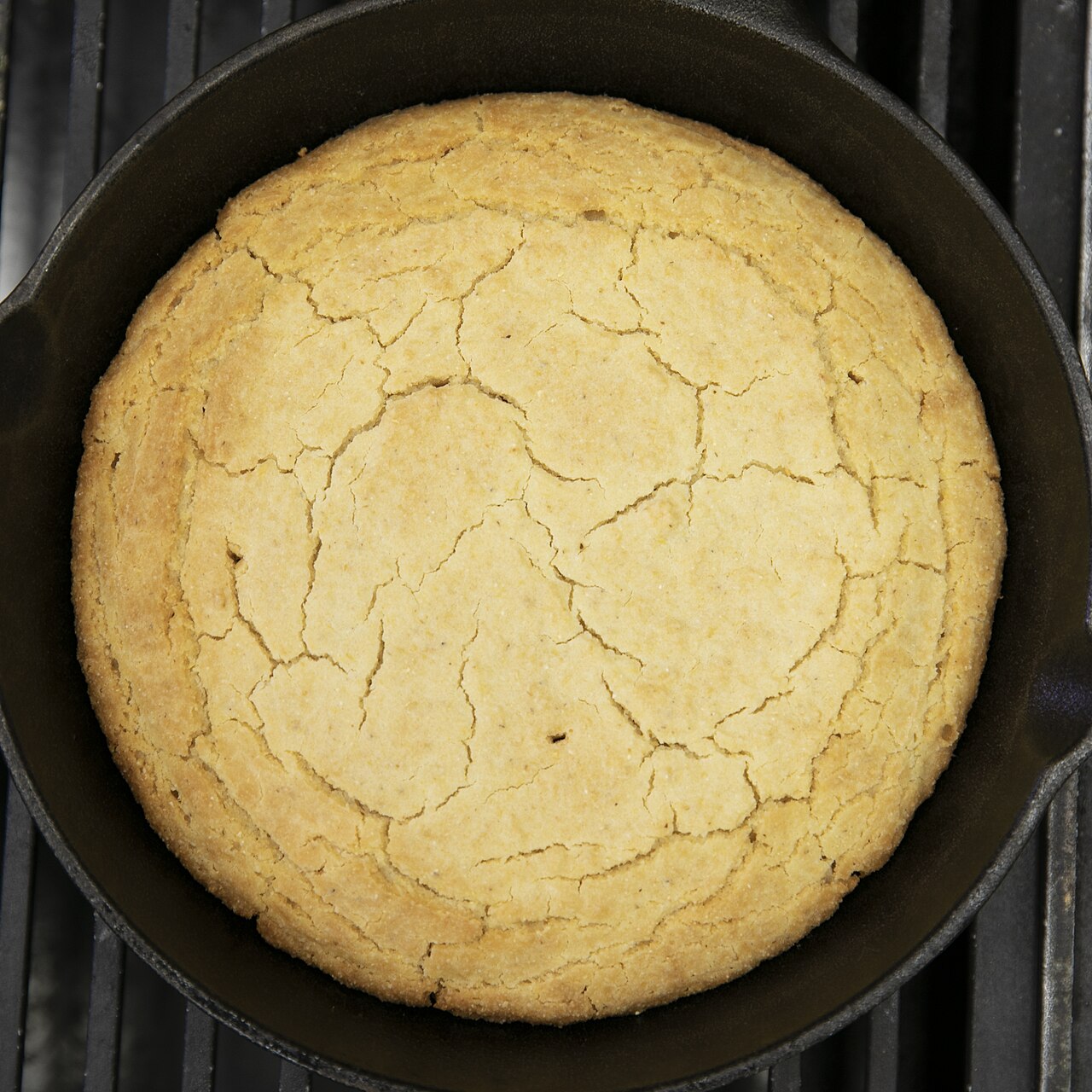
This home version includes wheat flour for a softer structure and keeps added sugar optional. A preheated pan helps the crust, while brief mixing and a fully ready oven protect the batter’s chemical lift.
Golden Skillet Cornbread
Includes the 10-minute rest before slicing.
Planning totals add preparation, cooking and listed waits. Overlapping stages may shorten the schedule; ingredient and equipment differences can lengthen it.
Ingredients
For fractional eggs, beat an extra egg or yolk and measure the required fraction.
Times and base yield refer to the original recipe. Scaling quantities does not automatically change pan size, temperature or cooking time.
Step-by-step method
The steps describe the base batch (1 skillet bread, 8 wedges). The calculator changes the ingredient list only; amounts written in the steps, equipment and timing remain for that base batch.
Step 1
Heat the oven to 220°C / 428°F with a 23 cm oven-safe skillet inside.
Step 2
Whisk cornmeal, flour, leavening, salt and optional sugar in a bowl.
Step 3
Whisk buttermilk, eggs and 60 g of the melted butter separately. Reserve the remaining 10 g for the skillet.
Step 4
Fold wet ingredients into dry just until combined.
Step 5
Carefully brush the hot skillet with remaining butter and pour in batter.
Step 6
Bake for 20–25 minutes until golden and a skewer comes out without wet batter, then rest for 10 minutes.
Why this version works
Choose cornmeal for texture as well as flavor
Fine or medium cornmeal gives a more predictable short bake than very coarse polenta. The particles need enough moisture to soften, and a coarse grind can remain gritty if treated exactly the same way. Smell the meal before mixing; stale oily or paint-like notes indicate poor freshness. Store it cool and sealed. The 180 g cornmeal and 120 g wheat flour balance makes this a tender home cornbread rather than a promise to represent every Southern regional tradition.
Buttermilk and the measured leaveners work together
The acidic dairy reacts with bicarbonate, while baking powder adds further lift. They should be mixed evenly through the dry ingredients so no bite receives a concentrated patch. Do not double them to make a taller bread: excess can taste unpleasant and disrupt the crumb. Have the oven fully preheated before wet meets dry because the reaction begins during mixing. Sweetened dairy or a much thicker yogurt substitute changes more than the liquid volume.
Preheat the skillet safely
Place an oven-safe skillet in the oven while it heats to 220°C / 425°F, checking that its handle and finish are suitable for that temperature. When the batter is ready, take the skillet out with a dry glove and brush the base with the reserved butter. It may foam quickly; do not linger until it blackens. Pour in the batter promptly and return the pan carefully to the oven. The handle remains hot long after it looks ordinary.
Fold the batter rather than beating it smooth
Whisk wet ingredients separately so eggs and melted butter are distributed before they reach the flour. Then fold just until the largest dry patches disappear. A perfectly polished batter is not the goal, and continued beating develops the wheat flour more than necessary. Pour in one steady layer and avoid repeatedly stirring inside the hot pan, which disrupts the forming bottom crust. The modest optional sugar changes sweetness and browning, but should not be used to cover stale cornmeal.
Check the center, then rest before cutting
A skewer inserted into the middle should emerge without wet batter, and the surface should feel set rather than slosh. Some moist crumbs are different from uncooked paste. Check before the end if your skillet is dark or your oven runs hot. Let the bread stand for about ten minutes so slices hold together. Leaving it in a hot pan for a prolonged time continues drying the edge, so move remaining portions to a rack once the structure is secure.
Treat the skillet butter as a separate measured portion
The recipe reserves part of the melted butter for the preheated skillet. Set that portion aside before mixing the wet ingredients so the full allowance does not accidentally enter the batter and require another unmeasured amount for the pan. Have batter ready before handling the hot skillet and keep a dry glove beside its handle afterward. Divide the baked bread into eight wedges once it has rested; four servings from the same pan would simply be larger portions, not a different formula. Serve wet accompaniments separately to preserve the crisp lower edge.
Ingredient choices and substitutions
Choose fine or medium cornmeal that smells fresh rather than rancid. Coarse polenta changes the texture and may need more hydration. Use a skillet explicitly rated for the oven, including its handle.
Fixes for this recipe
| What you notice | Likely reason | What to do |
|---|---|---|
| The crumb is gritty and dry | Cornmeal was too coarse for the hydration and timing, or the bread overbaked. | Use the specified finer grind and weigh the dry ingredients. Check the center earlier instead of relying solely on a deeply brown edge. |
| The bread barely rises | Leaveners were stale or the mixed batter waited while the oven warmed. | Preheat first and combine shortly before baking. Replace tired baking powder rather than increasing the quantity of an inactive product. |
| The bottom tastes burnt | Butter blackened in the preheated skillet or bottom heat was excessive. | Brush and fill promptly, use a suitable oven position and reduce the preheat intensity if the pan is unusually thin. Scraping away burnt butter afterward does not restore its flavor. |
Recipe-specific questions
Is sugar required in cornbread?
No, it is optional in this home version. Preferences vary by household and region. Leaving out the small listed amount makes a less sweet bread; it does not require rewriting the whole recipe. Judge sweetness alongside the food you intend to serve with it.
Can coarse polenta replace the cornmeal directly?
It changes the texture and may need a different hydration stage. For the first attempt, buy fine or medium cornmeal as specified. If using coarse polenta, follow a method designed for that grind instead of assuming the same short mixing and baking schedule will soften it.
Can I bake this in a regular tin?
Yes, using an appropriately sized oven-safe tin, but the edge will differ from a hot skillet. Grease the tin and watch the center because material and layer depth alter baking. Do not preheat an unsuitable or unverified tin as if it were cast iron.
Serving and storage
Serve with white bean soup, chili-style beans or greens. The modest sweetness and crisp edge suit savory dishes better than a heavy sweet glaze.
Cool spare slices completely before covering, then store according to the ingredients and local guidance or freeze in portions. Reheat briefly to warm the center without drying the edges. Butter or soup alongside can complement the bread, but cannot reverse a severely overbaked crumb.
An AI-assisted editorial guide, not independently kitchen-tested. The photograph is a serving example. How we prepare and correct our guides.
For safe handling, consult FDA guidance. Send recipe corrections by email to ZYS10.