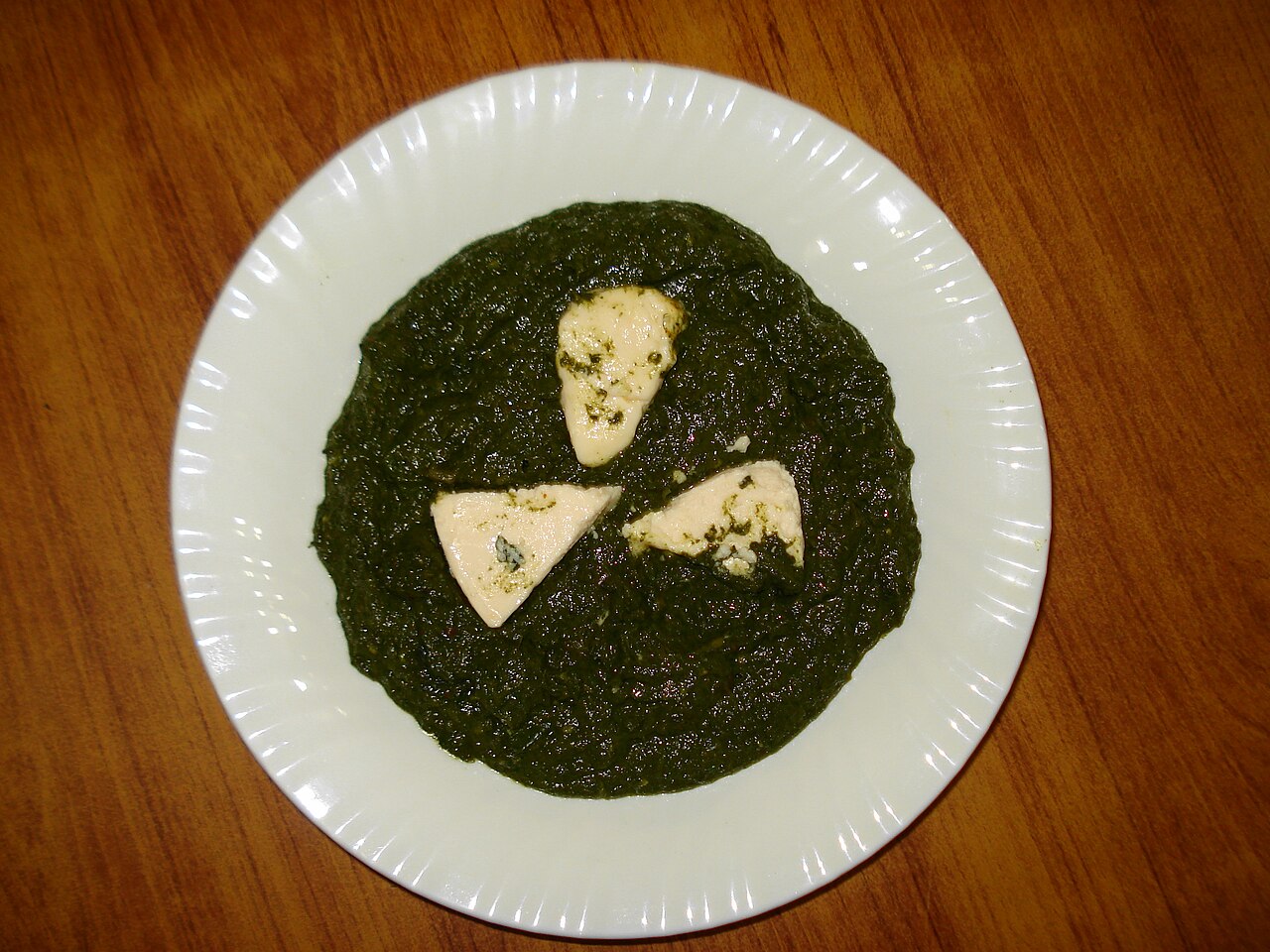
The sauce should taste green and savory, with soft paneer cubes providing a mild contrast. Its most important controls are removing excess spinach water, cooking the tomato base before adding greens, and keeping the final simmer short enough to preserve a fresh flavor.
Spinach Palak Paneer
Planning totals add preparation, cooking and listed waits. Overlapping stages may shorten the schedule; ingredient and equipment differences can lengthen it.
Ingredients
Times and base yield refer to the original recipe. Scaling quantities does not automatically change pan size, temperature or cooking time.
Step-by-step method
The steps describe the base batch (4 servings). The calculator changes the ingredient list only; amounts written in the steps, equipment and timing remain for that base batch.
Step 1
Blanch spinach briefly in boiling water, drain and cool rapidly, then blend to a coarse puree.
Step 2
Warm ghee and cumin seeds in a pan until fragrant.
Step 3
Add onion and cook until lightly golden, then stir in ginger, garlic and green chile.
Step 4
Add tomatoes and cook until their moisture reduces and the mixture thickens.
Step 5
Fold in spinach and paneer and simmer gently for 5–7 minutes.
Step 6
Finish with garam masala and cream, season to taste and adjust consistency with a little water.
Why this version works
Drain the spinach without drying out its flavor
Five hundred grams of fresh spinach shrink substantially, so judge the cooked quantity rather than the apparent volume in the shopping bag. Blanch only until the leaves wilt, cool them quickly, and squeeze out free water before blending. There is no need to wring them into a completely dry hard ball; reserve the ability to blend smoothly with a little cooking liquid or fresh water. Large mature stems are more fibrous than tender leaves and can be trimmed. With frozen spinach, thaw and drain before weighing the usable portion if substituting by cooked volume.
Choose how smooth the sauce should be
A coarse puree leaves small spinach flecks and feels more vegetable-forward. A longer blend gives a smoother restaurant-style texture but cannot compensate for tough stems or poorly cooked onion. Blend spinach separately from the onion-tomato base in this version so each component gets the heat it needs. If using a jug blender for hot ingredients, follow the manufacturer's hot-liquid instructions and avoid sealing steam beneath a tight lid. A stick blender offers more control in a tall container, though the finish may be less perfectly uniform.
Treat paneer as a tender filling
The 250 grams of paneer should be cut into cubes large enough to survive gentle folding. Fresh soft paneer can go directly into the sauce. A firmer refrigerated block may benefit from a short warm-water soak, followed by draining, rather than aggressive frying. A browned exterior is an optional texture choice, not a necessary step for this recipe. When frying is desired, use only a brief light sear: prolonged dry heat turns a mild cheese into chewy pieces. Add the cubes once the spinach sauce is nearly ready so they warm without repeated stirring.
Keep tomato, cream and spice in proportion
Two tomatoes provide background acidity and sweetness; they should not turn the sauce into tomato curry with a little spinach added. Cook them until thick before introducing the puree. Cumin seeds establish a warm base, while garam masala and three tablespoons of cream are finishing accents. The cream rounds mature spinach's earthiness but should not erase its flavor. Lemon is not required in the ingredient list, and adding a large squeeze automatically can make a tomato-rich base unnecessarily sour. Taste the full spoonful with paneer before deciding what is missing.
Measure spinach in the form the recipe names
The spinach allowance is for fresh leaves before blanching, not an equal weight of tightly squeezed cooked spinach. A frozen block and a bag of fresh leaves therefore need separate handling decisions. When using an adaptation, thaw or wilt first, drain and look at the actual cooked yield before committing the paneer and cream. Keep the puree loose enough to surround the cubes without becoming a green soup. If the base is already dense, add water gradually rather than more cream, which changes richness while making the measured dairy balance harder to judge.
Ingredient choices and substitutions
Use fresh spinach with unwilted leaves and paneer that smells clean and milky. Frozen chopped spinach can work if thawed and squeezed. Older paneer may benefit from a short soak in warm water.
Fixes for this recipe
| What you notice | Likely reason | What to do |
|---|---|---|
| The sauce turns watery around the cubes | Blanched or thawed spinach carried too much liquid into the pan. | Drain the spinach more carefully next time. For the current batch, remove paneer temporarily and reduce the spinach sauce gently, then return the cubes for a brief warm-through. |
| Paneer feels rubbery instead of soft | The cheese was fried for too long or repeatedly boiled in the finished curry. | A warm-water soak before use can help firm packaged paneer. Keep the final cooking gentle and brief; extra cream does not undo a tough cheese texture. |
| A dark, flat spinach flavor | The green puree spent too long simmering while another component was still cooking. | Finish the onion-tomato base first and add spinach late. Use cream modestly for balance, but do not expect it to restore the aroma of freshly cooked greens. |
Recipe-specific questions
Can frozen spinach work for this palak paneer?
Yes. Choose plain spinach without sauce or seasoning, thaw it fully and remove excess liquid. Frozen chopped spinach may produce a less silky puree than whole leaves, but it is a practical choice when fresh spinach is tired or expensive.
Is firm tofu a direct replacement for paneer?
It can make a useful dairy-free variation, although its flavor and texture are different. Drain it, cut stable cubes and warm them gently in the sauce. Replace the ghee and cream as well if the whole dish needs to avoid dairy.
Why not cook the raw spinach directly in the tomato base?
That can be a valid alternative method, but releases its water into the sauce and changes timing. The brief blanch-and-drain method here gives more control over consistency, especially when spinach bunches differ in size and moisture.
Serving and storage
Soft roti is useful for scooping the thick sauce, while plain basmati keeps the spinach flavor clear. A lemon-dressed raw salad provides contrast; another heavy dairy curry adds less variety to the same meal.
The spinach sauce can be prepared ahead, cooled promptly and refrigerated separately from the paneer. Reheat it gently, add the cheese near the end and adjust with a little water. Repeated long reheating dulls the greens and firms the cubes, so portion what you expect to serve rather than warming the whole pan repeatedly.
An AI-assisted editorial guide, not independently kitchen-tested. The photograph is a serving example. How we prepare and correct our guides.
For safe handling, consult FDA guidance. Send recipe corrections by email to ZYS10.