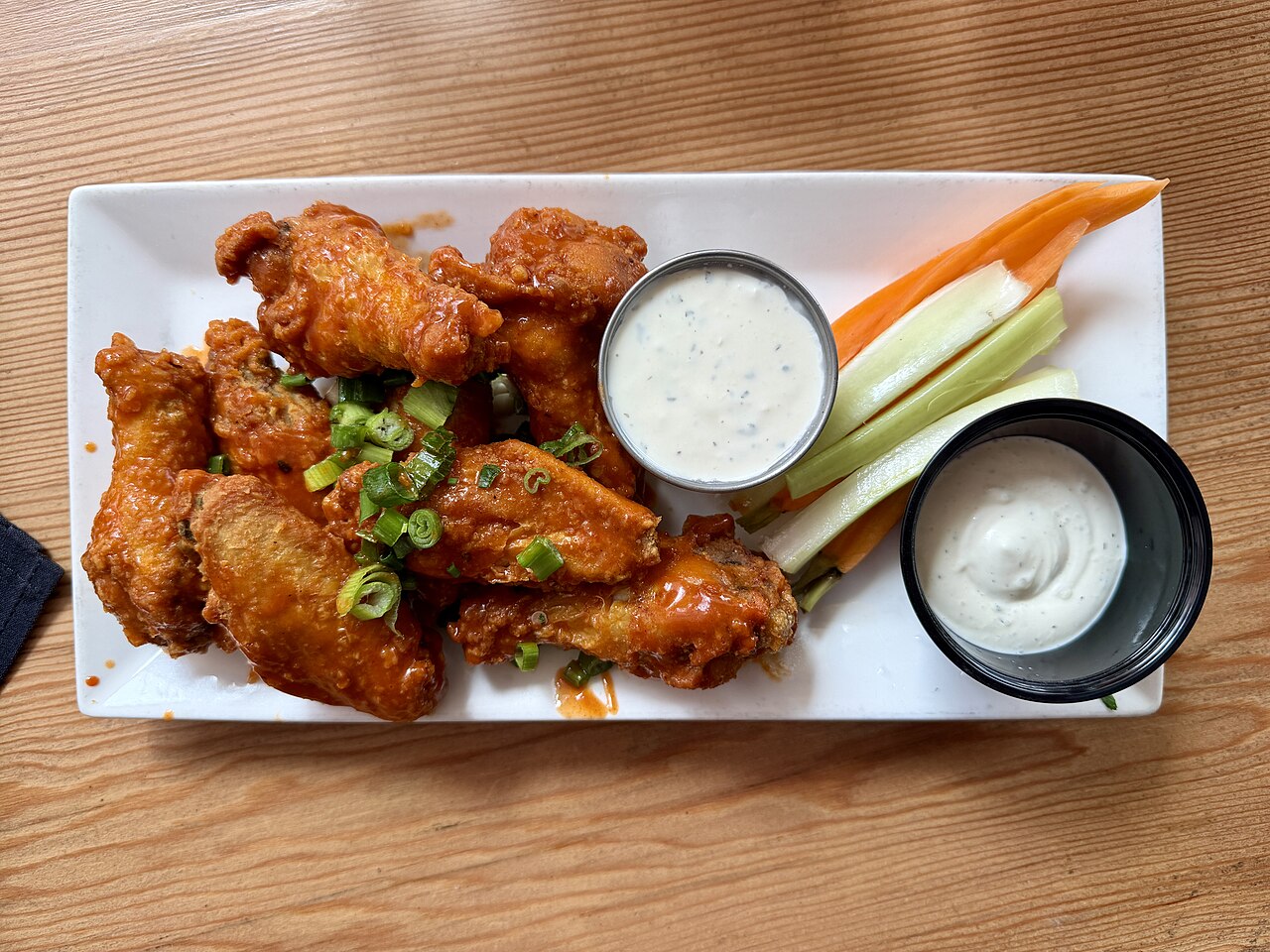
This method uses a rack and a small measured amount of baking powder, then sauces the wings only at serving time. It offers an oven approach with clear texture cues rather than claiming that every oven reproduces a deep fryer.
Crisp Oven Buffalo Wings
Planning totals add preparation, cooking and listed waits. Overlapping stages may shorten the schedule; ingredient and equipment differences can lengthen it.
Ingredients
Times and base yield refer to the original recipe. Scaling quantities does not automatically change pan size, temperature or cooking time.
Step-by-step method
The steps describe the base batch (4 servings). The calculator changes the ingredient list only; amounts written in the steps, equipment and timing remain for that base batch.
Step 1
Pat wings very dry and toss with baking powder and salt, not bicarbonate of soda.
Step 2
Arrange on a rack over a lined tray with gaps between pieces.
Step 3
Roast at 220°C / 428°F for 45–50 minutes, turning once, until crisp and at least 74°C / 165°F.
Step 4
Melt butter gently and whisk in hot sauce and vinegar off the heat.
Step 5
Toss cooked wings with just enough warm sauce to coat.
Step 6
Serve immediately with celery and a cool yogurt-based dip.
Why this version works
Drying matters more than a thick powder coating
Thaw frozen wings completely in the refrigerator and pat every fold dry. Surface water delays browning and dilutes the small baking-powder coating. The measured tablespoon for one kilogram should be distributed evenly; visible piles taste unpleasant. Use baking powder, not bicarbonate of soda. Some cooks prefer aluminum-free products to reduce the chance of an unwanted aftertaste. The powder is a texture aid, not a reason to skip drying or to crowd the wings tightly together.
A rack exposes the underside to moving hot air
Arrange split wings in a single layer with gaps, keeping drumettes and flats reasonably evenly distributed. A bare tray lets the lower surface sit in rendered fat and juices. The rack makes the cook more consistent, although turning once still helps. Line the tray below for cleanup without covering the rack itself. If using multiple trays, expect different browning speeds and swap positions when necessary rather than assuming the fan eliminates all oven hot spots.
Judge both the skin and the thickest flesh
At 220°C / 425°F, well-dried wings should gradually develop a crisp browned surface. Start checking before the end if the pieces are small or the oven runs hot. Measure at least 74°C / 165°F in the thickest flesh without resting the probe against bone. Skin crispness and safe internal temperature are separate checks. If the meat is ready but the skin remains pale, a short closely watched grill finish may help; it is not a substitute for a properly preheated oven.
Keep the Buffalo sauce an emulsion
Melt butter gently and whisk in cayenne hot sauce off the heat. A hard boil encourages separation and can make the coating look oily. Hot sauce brands vary in vinegar, salt and heat, so taste the sauce before adding extra vinegar. The intended result is a fluid coating that clings lightly. If it looks split, whisk while warm with a very small splash of water. Do not keep adding butter simply to mute a sauce whose heat level you fundamentally dislike.
Toss only the wings you will eat immediately
The sauce contains water, so any crisp skin softens after prolonged contact. Put cooked wings into a dry warm bowl, add sauce gradually and toss until coated rather than flooded. Reserve spare wings unsauced if serving in stages. Celery and a cool dip provide contrasting crunch and temperature. Their job is not to make an excessively hot sauce tolerable; choose a suitable hot sauce at the start so the chicken remains enjoyable.
Divide the sauce according to how soon wings will be eaten
The butter-hot sauce mixture is best added to the portion being served now. Keep additional cooked wings unsauced briefly if the meal will be eaten in rounds, then toss the next portion separately. A heavy pool of sauce in the serving bowl softens the underside while giving the last pieces a different coating from the first. The celery and yogurt dip are contrasting accompaniments, not ingredients for the hot sauce pan. Keep them cool and separate so diners can choose their own balance without cooling the entire batch of wings.
Ingredient choices and substitutions
Choose wings of similar size and check they are fully thawed before drying. Use baking powder rather than baking soda, which can taste harsh. Hot sauces vary widely in salt and heat.
Fixes for this recipe
| What you notice | Likely reason | What to do |
|---|---|---|
| A powdery taste remains on the skin | Baking powder was overmeasured or unevenly distributed, or baking soda was substituted. | Use a level measured amount of the correct product and toss thoroughly. More powder is not a useful shortcut to more crispness. |
| The skin is soft underneath | The wings were crowded, wet or sitting directly in their juices. | Dry thoroughly and use a rack with gaps. Drain any large accumulation in the tray carefully without splashing hot fat. |
| The sauce immediately pools as oil | It was overheated or mixed while components were at very different temperatures. | Remove from heat and whisk gently while warm. A little water may help it come together; boiling harder usually makes the separation worse. |
Recipe-specific questions
Can I use baking soda instead of baking powder?
No, not at the listed quantity. They differ in formulation and alkalinity. Baking soda can leave a harsh soapy taste. Buy baking powder and measure it carefully rather than treating every white leavening powder as interchangeable.
Can I sauce the wings before roasting?
Not for this method. The wet sauce delays skin drying, and its butter and seasonings can scorch during the long oven stage. Roast the wings first and coat them while hot near serving.
Can I use the same timing for whole wings?
Whole wings have different shape and thickness and can crowd the rack differently. Split pieces are easier to arrange and compare. If leaving them whole, use the texture and internal-temperature checks rather than assuming identical timing.
Serving and storage
Celery sticks, cucumber and a plain yogurt dip give a cooling contrast. Offer extra hot sauce separately rather than making every serving equally intense.
Keep leftover wings chilled promptly, preferably without sauce if planning them ahead. Reheat on a rack until thoroughly hot and then add fresh warm sauce. Already sauced wings can be reheated, but their skin will not return fully to its initial crisp texture.
An AI-assisted editorial guide, not independently kitchen-tested. The photograph is a serving example. How we prepare and correct our guides.
For safe handling, consult FDA guidance. Send recipe corrections by email to ZYS10.