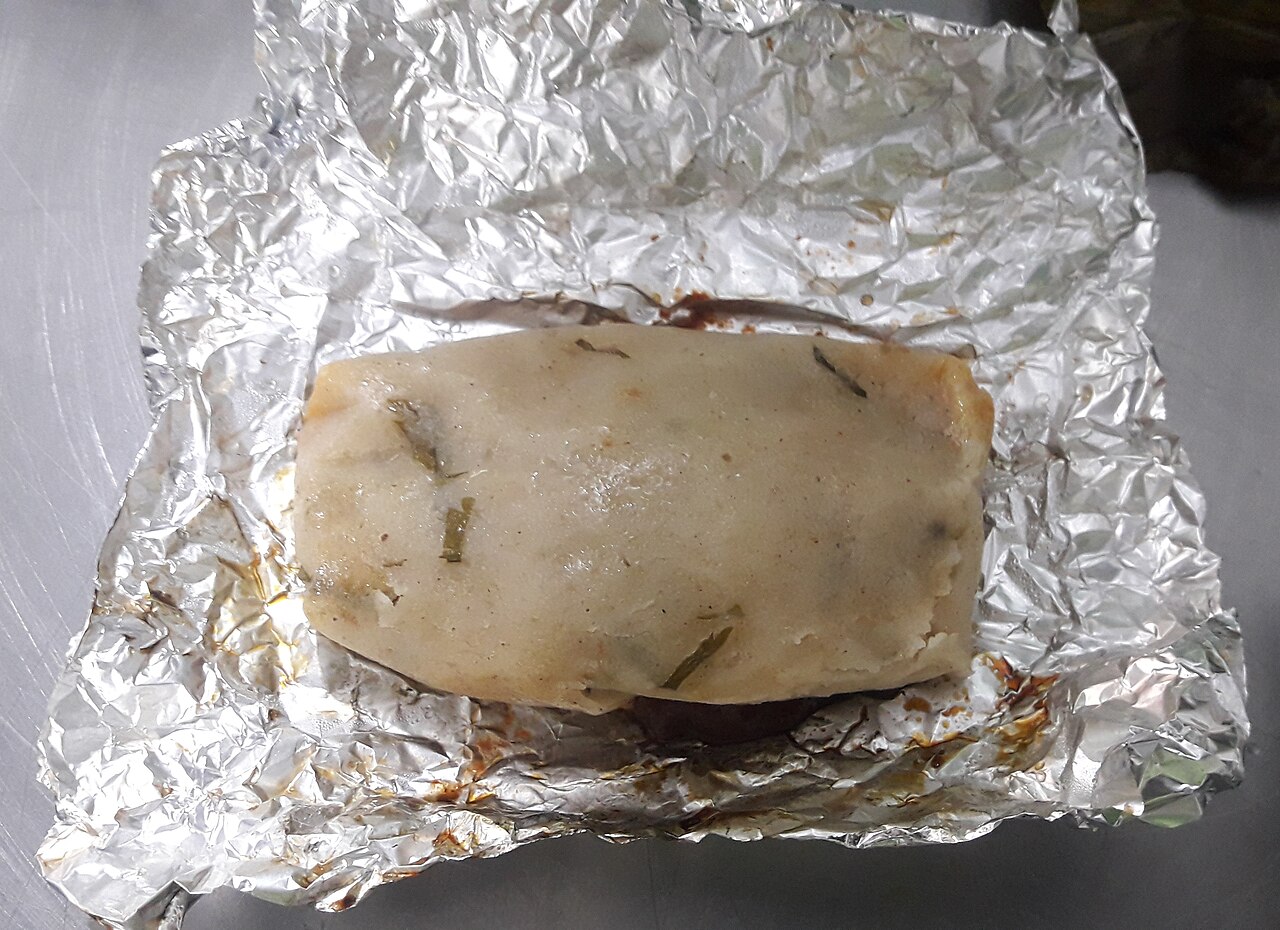
They are a useful assembly project, but the long cooking stage should be planned before the husks are filled. This version uses masa harina and cooked chicken, making the main uncertainties dough hydration, parcel size and the steamer arrangement.
Chicken Tamales in Corn Husks
Plus soaking and resting
Planning totals add preparation, cooking and listed waits. Overlapping stages may shorten the schedule; ingredient and equipment differences can lengthen it.
Ingredients
Times and base yield refer to the original recipe. Scaling quantities does not automatically change pan size, temperature or cooking time.
Step-by-step method
The steps describe the base batch (About 16–20 tamales, 8 servings). The calculator changes the ingredient list only; amounts written in the steps, equipment and timing remain for that base batch.
Step 1
Soak corn husks in hot water for 30 minutes and pat dry.
Step 2
Beat the lard until fluffy, then gradually mix in masa harina, baking powder, salt and warm stock to make a soft spreadable dough.
Step 3
Mix chicken with the thick chile sauce and keep the filling moist but not runny.
Step 4
Spread dough over the wide end of 16–20 usable husks, dividing the chicken filling between them in narrow strips. Fold without overfilling and keep the spare husks for lining the steamer.
Step 5
Stand tamales upright with space for steam, cover with spare husks and steam for 60–75 minutes. Keep the water below the basket and replenish with hot water if needed.
Step 6
Rest for 15 minutes, then check that a husk pulls cleanly away from the masa before serving.
Why this version works
Buy masa harina rather than ordinary cornmeal
Masa harina is flour made from treated maize and has different handling from polenta or generic cornmeal. Choose a product intended for tamales when available and read its hydration guidance. The written 350 g flour and 450 ml stock are a starting balance; different grinds absorb liquid differently. Add the warm stock in stages while mixing so you can stop at a soft paste that spreads without crumbling. A dry ball that must be pressed hard onto the husk needs more moisture, while a flowing batter will not stay in its place during folding.
Aerate the fat, then judge the mixed dough
Beat lard or vegetable shortening until lighter and fluffy before gradually adding flour and liquid. This distributes small air spaces and makes the finished masa less dense. Lard brings a savory flavor; shortening gives a different neutral result and may need more attention to seasoning. Baking powder contributes lift but does not replace proper mixing or adequate hydration. Taste a tiny cooked dough sample if adjusting salt rather than eating raw flour paste. Keep the bowl covered while assembling so its surface does not dry and make the final parcels noticeably firmer than the first ones.
Make a filling that stays in a narrow strip
Mix the cooked shredded chicken with a thick red chile sauce. The strands should be moist and flavorful, but loose liquid should not run across the husk. A very wet filling weakens the seam and creates patches where the surrounding masa remains gummy. Use small manageable strands rather than long ropes of meat. Spread dough over the wide part of a softened husk in an even thin layer, leaving borders for folding. Place a modest filling strip in the middle; more filling is not always a better tamal if the dough cannot close around it.
Steam with space and check a rested sample
Soaked husks should bend without cracking. Stand the folded parcels upright with their open ends facing upward, supported so they do not topple into water. Keep the simmering water below the rack and leave paths for steam to circulate between parcels. Replenish with hot water as needed without pouring directly into the filling. After the cooking interval, let a sample rest briefly before testing whether the husk releases cleanly. A very hot tamal can seem softer than it will after settling. If the masa still smears heavily onto the husk, continue steaming and check again rather than assuming the clock alone proves it is done.
Check one filled husk against the steamer layout
Before filling every husk, fold one tamal and stand it in the actual basket. Its folded base must be secure and its size must allow the lid to close without crushing the top. Use that sample to judge the filling portions, then keep a clear path for steam between the completed parcels. The spare husks line and cover the basket; they are not part of the edible yield. A larger batch needs more basket space or another steaming run, not extra pressure to compress the same filled basket tightly.
Ingredient choices and substitutions
Buy masa harina intended for tamales and distinguish it from ordinary cornmeal. Corn husks should be clean and free of mold. A flavorful low-salt stock gives the dough depth without relying only on the filling.
Fixes for this recipe
| What you notice | Likely reason | What to do |
|---|---|---|
| The masa is dense and crumbly. | The dough was too dry, the fat insufficiently aerated or the parcels understeamed. | Check a rested sample first. For remaining uncooked dough, mix in warm stock gradually until spreadable; do not solve crumbling by packing a thicker layer onto every husk. |
| Filling leaks from the side. | The parcel was overfilled, the sauce too loose or the husk cracked during folding. | Use a smaller narrow filling strip and a sound softened husk. Patch with an additional husk where practical, keeping folds secure without squeezing the filling outward. |
| Some parcels cook much slower than others. | Their sizes vary or the steamer is packed too tightly for circulation. | Rearrange carefully and continue steaming the less-set pieces. Make more consistent parcels next time and leave enough gaps rather than forcing the entire batch into an undersized basket. |
Recipe-specific questions
Are corn husks eaten?
No. They wrap and support the dough during steaming and serving. Unwrap the tamal and eat the masa and filling. Remove any ties or loose husk strips before serving to children or anyone unfamiliar with the dish.
Can butter replace all the lard?
It changes water content, flavor and behavior, so it is not the most direct substitute in this formulation. Vegetable shortening is the listed alternative. A butter-based tamal should use a formulation designed for it rather than assuming an equal-volume swap will preserve texture.
Can the batch be divided over two days?
Prepare and refrigerate the cooked filling ahead, then mix and assemble dough closer to steaming. If holding uncooked filled parcels, keep them refrigerated and avoid prolonged warm standing. Cooked tamales are also convenient to freeze and reheat by steaming.
Serving and storage
Serve with a small amount of additional salsa and a fresh vegetable side. Unwrap at the table to retain warmth, but allow a brief pause before eating because the moist filling can remain much hotter than the husk's exterior suggests.
Cool cooked tamales promptly and refrigerate or freeze in manageable portions. Reheat thoroughly in a steamer, keeping husks around them to limit drying. Frozen parcels need longer than chilled ones, so check the center directly. Do not let the steamer boil dry during reheating, and keep the water level below the food throughout.
An AI-assisted editorial guide, not independently kitchen-tested. The photograph is a serving example. How we prepare and correct our guides.
For safe handling, consult FDA guidance. Send recipe corrections by email to ZYS10.