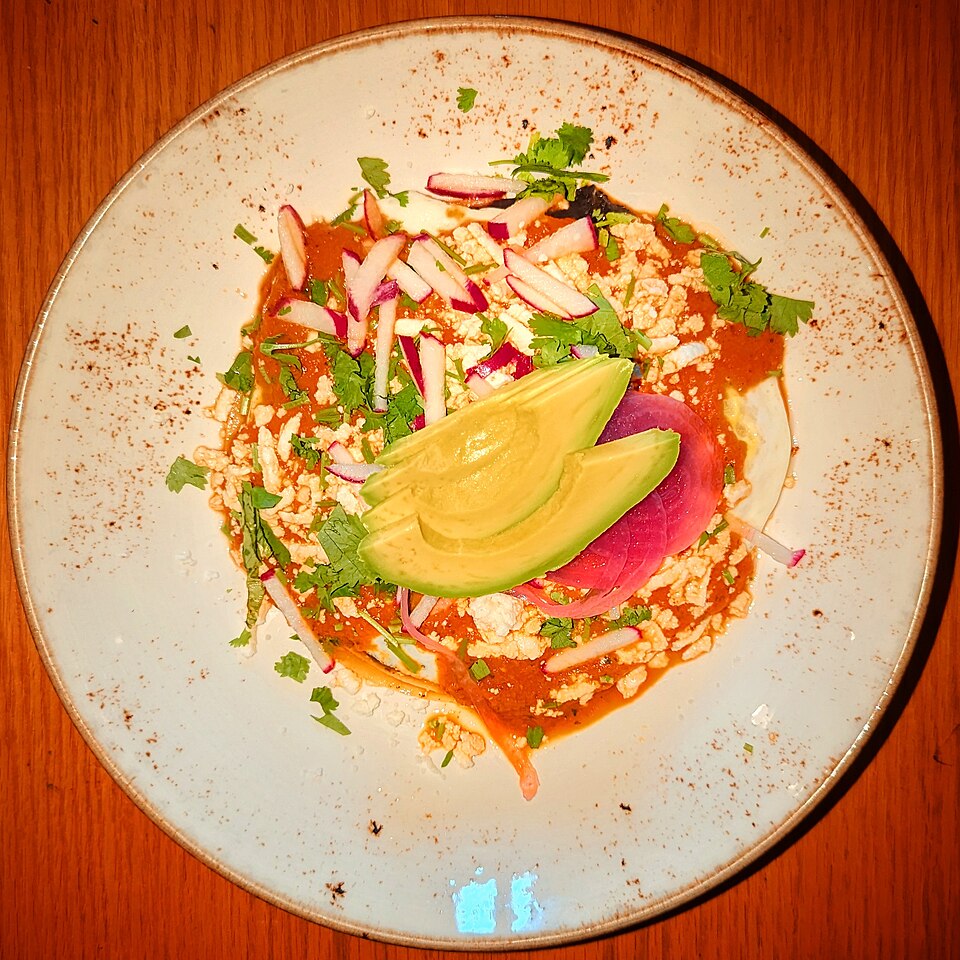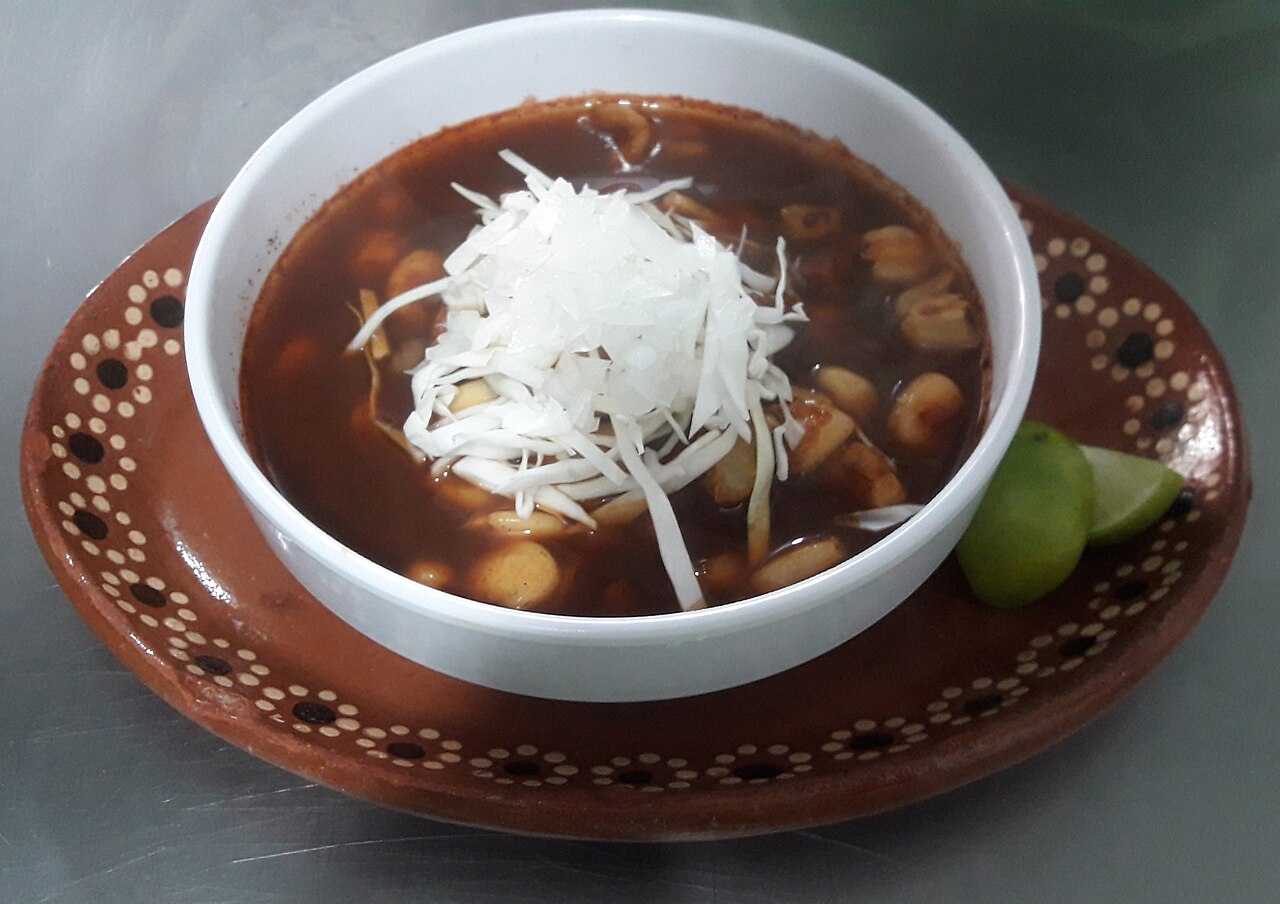
It should remain spoonable, with fresh toppings adding crunch at the table. The important distinction in this version is that the hominy is canned and already cooked; dried hominy needs a different preparation schedule.
Red Pork Pozole
Planning totals add preparation, cooking and listed waits. Overlapping stages may shorten the schedule; ingredient and equipment differences can lengthen it.
Ingredients
Times and base yield refer to the original recipe. Scaling quantities does not automatically change pan size, temperature or cooking time.
Step-by-step method
The steps describe the base batch (4 servings). The calculator changes the ingredient list only; amounts written in the steps, equipment and timing remain for that base batch.
Step 1
Place pork, half the onion and two garlic cloves in water and bring to a gentle simmer.
Step 2
Skim the surface and cook partially covered for 90 minutes until the pork begins to soften.
Step 3
Toast seeded chiles briefly, soak for 15 minutes and blend with remaining onion, garlic and a little broth.
Step 4
Strain the chile mixture into the pot and simmer for 30 minutes.
Step 5
Add drained hominy and oregano and simmer for another 20 minutes until the pork is tender.
Step 6
Season the broth and serve with cabbage, radish and lime at the table.
Why this version works
Choose shoulder for a long gentle simmer
Pork shoulder contains connective tissue that benefits from moist cooking, unlike lean loin that can become dry during the same long simmer. Cut the 800 g into even chunks large enough to remain identifiable after cooking. Start in cool water with onion and garlic, bring gradually to a simmer and remove surface foam as needed. A violent boil is not a shortcut to tenderness and can cloud the broth. Keep the pot partially covered and check the liquid level periodically, adding hot water if evaporation exposes the meat before it softens.
Use the chile mixture to flavor the broth clearly
Guajillo gives a fruity red-chile character and ancho adds a deeper rounded note. Toast seeded chiles only briefly until fragrant, then soak until pliable. A burnt chile makes bitter broth, so discard blackened pieces before blending rather than hoping a large pot of water will hide them. Blend the drained chiles with the remaining aromatics and enough broth to move smoothly. Straining removes leathery skin fragments and gives a cleaner spoonful. Add the puree while the pork still has time to absorb its flavor instead of using it only as a last-minute color adjustment.
Recognize cooked hominy and avoid false substitutions
Hominy is processed maize with a swollen shape and a characteristic texture. The 700 g drained canned quantity can enter late because it needs warming and flavor absorption rather than a long initial cook. Rinse if the can liquid is very salty or starchy. Ordinary sweetcorn is not the same ingredient: it is smaller, sweeter and lacks hominy's bite. If using dried hominy, follow its soaking and cooking directions separately and measure the cooked result for this recipe. Do not expect a short final simmer in acidic chile broth to soften a hard dried grain reliably.
Finish the pork before reducing the seasoning balance
Test a piece with a fork. It should yield easily rather than merely reach a safe minimum temperature while remaining chewy. If it resists, continue a quiet simmer with enough liquid. Once tender, skim excess surface fat but leave some richness to carry the chile aroma. Taste the complete broth with hominy before adding salt. Lime, cabbage and radish belong at serving so each bowl can have its own brightness and crunch. Adding all the lime to the whole pot removes that choice and can make leftovers more acidic as the broth concentrates.
Compare broth strength before choosing the final volume
The long pork simmer removes water while the meat, chiles and hominy contribute flavor and body. Check the broth level when the hominy enters instead of assuming the starting water remains unchanged. Add hot water if needed to keep a generous soup consistency, then let it combine before the final salt adjustment. Canned hominy should be measured drained, not together with its packing liquid. Taste with a piece of pork and hominy; that is the actual serving, while a spoon of reduced liquid alone can seem stronger than the complete bowl.
Ingredient choices and substitutions
Use pork shoulder rather than lean loin for a long simmer. Canned hominy is already processed and cooked, making timing predictable. Dried hominy needs separate soaking and cooking and is not a direct timed substitute.
Fixes for this recipe
| What you notice | Likely reason | What to do |
|---|---|---|
| The pork is safe but still tough. | Shoulder connective tissue has not softened enough during the simmer. | Continue gentle cooking and maintain the liquid level. Do not raise the heat to a hard boil or assume reaching a minimum temperature guarantees the tender texture intended for a stew. |
| The broth tastes bitter. | Chiles scorched during toasting or bitter fragments entered the puree. | A small bitterness may soften with balanced seasoning, but a burnt base cannot be reliably repaired. Toast more cautiously for the next batch and strain the chile mixture. |
| The soup is thick and salty by serving time. | Excess water evaporated during the long cooking interval. | Add hot unsalted water or mild stock to restore a spoonable broth, then taste again. Make salt adjustments after the final liquid consistency rather than early in the simmer. |
Recipe-specific questions
Can chicken be used for a faster version?
Yes, as a chicken pozole variation with a shorter meat-cooking stage and the appropriate poultry temperature. Cook the broth and chile base until flavorful, then avoid simmering tender chicken for the full shoulder timing. Keep the hominy distinction and fresh toppings the same.
Is Mexican oregano required?
It gives a particular aromatic direction and is a useful choice when available. Other dried oregano makes a different but practical home seasoning. Start with a modest amount and taste after it has hydrated rather than adding a large dry handful to compensate for unfamiliarity.
Should all the fat be removed?
Not necessarily. A small amount contributes mouthfeel and carries aroma, while a thick greasy surface can overwhelm the bowl. Skim excess deliberately, especially after a chill if making ahead. Removing every trace is a preference, not a requirement for the broth to taste clear.
Serving and storage
Set out cabbage, thin radish slices, lime and a little dried oregano in separate bowls. A modest fresh topping improves contrast, while a heap that chills the broth completely can make the pork fat feel heavier on the palate.
Cool the stew in shallow containers and refrigerate promptly rather than leaving a large pot warm overnight. Reheat a portion thoroughly with enough water to replace what the hominy absorbed. Keep shredded cabbage, radish and lime separate so they remain fresh. The broth freezes more predictably without a large quantity of raw garnish mixed into it.
An AI-assisted editorial guide, not independently kitchen-tested. The photograph is a serving example. How we prepare and correct our guides.
For safe handling, consult FDA guidance. Send recipe corrections by email to ZYS10.