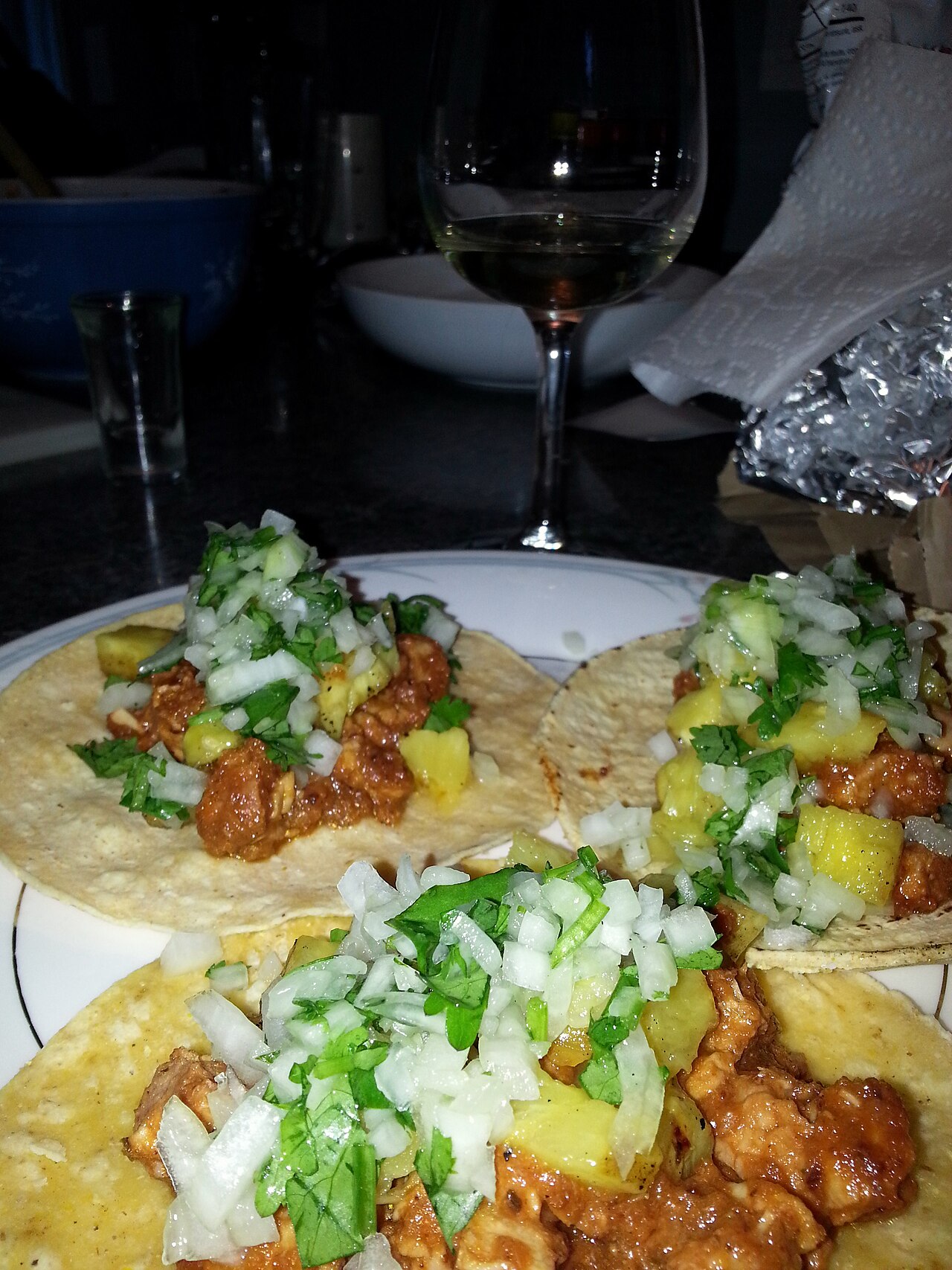
Thin shoulder slices, an aromatic chile-achiote marinade and a brief final sear give useful caramelized edges. Pineapple, onion and coriander should add contrast without turning each small tortilla into an overfilled wet parcel.
Home-Style Tacos al Pastor
Includes 2–6 hours refrigerated marinating and at least 3 minutes resting after cooking.
Planning totals add preparation, cooking and listed waits. Overlapping stages may shorten the schedule; ingredient and equipment differences can lengthen it.
Ingredients
Times and base yield refer to the original recipe. Scaling quantities does not automatically change pan size, temperature or cooking time.
Step-by-step method
The steps describe the base batch (4 servings). The calculator changes the ingredient list only; amounts written in the steps, equipment and timing remain for that base batch.
Step 1
Soften guajillo chiles in hot water for 15 minutes, then drain.
Step 2
Blend chiles with achiote, pineapple juice, vinegar, garlic and oregano into a smooth marinade.
Step 3
Coat the pork and refrigerate for 2–6 hours, avoiding a long soak with fresh pineapple juice.
Step 4
Brush the tray with the listed teaspoon oil. Spread pork and pineapple out in a shallow layer and roast at 220°C / 428°F for 18–25 minutes.
Step 5
Check pork reaches at least 63°C / 145°F and rest for 3 minutes, then chop and briefly crisp in a hot skillet.
Step 6
Warm tortillas and fill with pork, pineapple, onion and coriander.
Why this version works
Slice shoulder thinly while it is firm
Pork shoulder brings enough fat to stay succulent under high heat, but thick stew cubes do not suit this quick method. Chill the meat until firm and slice across the grain into thin pieces, roughly a few millimeters thick where practical. Remove very large hard fat seams while retaining fine marbling. A partially firm piece is easier to cut than warm soft meat, but do not leave it on the counter to soften for a long preparation. Similar thickness matters more than making every slice the same decorative shape.
Choose chile and achiote for flavor as well as color
Guajillo contributes a fruity dried-chile character, while achiote gives an earthy aromatic note and color. Remove stems and seeds, soak until pliable and blend thoroughly so the marinade does not leave leathery chile fragments on the pork. Commercial achiote pastes vary in vinegar, salt and other spices; taste the blended marinade before adding raw meat and adjust cautiously. A bright red color alone is not evidence of a balanced marinade. If the paste is especially salty, hold back other added salt until the cooked pork can be tasted.
Use pineapple thoughtfully during marinating
Fresh pineapple contains enzymes that can change the meat's surface during an extended marinade. Heat-treated canned juice is a more predictable choice for the written two-to-six-hour rest. Fresh pineapple slices can still be roasted alongside the meat for a separate sweet-tart topping. Keep the pork refrigerated throughout marinating and turn it once so surfaces are coated evenly. A longer rest is not automatically better: a mushy exterior is a texture defect, not proof of superior tenderness. Discard raw marinade unless it receives proper cooking before any further use.
Create edges without pretending the oven is a trompo
Spread pork in a shallow layer on a large lightly oiled tray. If slices overlap heavily, roast in batches so moisture can escape. The oven cooks the meat, while the final hot skillet stage gives selected surfaces additional color after chopping. Do not keep cooking every morsel until uniformly dry and crisp; the contrast between browned edges and juicy interior is more appealing. Check pork reaches the required safe temperature and rest before chopping. Warm corn tortillas separately, then fill modestly and add pineapple, raw onion and coriander at the last moment.
Separate the marinade from the crisping stage
The oven version uses a shallow layer of sliced pork, so crowding determines how much moisture must leave before the edges can color. Divide across trays if pieces overlap heavily, and keep pineapple spread out rather than burying it under meat. After the cooked pork rests, chop only the portion entering the skillet next. Crisping a very large pile merely creates another wet holding stage. Warm the tortillas before that final skillet finish, then add onion and coriander after filling so their freshness contrasts with the cooked chile-pork coating.
Ingredient choices and substitutions
Choose pork shoulder with fine fat marbling. Canned pineapple juice is predictable because heat processing reduces the activity of its tenderizing enzyme. Use pliable corn tortillas and warm them before filling.
Fixes for this recipe
| What you notice | Likely reason | What to do |
|---|---|---|
| The pork has a soft mushy surface. | Fresh pineapple juice or an excessively long acidic marinade altered the outer meat. | It cannot be fully reversed by searing. Use a shorter refrigerated rest and heat-treated juice next time, keeping fresh pineapple primarily for the roasted topping. |
| The tray fills with liquid and the pork stays pale. | Slices were crowded or the oven and tray lacked sufficient heat. | Drain only excess loose liquid and finish cooked pork in small skillet batches. Use a wider tray or fewer pieces per batch rather than adding more sweet marinade. |
| The tortilla splits under the filling. | It was cold, dried out or overloaded with juicy meat and toppings. | Warm tortillas until flexible and keep them briefly wrapped in a clean towel. Use a smaller filling quantity, or two small tortillas when their structure is particularly delicate. |
Recipe-specific questions
Can chicken replace pork?
Chicken thigh can make a useful chile-achiote taco variation, but it needs the poultry cooking temperature and should be named accordingly. Do not copy the pork's safe-temperature guidance. Cut pieces evenly and avoid extending a pineapple marinade simply because a different protein is being used.
Is annatto powder the same as achiote paste?
Annatto supplies a key component, while prepared paste often also contains acid and seasoning. Replacing paste with the same volume of plain powder will change both flavor and consistency. Use a separate balanced marinade formulation instead of assuming a direct spoon-for-spoon equivalence.
Can the pork be cooked before guests arrive?
Yes, then chilled safely and reheated thoroughly in small skillet batches. Keep the final crisping and tortilla warming close to serving. A large warm covered bowl of finished pork softens the browned edges and can encourage excessive liquid to collect beneath it.
Serving and storage
Offer lime and a fresh salsa at the table, with small portions of onion and coriander. The marinade already supplies strong flavor, so a little topping gives more balance than a thick layer of cheese or several competing sweet sauces.
Cool cooked pork promptly in shallow containers and refrigerate separately from pineapple and fresh garnishes. Reheat only the amount needed until thoroughly hot, adding a small spoon of cooking juice if dry. Store tortillas separately and warm them fresh. Do not mix raw-marinade utensils with the chopped cooked meat or ready-to-eat onion.
An AI-assisted editorial guide, not independently kitchen-tested. The photograph is a serving example. How we prepare and correct our guides.
For safe handling, consult FDA guidance. Send recipe corrections by email to ZYS10.