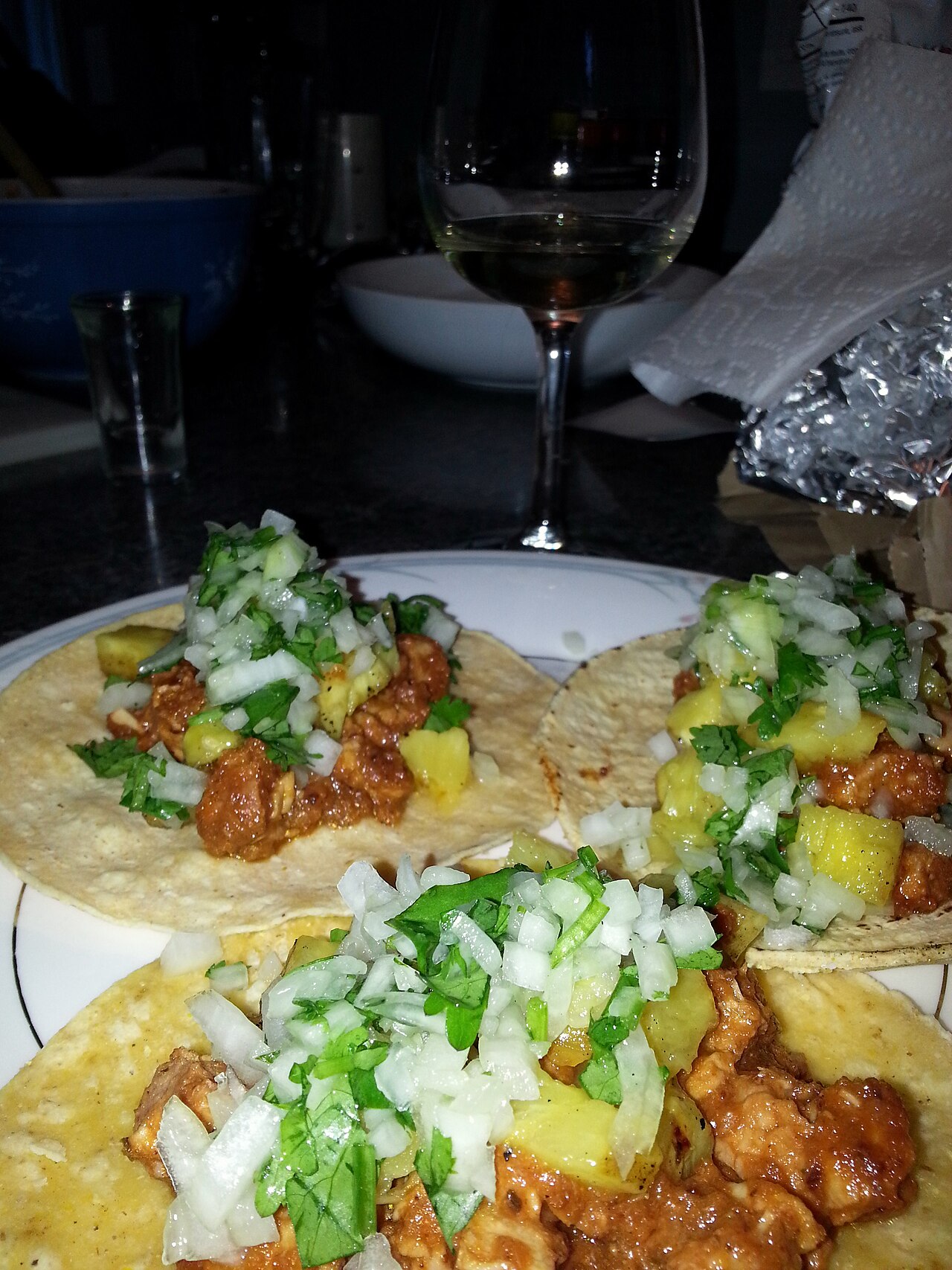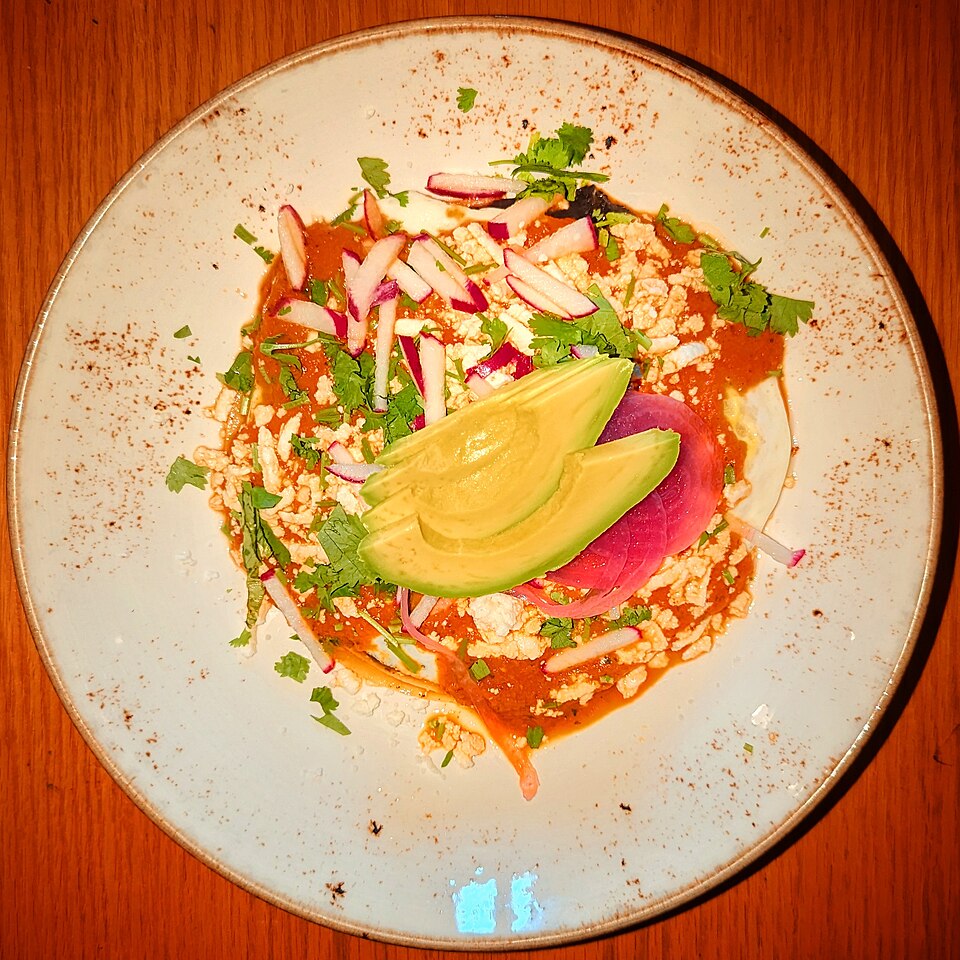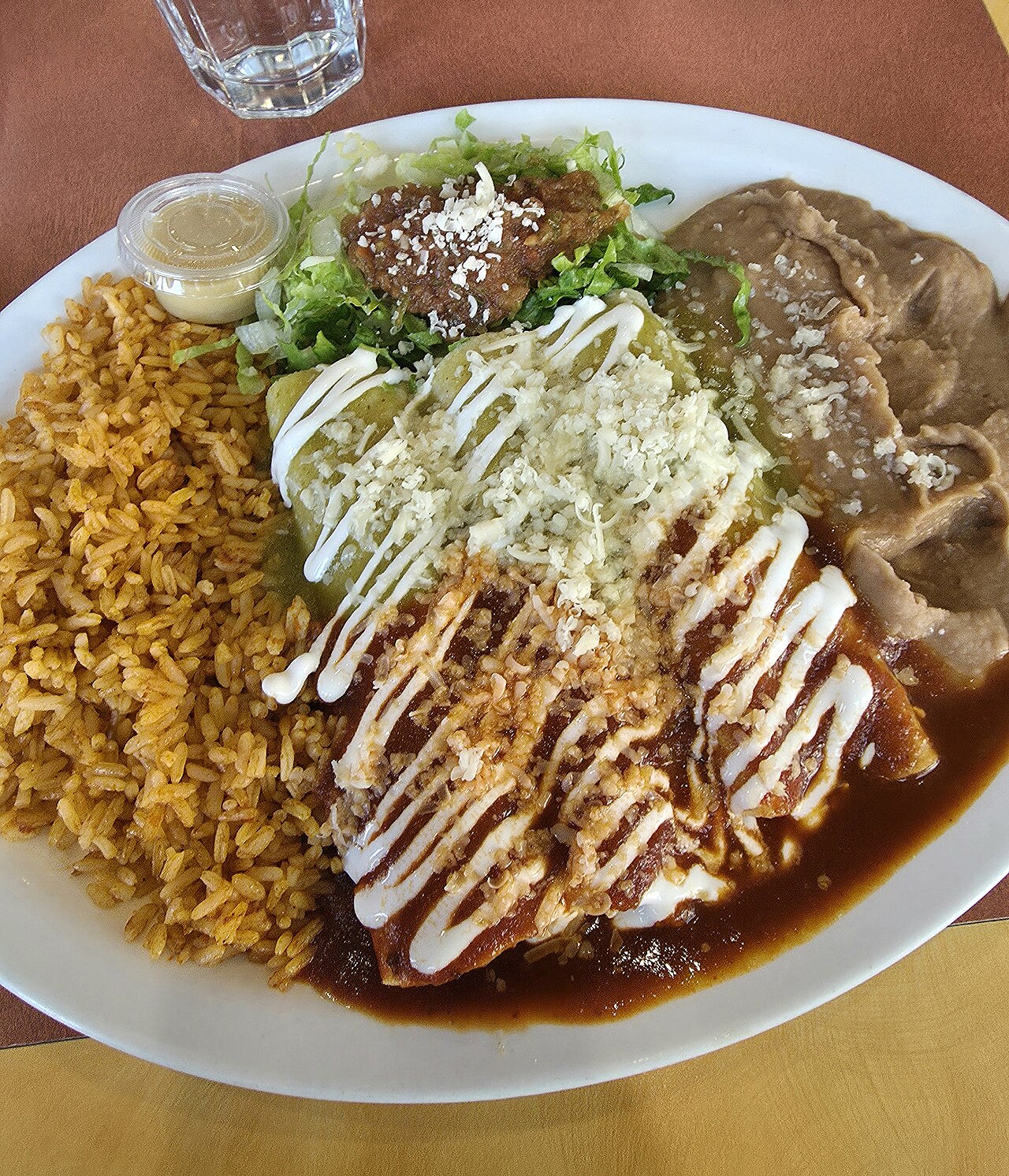
The key is to prepare a concentrated sauce and pliable tortillas before assembly. The oven then heats the filled rolls and browns the modest cheese topping rather than repairing raw sauce or brittle tortillas.
Red Chicken Enchiladas
Planning totals add preparation, cooking and listed waits. Overlapping stages may shorten the schedule; ingredient and equipment differences can lengthen it.
Ingredients
Times and base yield refer to the original recipe. Scaling quantities does not automatically change pan size, temperature or cooking time.
Step-by-step method
The steps describe the base batch (4 servings). The calculator changes the ingredient list only; amounts written in the steps, equipment and timing remain for that base batch.
Step 1
Toast the seeded dried chiles briefly in a dry pan, then soak in hot water for 15 minutes.
Step 2
Blend drained chiles with tomatoes, half the onion, garlic and stock.
Step 3
Fry the blended sauce in one tablespoon of oil for 8 minutes, then season.
Step 4
Warm tortillas lightly in the remaining oil until pliable and fill with chicken and finely diced remaining onion.
Step 5
Spread sauce in a baking dish, arrange rolled tortillas seam-side down and cover with more sauce and cheese.
Step 6
Bake at 190°C / 374°F for about 20 minutes until bubbling and the center of the chicken filling reaches 74°C / 165°F. Finish with sour cream.
Why this version works
Toast dried chiles without burning their skin
Guajillo and ancho provide different fruity and earthy notes, so their combination gives more depth than a single generic hot powder. Remove stems and seeds and warm the chiles briefly in a dry pan until aromatic and slightly more flexible. Dark black spots and smoke indicate excessive heat, which can make the blended sauce bitter. Soak until pliable, then drain. The soaking water can be bitter depending on the chiles, so this version uses measured stock for blending rather than automatically pouring all the soak into the sauce.
Cook the blended sauce before assembly
Blend chiles with tomato, onion, garlic and stock until smooth, then fry the mixture carefully in hot oil. Stir often because a thick puree can spit and catch near the pan edges. The sauce should lose its raw onion-garlic edge and become concentrated enough to coat a spoon. It still needs to spread between tortillas without dragging like paste. Taste before adding more salt because stock and cheese contribute seasoning. If coarse chile skin remains, pass the sauce through a sieve; straining changes texture more reliably than blending indefinitely in an underpowered machine.
Warm corn tortillas until they bend easily
The twelve-tortilla count assumes small corn tortillas, not large flour wraps. Cold corn tortillas often crack when rolled. A light pass through warm oil or another package-appropriate warming method makes them flexible without frying them into hard chips. Work with a few at a time and keep the rest covered briefly. Divide the 450 g chicken into modest portions, roughly a small loose handful for each roll rather than packing a thick cylinder. Finely diced onion adds bite, but large wet pieces make rolling more awkward and can dominate the filling.
Assemble with sauce on every exposed surface
Spread a thin sauce layer in the baking dish, arrange rolls seam-side down and spoon more sauce over the tops and corners. Choose a dish large enough to hold the rolls snugly without stacking them deeply. The 150 g cheese is a finishing layer, not the main structure, so distribute it rather than creating one thick central mound. Bake until bubbling and thoroughly hot inside, then add sour cream at serving. If the top colors before the center heats, cover loosely instead of extending an intense uncovered bake that dries the tortillas.
Budget sauce for the exposed tortilla edges
Before rolling, divide the sauce mentally between the bottom of the dish, the surface and the edges. Tortilla ends left dry at the rim can harden even while the center bubbles. Use a dish that holds the twelve rolls without forcing several into a second deep layer. If the available dish is small, split the batch between two dishes and check both centers rather than increasing stack height. Keep sour cream for serving; adding it underneath the cheese changes the baking sauce instead of giving the intended cool finishing contrast.
Ingredient choices and substitutions
Buy dried chiles that bend rather than snap into dust. Corn tortillas offer a clear maize flavor and absorb sauce differently from flour tortillas. Use cooked chicken that has been stored safely and kept refrigerated.
Fixes for this recipe
| What you notice | Likely reason | What to do |
|---|---|---|
| The sauce tastes bitter. | Dried chiles scorched during toasting or bitter soaking liquid dominated the blend. | A genuinely burnt sauce is best remade. Next time toast briefly over moderate heat and use fresh stock for blending rather than trying to correct burnt flavor with large amounts of sugar. |
| The rolls split while being filled. | Tortillas were cold, dry or overstuffed. | Warm the remaining tortillas more thoroughly and reduce the chicken quantity per roll. A cracked tortilla can be placed seam-side down in this batch, but handle gently and cover it well with sauce. |
| The dish is watery after baking. | The sauce was not reduced enough or the chicken carried loose cooking liquid. | Let the dish settle briefly before serving. For the next batch drain the filling and concentrate sauce before assembly rather than trying to evaporate a deep puddle through extra oven time. |
Recipe-specific questions
Can rotisserie chicken be used?
Yes, if it has been stored safely and kept chilled before assembly. Remove skin and bones and shred into bite-size strands. Strongly seasoned chicken changes the salt level, so taste it with a spoon of sauce before adding extra seasoning to the filling.
Can flour tortillas replace corn?
They create a different softer baked wrap and absorb sauce differently. Use smaller flexible tortillas and avoid a long wet hold before baking. For the written corn-forward flavor and roll size, corn tortillas are the more direct choice.
Should the enchiladas be assembled hours ahead?
The sauce and shredded filling can be prepared separately ahead. A long assembled hold makes tortillas absorb more liquid and may soften their structure. If assembling in advance, keep refrigerated and allow additional heating time, protecting the top while the center becomes thoroughly hot.
Serving and storage
Shredded lettuce, radish and a little lime provide crispness beside the soft rolls. Serve extra sauce separately rather than flooding the plate, and use a light hand with sour cream so the dried-chile flavor remains easy to taste.
Refrigerate leftover rolls promptly in shallow portions with sauce distributed around them. Reheat covered until hot in the center, then uncover briefly if the topping needs refreshing. Keep sour cream and fresh salad garnishes separate. Freeze baked or assembled portions only with the expectation of a softer tortilla texture after thawing and reheating.
An AI-assisted editorial guide, not independently kitchen-tested. The photograph is a serving example. How we prepare and correct our guides.
For safe handling, consult FDA guidance. Send recipe corrections by email to ZYS10.